

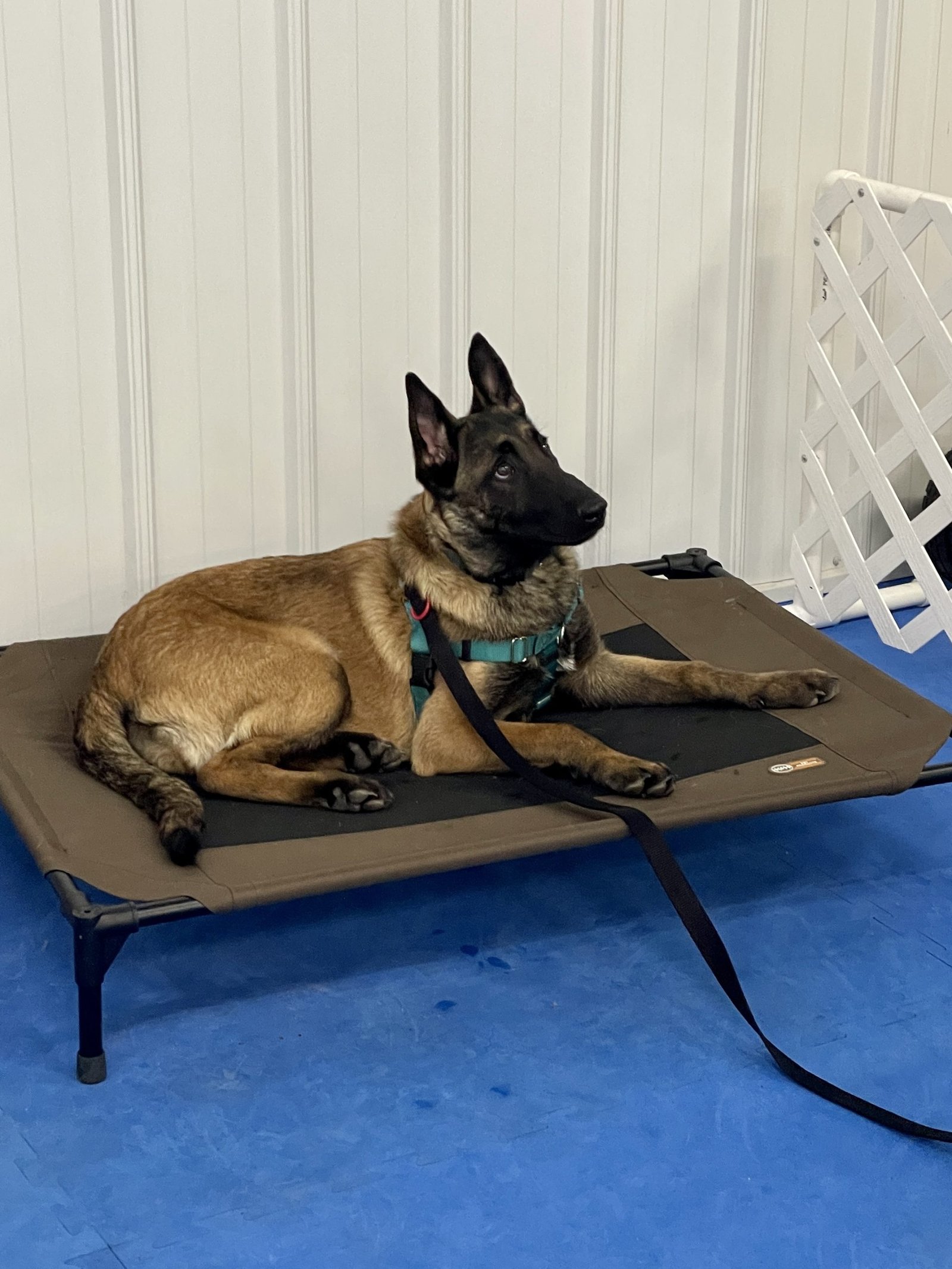
Why Teaching a Puppy to Settle on a Mat Matters
Teaching a puppy to settle on a mat gives them something most puppies desperately need: a clear job. Instead of constantly scanning the environment, seeking stimulation, or finding creative ways to get into trouble, your puppy learns that the mat is their designated spot for relaxing. This behavior becomes one of the most practical skills you can teach because it transfers directly to real life. A puppy who understands mat work can join you at outdoor patios, training classes, family gatherings, and vet waiting rooms and stay genuinely calm rather than just physically restrained. The mat becomes a visual cue that tells your puppy, “This is where you rest,” and over time, that association becomes automatic.
Start Teaching a Puppy to Settle on a Mat by Making It a Happy Place
Before you teach anything, your puppy needs to feel good about the mat itself. Lay it down in a low-distraction area and let your puppy investigate at their own pace. You don’t need to point at it, lure them onto it, or do anything at all. Just wait. The moment your puppy looks at the mat, steps toward it, sniffs it, or puts even one paw on it, mark that choice with a calm “yes” or a click and reward it. You’re not yet teaching a behavior here. You’re building an emotional association. The mat needs to predict good things before your puppy can learn to choose it reliably. If your puppy is hesitant, toss a few treats near the mat and let them eat at whatever distance feels comfortable. Let them set the pace.
Reward Calm Choices — Don’t Lure
One of the most common mistakes in mat training is using a lure to get the puppy onto the mat and into a down. Luring can work in the short term, but it often creates a dog who is following the food rather than understanding the concept. Instead, wait for your puppy to offer behaviors on their own. If they walk toward the mat, reward it. If they step onto the mat, reward it. If they sit or lie down on the mat, reward it. When you deliver the treat, place it slowly and calmly between your puppy’s paws rather than bringing it up near their face, which would prompt them to stand. The way you deliver reinforcement matters as much as the reinforcement itself. Calm delivery teaches calm behavior. A puppy who is getting rapid-fire treats or hearing excited praise is not a puppy learning to settle.
Teaching a Puppy to Settle on a Mat Means Building Duration Slowly
Once your puppy starts choosing to lie down on the mat, shift your focus from position to duration. You want a puppy who stays on the mat and relaxes, not one who is doing a quick down and popping right back up. Start by rewarding every few seconds while your puppy stays in place. Then gradually stretch the gaps between rewards.
The goal is to reward the puppy for staying, not just for the moment they arrived. If your puppy gets up before you’ve released them, that’s information. It means you’ve moved too fast or waited too long between rewards. Simply pause, let them wander a bit, and wait for them to return to the mat. Don’t correct, redirect, or repeat a cue. Just wait. The puppy returning on their own is worth marking and rewarding because it shows they’re beginning to understand that the mat is where the good stuff happens.
Build a Training Loop That Leads Back to the Mat
Once your puppy has some duration on the mat, you can start deliberately building in releases and returns. Toss a treat off the mat to release your puppy, let them eat it, and then stand still and wait. Don’t call them back. Don’t point at the mat. Just wait. When your puppy chooses to return to the mat and settles, mark and reward generously. Repeat this loop several times. What you’re building is a puppy who views the mat as a place worth returning to, not just a place they were put. That distinction matters a great deal for long-term reliability. A puppy who chooses the mat because it has been consistently rewarding will hold that behavior under pressure in ways that a puppy who was simply placed there will not.
Add a Cue Only When the Puppy Understands the Behavior
Many people add a verbal cue too early, before the puppy has any real understanding of the behavior. If you say “mat” while your puppy is still figuring out what the mat is about, the word becomes meaningless. Wait until your puppy is reliably moving toward the mat, settling, and staying without much prompting. Once you see that pattern three or four times in a row, you can start pairing the cue. As your puppy moves toward the mat with intention, say your cue word once, calmly. Over many repetitions, the puppy begins to associate that word with the whole sequence of finding the mat, lying down, and staying put. Keep the cue consistent. Pick one word and stick to it, and make sure everyone in the household uses the same one.
Teaching a Puppy to Settle on a Mat in New Environments
This is where many puppies struggle, and it’s not their fault. A skill learned in your living room is a skill learned in your living room. It doesn’t automatically transfer to a busy coffee shop or a training facility waiting area. You have to take the mat training on the road in small, manageable steps. Start by practicing in a second room in your house. Then try the front porch. Then a quiet parking lot. Then a mildly busy environment with people walking at a distance.
At each new location, drop your expectations back and make it easy. Higher distractions mean shorter durations and more frequent rewards. If your puppy is struggling, you haven’t failed. You’ve just found the edge of their current skill level, which is exactly the information you need to know where to work next. Calmness in new environments is a learned skill, not a personality trait, and skills build gradually.
Use the Mat for Everyday Life
Once your puppy understands mat work, it becomes one of the most versatile tools in your training toolkit. Dinner time? Mat. Guests at the door? Mat. Sitting at a training seminar? Mat. Waiting at the vet? Mat. The mat provides your puppy with a clear answer to the question they’re always asking: “What should I be doing right now?” Instead of guessing, wandering, or escalating, they have a specific place to go and a specific expectation to meet. This reduces frustration for both of you and builds real impulse control in a way that is positive and confidence-building rather than suppressive. A puppy who knows where to go and what to do there is a puppy who is much easier to live with.
Teaching a puppy to settle on a mat takes patience, consistency, and a willingness to work in small steps. But the payoff is significant. Over time, the mat becomes a portable relaxation zone your puppy genuinely values, and that’s something you can take anywhere.
