

STORY AT-A-GLANCE
- Artichokes are plants known for their edible flower buds. Research shows that they’re rich in bioactive compounds that may support pet health, such as quercetin and caffeic acid
- Another notable nutrient found in artichoke is inulin, which is a prebiotic dietary fiber that may support gut microbiome
- Artichoke’s biological activities include “lipid-lowering, antioxidant, anti-inflammatory, hepatoprotective, cardioprotective, anticancer, antimicrobial, and anti-HIV activities”
- While artichokes are safe for your pet, they are difficult to feed raw, which maximizes nutrition. Avoid canned artichokes, unless they’re packed in water (most come in oil or are pickled with preservatives that may affect your pet’s health)
- You can use artichokes as a tasty treat, or add them as toppers to your pet’s nutritionally balanced, homemade meal
Editor’s Note: This article is a reprint. It was originally published May 23, 2024.
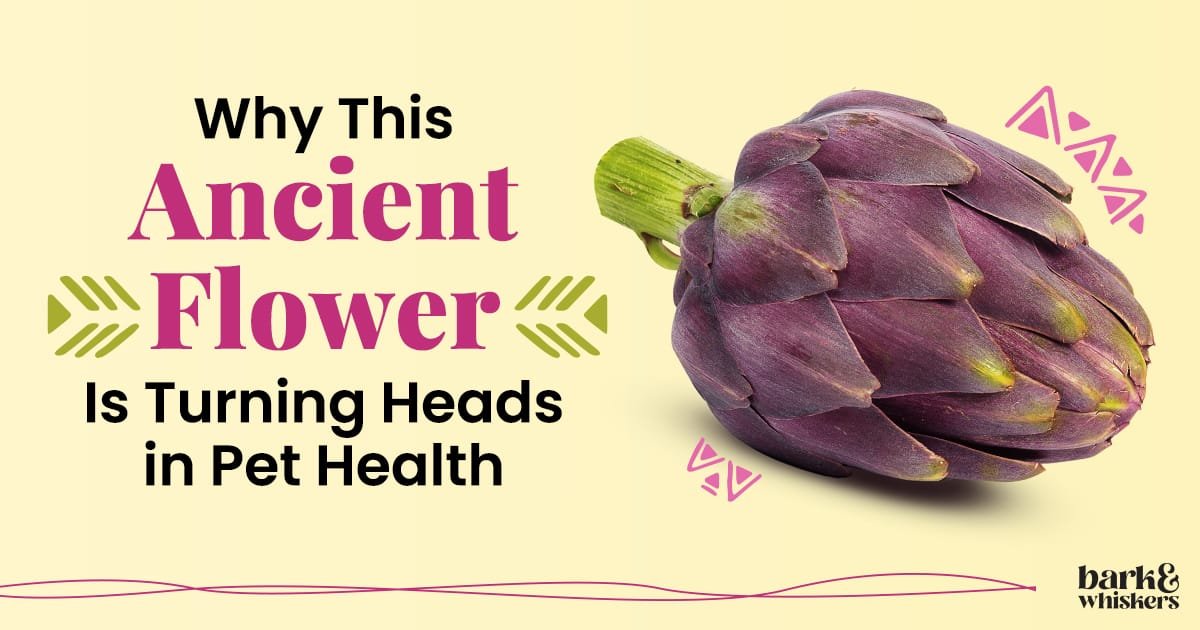
Artichoke (Cynara cardunculus) is a perennial known for its edible flower buds. According to The Spruce Eats,1 the most common variety consumed is the French artichoke, which you may have seen while you’re out buying groceries.
The outer petals of the bud have thorns on the tips, but thornless varieties are also available.2 The heart located at the base of the bud is also consumed, which happens to be the meatiest part. The only portion of the plant not eaten is the choke, which is the hairy center on top of the heart.3
If you’re in the mood to add more vegetables to your pet’s dietary arsenal, consider including artichokes in their meals.
Artichoke Trivia
Artichokes are one of the world’s oldest vegetables. According to Greek mythology, Zeus created the artichoke when he brought a woman named Cynara to Mount Olympus to turn her into a goddess. However, she escaped, angering Zeus, who, in a fury, transformed her into an artichoke.4
The Assorted Bioactive Compounds of Artichoke
Artichokes are a healthy food to share with pets. Research has shown this plant has an abundance of bioactive compounds. According to a 2023 study published in Food Technology & Biotechnology, the artichoke family contains phenolics, caffeic acid, ferulic acid, and cyanidin, as well as vitamins and minerals. Overall, artichoke’s biological activities include “lipid-lowering, antioxidant, anti-inflammatory, hepatoprotective, cardioprotective, anticancer, antimicrobial, and anti-HIV activities.”5
To elucidate the benefits of these compounds a little further, a 2015 study published in Behavioral and Brain Functions looked at the effects of caffeic acid. Researchers noted that this particular substance inhibits 5-LO (5-Lipoxygenase), an enzyme that metabolizes essential fatty acids into proinflammatory leukotrienes.6 Using a rat model, they noted that caffeic acid has a protective effect against ischemic stroke.7
Regarding the phenolics in artichoke, one notable example is quercetin.8 Quercetin is an antioxidant that not only benefits humans but animals, too. In a 2016 study published in Nutrients, researchers noted quercetin exhibited antiviral and anticancer activities in vitro and on animal models. The same study noted quercetin may also help inhibit autoimmune myocarditis by blocking anti-inflammatory signals.9,10
Other Nutritional Benefits of Artichoke
Another noteworthy aspect of artichoke is its potential to benefit digestive health. Research indicates that the plant has inulin, a prebiotic fiber that may nourish the good bacteria already living in your pet’s gut. In addition, prebiotics may protect overall gut health, as it may help lower the risk of enteric diseases.11
You’ll also find an assortment of vitamins in artichoke. It’s a good source of vitamin K,12 with a medium-sized flower (128 grams) containing 18.9 micrograms of this nutrient, which may help with proper blood clotting,13 and even support skeletal health by boosting bone reabsorption14 and maintaining density.15
The same serving of artichoke also contains 0.15 milligrams of vitamin C and 44 milligrams of choline.16 Vitamin C works as an antioxidant and free radical scavenger, which may help protect pets from inflammation and cancer.17,18,19 As for choline, it acts as a neurotransmitter that may help regulate heart rate and muscle contractions, as well as contributing to nerve health.20
The same serving size also contains calcium (56.3 milligrams), phosphorus (114 milligrams), and magnesium (76.8 milligrams),21 all of which support animal health in different ways.22
Did You Know?
The word “artichoke” was derived from the Spanish word “alcachofa,” which in turn was derived from the Italian word “articiocco.” The actual origin of these words, however, was “al-karsufa,” the Arabic name of this vegetable.23
How to Add Artichoke to Your Pet’s Diet
The most recognizable part of the artichoke plant you can eat (and offer to your pet) is the flower bud, right before it blooms. Artichoke buds and hearts can be served raw or lightly cooked, depending on your pet’s preference.24
The important thing to remember is that the bud should be pureed or finely chopped into bite-sized servings appropriate for your pet, as it can be a choking hazard when eaten whole.25 To make it easier on your part, you can pull the petals one by one, starting with the outermost petals. Then, when you get to the heart, remove the fuzzy layer of the heart, which is the actual “choke” that should be discarded. From there, you can use a spoon to remove the heart itself.26
You can use artichokes as a tasty treat, or add them as toppers to your pet’s nutritionally balanced, homemade meal. If used as treats, remember that they should only make up less than 10% of your pet’s daily caloric intake.
To protect your pet’s health further, offer them fresh artichokes only. While it may be tempting and convenient to buy bottled or canned artichokes from the store, the oil, seasonings, and other preservatives found in this product can harm their health.27
Top Producers of Artichokes Around the World
Italy is the world’s largest exporter of artichokes, with Egypt, Spain, and Peru coming in next. Artichoke production in the United States is generally limited to California because of its Mediterranean climate, but Washington and Oregon also produce this vegetable, albeit in smaller quantities.28
Is Artichoke a Sustainable Crop?
Artichoke is growing in popularity, which means that it will also garner a higher carbon footprint to help keep up with global demand. According to a 2023 study published in the Journal of Cleaner of Production, artichoke is “considered as a large greenhouse gases emitter, and its environmental sustainability, from agricultural production to industrial transformation, should be enhanced.”29 Factors contributing to this finding include the total amount of fertilizers used and diesel fuel for machinery.30
It is recommended to look for artichokes grown through sustainable agricultural practices, preferably from locally available sources, to help minimize emissions. The money you’ll save is a huge plus, too. If sustainably grown varieties are unavailable, feel free to go with conventionally grown varieties. Just make sure to wash them thoroughly before preparing and feeding them to your pet.
- 1,2 The Spruce Eats, December 19, 2022
- 3 NC State Extension, Cynara Cardunculus
- 4 Good & Fugly, December 19, 2021 (Archived)
- 5 Food Technol Biotechnol. 2023 Sep; 61(3): 312–327, Introduction
- 6 J Biomed Biotechnol. 2004 Jun 30; 2004(2): 99–105, Abstract
- 7 Behavioral and Brain Functions Volume 11, Article number: 18 (2015), Abstract
- 8 Food Technol Biotechnol. 2023 Sep; 61(3): 312–327
- 9 Nutrients. 2016 Mar; 8(3): 167, Abstract
- 10 Nutrients. 2016 Mar; 8(3): 167, Mechanism of Action in Animal
- 11 Open Vet J. 2019 Sep 1;9(3):253–258, Prebiotics and Probiotics
- 12 Nutrition and You, Artichoke (Globe or French) Nutrition facts
- 13 Wag! August 9, 2023
- 14 J Osteoporos. 2019 Dec 31;2019:2069176, Abstract
- 15 Nutrition. October 2001; Volume 17 (Issue 10): Pages 880-887
- 16,21 USDA, Artichokes, (globe or French), raw
- 17 Nutrients. 2017 Nov; 9(11): 1211, Abstract
- 18 Drug Des Devel Ther. 2015; 9: 3405–3412, Conclusion
- 19 Front Pharmacol. 2020; 11: 211, Abstract
- 20 Wag! September 15, 2023
- 22 Nutrients. 2021 Feb; 13(2): 509, Introduction
- 23 National Geographic, November 12, 2014
- 24,25,27 MasterClass, April 20, 2022
- 26 Ocean Mist Farms, How to Eat an Artichoke
- 28 Blue Book, Artichoke Market Summary
- 29 Journal of Cleaner Production Volume 391, 10 March 2023, 136240, Abstract
- 30 Agronomy 2022, 12(7), 1605, Discussion and Concluding Remarks
In this free guide, you’ll discover:
-
How your pet’s biology influences their nutritional needs -
Why conventional feeding advice often falls short -
Practical ways to choose better food for your dog or cat
View our Privacy Policy and Terms of Service.
