

STORY AT-A-GLANCE
- Yellow or greenish vomit in dogs is almost always bile, a digestive fluid made in the liver that is meant to break down fats in the small intestine — when it backs up into an empty stomach, it irritates the lining and comes back up as vomit
- One common and usually mild cause is Bilious Vomiting Syndrome (BVS), which happens when dogs go too long without food; it can often be managed with a bedtime snack, an earlier breakfast, or smaller meals spread throughout the day
- Yellow vomit can also signal serious conditions, including pancreatitis, intestinal blockages, bloat (GDV), inflammatory bowel disease, Addison’s disease, food allergies, parasites, or toxin exposure — bloat is a life-threatening emergency
- Red flags that warrant an immediate vet visit include repeated vomiting within 24 hours, dry heaving, a swollen belly, pale or bluish gums, blood in vomitus or stool, extreme lethargy, refusal of food and water, or signs of abdominal pain
- For mild, one-time episodes, offer small sips of water, rest the stomach for 8 to 12 hours (not for puppies or seniors), then reintroduce bland food like boiled chicken and rice; avoid human medications like Pepto-Bismol, and prevent recurrence by feeding smaller frequent meals, transitioning foods slowly, and limiting fatty table scraps
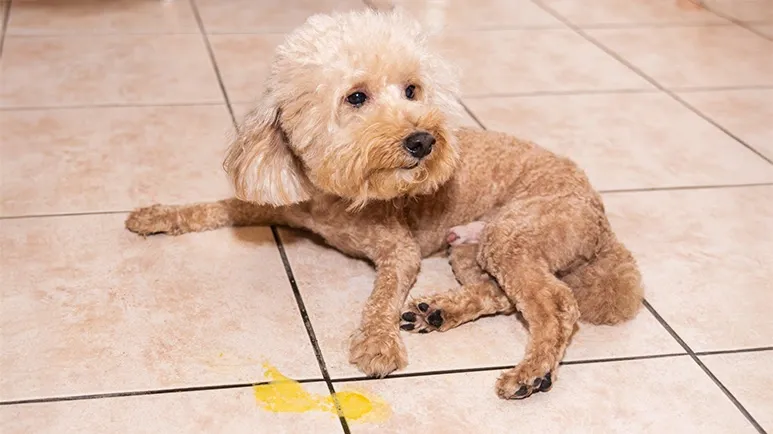
You come downstairs and there it is: a puddle of yellow, foamy liquid on the kitchen floor. Your dog is right next to it, looking a little sheepish but otherwise fine. Tail wagging. Ready for breakfast. You breathe out and think, “Oh well, empty stomach. No big deal.”
Sometimes that is true — but not always. Yellow vomit in dogs can be caused by varied factors, and some of them are serious enough to put everything else on hold and call the vet. Learning what that yellow puddle might be telling you can spare your dog a lot of pain — and spare you a lot of worry.
What Is That Yellow Stuff, Anyway?
The yellow (sometimes greenish) fluid your dog throws up is most commonly bile. Bile is a digestive fluid containing enzymes made in the liver and stored in the gallbladder. Its job is to break down fats and oils in the small intestine and help your dog’s body absorb nutrients. Bile is also alkaline, which helps neutralize stomach acids.1
However, bile is not supposed to be in the stomach. It belongs farther down the digestive tract, in the small intestine. When something pushes bile backward into the stomach, it mixes with the acids sitting there and irritates the lining. This can cause your dog to vomit a yellow or greenish fluid that is sometimes foamy or mixed with mucus, and often comes up in small amounts.2,3
One of the Most Common (and Usually Mild) Causes
If your dog mentions yellow vomit in the morning or late at night — and otherwise seems happy and healthy — there is a good chance they are dealing with something called Bilious Vomiting Syndrome (BVS). BVS happens when a dog goes too long without food. During a long overnight fast, bile flows backward into the empty stomach and irritates it.4
Dogs with BVS may show subtle signs of nausea first: lip-smacking, drooling, panting, restlessness, or a sudden lack of interest in food. The fix is usually simple — a small late-night snack or an extra early-morning meal keeps some food in the stomach, so bile has something to work on. For older dogs, smaller meals spread throughout the day can make a significant difference.5,6
If your dog throws up yellow once, perks up, eats their next meal normally and goes about their day, do not panic. Just watch them closely over the next 24 hours.
When Yellow Vomit Is a Warning Sign
Here is the part most people do not realize: Yellow vomit can also be a sign that something more serious is going on. Here are the big ones to know about:7,8,9
- Pancreatitis — This is the inflammation of the pancreas, often triggered by ingestion of high-fat foods. Symptoms usually show up three to five days later and include repeated episodes of yellow vomit, severe belly pain, diarrhea, and loss of appetite. Pancreatitis is serious and often needs hospital care, IV fluids, and pain medicine. About 90% of cases have no clear cause.
- Intestinal blockages — Dogs love to eat things they should not — socks, rope toys, even chicken bones. If one of these objects becomes lodged in the intestines, food cannot move through. Signs include repeated vomiting, severe abdominal pain, inability to keep water down, lethargy and collapse. Surgery is usually needed to remove the obstruction.
- Bloat — Also called gastric dilatation and volvulus (GDV), this is a true life-or-death situation. If your dog is repeatedly heaving up yellow or white foam with a tight or swollen belly, pale gums, panting heavily and is distressed, do not wait. The stomach fills with gas and twists, cutting itself off at both ends. It can kill a dog in hours. Go to the closest emergency vet immediately.10
- Chronic gastrointestinal diseases — Vomiting yellow once a week or every few days can contribute to inflammatory bowel disease, ulcers, infections, parasites like giardia, or even certain cancers. Bulldogs, Labrador Retrievers, Poodles, and toy breeds are especially prone to these issues.
- Addison’s disease — This is due to underactive adrenal glands that are not making enough of the stress hormones. Dogs with Addison’s may vomit bile, seem weak or dehydrated, and have electrolyte imbalances. Symptoms are so vague that vets call it “the great pretender.” Blood tests confirm it, and treatment means lifelong hormone replacement.
- Food allergies and dietary mishaps — Common triggers of food allergies include chicken, beef, dairy, wheat, egg, corn, lamb, soy, and fish. Allergies often develop between one and five years of age, and your vet may recommend a 12-week food trial to figure out the culprit; or even allergy testing. Toxin ingestion, motion sickness, and acid reflux can also cause yellow vomiting. If you suspect toxin ingestion, call your vet or a pet poison helpline right away as this can lead to profound consequences.
Puppies differ from adult dogs – if a young puppy is throwing up yellow liquid, do not assume it is just an empty stomach. A puppy vomiting bile can be a sign of parasites, blockages, pancreatitis, bacterial infections, or — more serious — viral infections such as parvovirus or distemper virus. Puppies can become seriously dehydrated very quickly, so if your puppy is sick and vomiting, call your vet’s office as soon as possible.11
Trust your gut. If something feels off, call your vet. If you notice any of the following, head to an emergency clinic:12,13,14
- Vomiting more than once in 24 hours
- Repeated unproductive heaving (dry heaves with nothing coming up)
- A tight or swollen belly
- Blood in the vomit or stool
- Pale, white, or bluish gums
- Extreme weakness, lethargy, or collapse
- Diarrhea along with vomiting
- Refusing food and water
- Signs of pain, like a hunched posture, whimpering, panting, or restlessness
- Known or suspected swallowing of a foreign object or toxin
What to Do at Home (When It’s Mild)
If your dog throws up once, it still has its usual pep, and has no other warning signs, here is how to help them recover. Start by offering water in small amounts — just a few sips at a time. Too much at once can trigger more vomiting. If the water stays down, gradually give more.15
Give the stomach a rest by withholding food for about 8 to 12 hours. Do not fast puppies, seniors, or dogs with other health problems without talking to your vet first. When it is time to eat again, start with something bland. Boiled, skinless chicken with plain white rice is a classic choice. Other bland options include lean ground beef or turkey with potato, sweet potato, or pumpkin. Serve small portions spread out across the day. Probiotics can also support recovery.16
Skip the human medicine. Pepto-Bismol, antacids, and other over-the-counter stomach remedies can be unsafe for dogs. And track what you are seeing — note the time, what vomit looked like, how many times it happened, and any other symptoms. If you end up at the vet, those details help them find the cause faster.17
Simple Steps to Prevent Yellow Vomit
For dogs with occasional bile vomiting, a few slight changes can make a significant difference. Feed smaller, more frequent meals — three or four small meals instead of one or two large meals. A bedtime snack keeps the stomach from going empty overnight. Avoid sudden food changes: when switching foods, mix the new food with the old for at least a week. Keep fatty foods to a minimum — fatty items like fat from steak or ribs, chicken or turkey skin, bacon grease, ice cream, and butter are all top triggers for pancreatitis.
Watch what your dog picks up on walks, too. Trash, food wrappers, and mystery scraps can cause serious stomach to upset. Pet probiotics, a balanced gut, and a clean diet help keep your dog’s digestive system strong. If your dog has a sensitive stomach or digestive issues collaborate with your holistic vet to find the right probiotics or to do microbiome testing to find and correct any gut imbalances. There are also several herbal formulas that are helpful for gut sensitivities depending on the underlying pattern that your pet has.
The Bottom Line
Yellow vomit is one of those concerns where the story you tell yourself matters. Sometimes it really is just an empty stomach, and a small bedtime snack solves it. Other times, it is your dog’s body waving a flag that something is wrong. Telling the difference means paying attention to the whole picture — how often it is happening, what else you are seeing, and how your dog is acting overall.
If your dog vomited yellow once, bounces back, and seems fine, you can relax. If it happens again within a day, it keeps coming back week after week, or comes with any of the red flags above, do not wait. Call the vet. A quick check up is always safer and less stressful than an emergency run — and your dog will thank you for paying attention.
- 1,5,7,11,12,16 PetMD, June 25, 2024
- 3,6,9,10,14 Dogs Naturally Magazine, December 6, 2024
- 4,8,13,15,17 Urgent Vet, November 17, 2025
In this free guide, you’ll discover:
-
How your pet’s biology influences their nutritional needs -
Why conventional feeding advice often falls short -
Practical ways to choose better food for your dog or cat
View our Privacy Policy and Terms of Service.
