

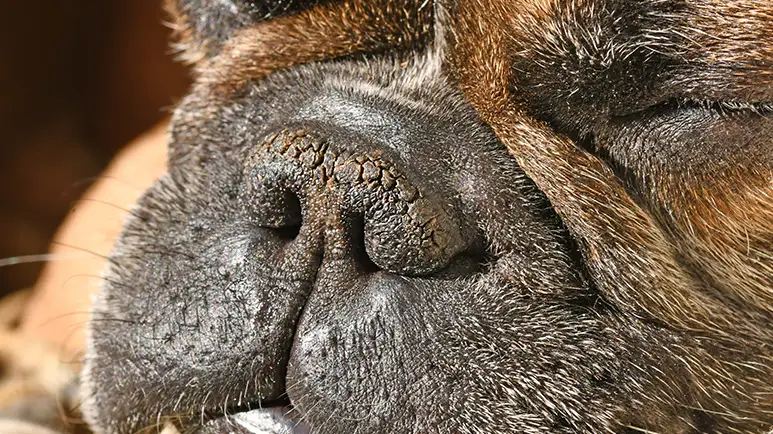
Do not panic when you suddenly notice that your dog has tough patches of skin on their elbows or nose. There are ways to manage it easily. Here are a few strategies you can try.
Advertisement
Join the Bark & Whiskers™ Family
Sign up today for our FREE newsletter, packed with expert advice and insider tips to keep your beloved pet in tip-top shape.
View our Privacy Policy and Terms of Service.
STORY AT-A-GLANCE
- Hyperkeratosis is a condition where dogs overproduce keratin, causing thick, dry, hardened skin on the nose, paw pads, and elbows
- Common causes include aging, breed genetics, nutritional deficiencies, infections, autoimmune disorders, and repeated pressure on specific body areas
- Additional signs of hyperkeratosis include hair-like growths on paw pads and loss of the nose’s normal cobblestone texture
- There is no permanent cure, but treatments like moisturizing balms, medicated creams, paw soaks, and nutritional supplements can help manage symptoms
- Most dogs with hyperkeratosis live normal, comfortable lives with the help of regular veterinary checkups and attentive care
The joy of holding your dog’s paws or giving their nose a gentle boop is second to none. These small moments deepen your bond with your pet, but they also happen to be the perfect opportunity to monitor any physical changes.
Maybe your dog’s nose feels unusually rough, or their paw pads seem thick and dry, almost like hard calluses. You might even notice strange, hair-like growths on the edges of the pads. These changes may be caused by a condition called hyperkeratosis.
What Is Hyperkeratosis?
To understand hyperkeratosis,1,2,3 it is important to know how skin normally functions. Essentially, skin cells are constantly growing and moving toward the surface and once they reach the topmost layer, they die and naturally shed away. This process keeps the system healthy and balanced.
But with hyperkeratosis, the cycle is disrupted.4 This condition occurs when keratin, the structural protein that hardens skin, hair, and nails, is produced faster than it can naturally shed away, causing it to accumulate into thick, rough layers. In dogs, this usually affects areas with little or no hair, such as the nose, elbows, and paw pads.5
Over time, the skin in the affected areas may develop a rough, crusty texture or grow outward in small projections that look like feather-like strands.6 Most dogs with hyperkeratosis are otherwise healthy. But in some cases, the condition can become uncomfortable or may signal an underlying health issue.
Hyperkeratosis is usually not an emergency. It would be wise, though, to schedule a veterinary visit if you notice worsening symptoms. If your dog has cracked or bleeding paw pads, signs of infection, pain when walking, or unusual fatigue, it is time to see your veterinarian.7,8
6 Common Causes of Hyperkeratosis in Dogs
Hyperkeratosis does not always have a single cause. In many cases, it develops from a combination of factors. Below are the most common examples:9,10,11
- Aging — As your dog grows older, their skin does not renew itself as efficiently as it did when they were young. They may also move less, which means their paws and noses experience less natural wear.
- Breed genetics — Some dogs are more likely to develop hyperkeratosis because of genetics. Breeds commonly affected include Bulldogs, Boxers, Boston Terriers, Pugs, Cocker Spaniels, Basset Hounds, Beagles, and Irish Terriers.
Some breeds inherit specific forms of hyperkeratosis. For example, Labrador Retrievers may develop nasal parakeratosis, which causes the nose to become dry and crusty early in life. Another breed is the Dogue de Bordeaux, which can develop familial footpad hyperkeratosis as early as 6 months of age.
- Nutritional problems — Low levels of certain nutrients can affect skin health. One example is zinc deficiency, which may inhibit the regulation of keratinocytes, resulting in hyperkeratosis.12
- Infections — One example is canine distemper virus, sometimes called “hard pad disease.” It can trigger abnormal keratin production as the immune system responds to infection.
- Autoimmune disorders — Sometimes your dog’s immune system mistakenly attacks healthy skin cells. When this happens, the body may respond by producing excess keratin.
- Repeated pressure or trauma — Hyperkeratosis can develop where your dog’s body experiences constant pressure. For instance, dogs that frequently lie on hard floors may develop thickened skin on their elbows or joints. Here, the body produces extra keratin to protect those areas.
How to Manage Hyperkeratosis
The first step to controlling hyperkeratosis is a physical exam. Your veterinarian will examine your dog’s nose, paws, and skin. They will also ask you about your dog’s current diet, lifestyle, and medical history to rule out possibilities of other underlying diseases. In some cases, additional tests may be recommended, such as blood tests and skin biopsies.13,14
Note that there is no permanent cure for hyperkeratosis. However, treatment can help keep your dog comfortable and prevent complications. Common strategies include moisturizing balms or ointments, medicated shampoos or creams, and removing excess keratin when necessary.15,16,17
If your dog has mild hyperkeratosis, your veterinarian may recommend simple home remedies, such as:18
- Paw soaks — Soaking your dog’s paws in warm water with Epsom salts may help soften the skin and reduce irritation.
- Warm compresses — Holding a warm, damp cloth on your dog’s nose can hydrate and soften dry tissue.
- Moisturizing balms — Natural, dog-safe paw or nose balms help keep skin flexible and prevent cracking. Coconut oil can also be used in this situation.19
- Nutritional support — Food containing omega-3 fatty acids may support skin health and reduce inflammation. For more information on this topic, read “Could This Overlooked Fat Boost Your Pet’s Immunity and Health?”
While genetically driven or age-related hyperkeratosis may be inevitable, you can still reduce your dog’s risk of complications — and slow down progression — with some more healthy lifestyle changes aside from the ones mentioned above. These include feeding a balanced, species-appropriate diet, keeping paw pads moisturized, and providing soft bedding.20,21
Do Not Panic at the First Sign of Hyperkeratosis
The good news is that most dogs with hyperkeratosis live normal, happy lives. Mild cases often cause little or no discomfort. With proper care, even more severe cases can be managed successfully.22
By learning the signs and working with your veterinarian, you can help keep your dog comfortable and active. Remember, one of the easiest ways to spot health issues early is simply paying attention to your dog’s paws and nose.
- 1 Vet Rec Open. 2021 May 5;8(1):e10
- 2 Jpn J Vet Dermatol 2012, 18(3): 169-170 (Archived)
- 3,19 Vet Dermatol 2015; 26: 303
- 4,7,9,15,18 Toe Grips, February 24, 2026
- 5,8,10,13,16,20,22 PetMD, September 22, 2023
- 6,11,14,17,21 The Spruce Pets, Understanding Hyperkeratosis in Dogs: Symptoms, Causes, and Remedies
- 12 Animals (Basel). 2021 Apr 1;11(4):978
In this free guide, you’ll discover:
-
How your pet’s biology influences their nutritional needs -
Why conventional feeding advice often falls short -
Practical ways to choose better food for your dog or cat
View our Privacy Policy and Terms of Service.
