

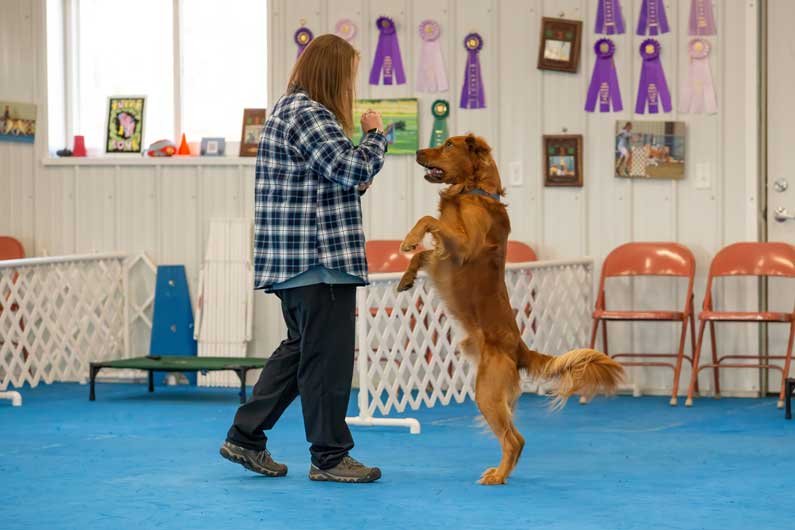
Impulse control training for dogs plays a major role in how dogs behave in everyday life. Many dogs know cues but struggle to pause long enough to respond. Excitement often takes over before thinking happens. This is where impulse control training makes the biggest difference.
Impulse control is not about suppressing behavior. It teaches dogs how to slow down and make better choices.
What Impulse Control Training for Dogs Really Means
Impulse control training for dogs teaches the ability to stop, think, and choose a behavior. This skill shows up at doorways, during greetings, and around food. It also appears on walks and in busy environments.
Dogs with impulse control can feel excited without losing control of their bodies. They may still feel big emotions, but they can pause before reacting. This skill is learned through practice.
Impulse control is different from obedience. Obedience is responding to a cue. Impulse control is choosing behavior before a cue happens.
Why Impulse Control Training for Dogs Matters More Than Obedience
Many owners rely on cues like sit to manage challenging behavior. Sit can help, but it does not teach regulation. A dog can sit while feeling completely over-aroused.
Impulse control training for dogs changes what happens before the behavior. Dogs learn how to manage excitement instead of exploding through it. This makes manners more reliable and easier to maintain.
Without impulse control, behavior often falls apart when cues end. With impulse control, dogs make better choices on their own.
Why Dogs Struggle Without Impulse Control Training for Dogs
Many problem behaviors work well for dogs. Pulling moves them forward. Jumping earns attention. Barking can change the environment. Dogs repeat behaviors that produce results.
Excitement also narrows attention. Dogs may hear you but struggle to respond. Their body reacts faster than their brain.
This is not stubbornness. It reflects a missing skill.
Offered Calmness: The Foundation of Impulse Control
Offered calmness happens when a dog chooses a calmer behavior without being asked. A dog may pause at the door. A dog may keep four paws on the floor. A dog may glance at their handler instead of lunging.
These moments are easy to miss. Many owners focus on mistakes instead. Offered calmness often goes unnoticed.
Offered calmness matters because it shows choice. Dogs are not responding to cues. They are regulating themselves.
How to Reward Offered Calmness Effectively
Impulse control training for dogs improves quickly when offered calmness gets rewarded. Timing matters. Rewards should happen the moment calm behavior appears.
Rewards do not need to be dramatic. Small, consistent reinforcement works best. Food, praise, or access to something valuable can all reinforce calm choices.
Position matters too. Rewarding close to the handler encourages dogs to stay grounded. This builds calm behavior without constant cues.
How Basic Manners Training Supports Impulse Control Training for Dogs
Basic Manners training provides structure for impulse control development. Exercises are introduced in clear, manageable steps. Dogs practice skills before distractions increase.
Skills like polite greetings, loose-leash walking, stays, and waiting rely on impulse control. Without regulation, these behaviors become fragile.
Basic Manners training also helps owners recognize early signs of arousal. This awareness improves reinforcement timing and training success.
The Role of Impulse Control in Emotional Regulation
Impulse control training for dogs supports emotional regulation. Dogs learn how to recover faster from excitement or frustration. They settle more easily instead of escalating.
Offered calmness often appears when dogs feel safe and confident. Reinforcing these moments strengthens that emotional state.
Over time, dogs develop better coping skills. Stress decreases across many situations.
Why Impulse Control Training for Dogs Improves Everyday Life
Dogs with impulse control are easier to live with. Greetings feel calmer. Walks feel smoother. Daily routines feel more predictable.
Owners feel less frustrated. Communication improves. Training feels clearer and more productive.
Why Impulse Control Training for Dogs Is a Long-Term Investment
Impulse control training for dogs builds skills that last a lifetime. Dogs who pause and choose behavior adapt better to new environments.
This foundation supports advanced training, dog sports, and real-world reliability. It also strengthens trust between dogs and their people.
When dogs learn that calm choices lead to good outcomes, manners become easier to maintain and more enjoyable.
