

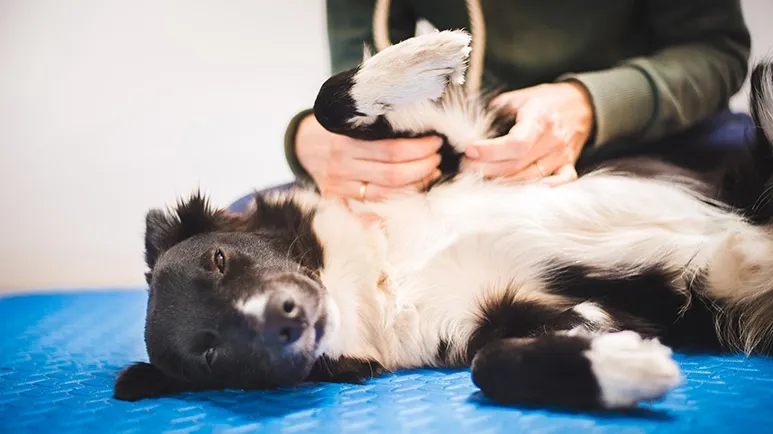
When you notice your canine bestie having a harder time jumping on the couch or seeming less active, it’s easy to chalk it up to age, but some pet parents are starting to wonder if there’s more to it.
Advertisement
Join the Bark & Whiskers™ Family
Sign up today for our FREE newsletter, packed with expert advice and insider tips to keep your beloved pet in tip-top shape.
View our Privacy Policy and Terms of Service.
STORY AT-A-GLANCE
- Chiropractic care for dogs focuses on the spine and joints, helping restore normal movement and ease pain without drugs or invasive procedures
- Conditions like hip dysplasia, arthritis, disc disease, and chronic back pain may all respond well to adjustments when combined with your dog’s regular veterinary care
- Only trained, certified animal chiropractors should perform adjustments on your dog, as improper technique or too much force can cause serious or irreversible injury to your pet
- Puppies are not good candidates for chiropractic care because their musculoskeletal systems are still forming, making manipulation risky at this early life stage
- Always consult your vet before booking a chiropractic visit. It works best as one part of a complete, personalized care plan tailored to your dog
You notice your dog takes a little longer to stand up in the morning, flinch when you go to pick them up, or they’ve stopped jumping onto the couch like they used to. These small changes can be easy to brush off, but they often signal that something is off, especially in the spine or joints.
More and more pet owners are turning to canine chiropractic care to help their dogs feel better and move more freely. If you’ve never heard of it or you’re wondering whether it could help your furry companion — here’s what you need to know.1
What Exactly Is Canine Chiropractic Care?
In an article from the American Kennel Club, the American Veterinary Chiropractic Association (AVCA) describes chiropractic care as a hands-on approach that involves gently adjusting the spine, limbs, or skull to help restore proper function and support overall health. When these restrictions are released, your dog’s nervous system can work more efficiently, and in some cases, the relief can be noticeable right away.2
Dr. Jessica Paige, a certified animal chiropractor and member of the International Veterinary Chiropractic Association (IVCA), points out that most joint movement restrictions are “subclinical,” meaning they don’t show up on routine tests like X-rays. Because of this, underlying issues can quietly build over time until they become more obvious problems, which is why regular chiropractic care can help catch concerns early.
What Conditions Can It Help With?
Chiropractic care is not a cure-all, but it can be a meaningful part of your dog’s health routine, especially for these common conditions:3,4
- Back and neck pain — If your dog has spinal disc issues or chronic stiffness, chiropractic adjustments may help ease their discomfort and restore range of motion.
- Hip dysplasia and joint disease — Many dogs develop hip problems as they get older or from conditions they were born with. Adjustments can improve joint movement and may reduce pain, especially when combined with weight management and appropriate activity.
- Arthritis and mobility issues — If your dog seems stiff getting up in the morning, struggles on stairs, or walks with a limp, chiropractic care may help reduce joint inflammation and improve their overall comfort.
- Recovery from injury or surgery — Dogs healing from trauma or an operation may benefit from chiropractic as part of a broader rehabilitation plan. Improved circulation helps healing nutrients reach the areas that need them most, speeding recovery.
Chiropractic care may also support dogs dealing with more specific concerns, including injuries from dog sports and challenges with everyday activities, like getting in and out of the car. Additional areas of support include jaw problems or difficulty chewing, bowel or bladder issues, and behavioral changes that may be tied to underlying discomfort. Veterinarians also use it in some cases to help pregnant dogs through the birthing process.5
What Are the Benefits?
According to Bergen County Veterinary Center, chiropractic care offers several benefits, including drug-free pain relief for pets experiencing discomfort. For pet parents who are cautious about long-term medication use, this can be an appealing option, as gentle adjustments may help support the body’s natural pain-relief responses.6
It’s also a noninvasive approach that doesn’t require surgery, anesthesia, or downtime. A trained animal chiropractor tailors care to your dog’s needs. They adjust treatments over time based on how your dog moves and responds, which helps support comfort and mobility in a more personalized way.
Make Sure to Consult a Professional
When performed by a trained professional, chiropractic care can be a safe and supportive addition to your dog’s wellness routine. Dr. Amy Attas, VMD, of City Pets in New York, stresses the importance of choosing a provider who has proper training and certification. Gentle, well-executed adjustments are designed to support the musculoskeletal system, helping your dog move more comfortably and maintain better overall function.7
It’s worth noting that puppies are still growing, so chiropractic care is generally not recommended during this stage. Instead, younger dogs benefit most from the basics, like regular exercise, balanced nutrition, and maintaining a healthy weight while their bodies develop.
For adult dogs, chiropractic care is typically safe when provided by a qualified practitioner. It works best as part of a well-rounded approach to health, complementing routine veterinary care rather than replacing it. Keeping your veterinarian involved ensures your dog gets the most appropriate and well-coordinated support.
Finding a Qualified Animal Chiropractor
When it comes to your dog’s care, Whole Dog Journal emphasized that choosing the right practitioner makes all the difference. Proper training, certification, and coordination with your veterinarian help ensure your dog gets safe and effective treatment.8
- Look for the right certification — Choose a chiropractor certified by the AVCA or IVCA. These credentials mean the practitioner has completed specialized training in animal anatomy and spinal and joint manipulation and has passed both written and hands-on exams.
- Choose someone trained in animal care — Both licensed veterinarians and human chiropractors (DCs) can become certified in animal chiropractic, but human chiropractors should complete additional training focused specifically on animals. Because a dog’s joints and structure differ from a human’s, proper technique is essential for safe, comfortable care.
- Keep your veterinarian involved — Rules vary by state, and some areas require veterinary involvement or supervision. Even when it’s not required, it’s a good idea to loop in your vet so everyone is aligned on your dog’s care plan and any other treatments they’re receiving.
Taking a ‘Crack’ at Chiropractic Care
Chiropractic care isn’t about replacing your dog’s regular vet visits; it’s simply another way to support their comfort and keep them feeling their best. When it’s done by a trained professional and guided by your veterinarian, it can be a gentle, low-stress option that helps your dog stay active and enjoy everyday life a little more. If you’re looking for ways to ease your dog’s discomfort without relying only on medication, this could be worth exploring.
- 1 Groton Ledyard Veterinary Hospital, Why More Pet Owners Are Turning to Chiropractic Care
- 2,3 Animal Wellness Magazine, May 8, 2026
- 4,6 Bergen County Veterinary Center, What Are the Benefits of Canine Chiropractic Care
- 5,7 American Kennel Club, May 27, 2025
- 8 Whole Dog Journal, May 2, 2024
In this free guide, you’ll discover:
-
How your pet’s biology influences their nutritional needs -
Why conventional feeding advice often falls short -
Practical ways to choose better food for your dog or cat
View our Privacy Policy and Terms of Service.
