

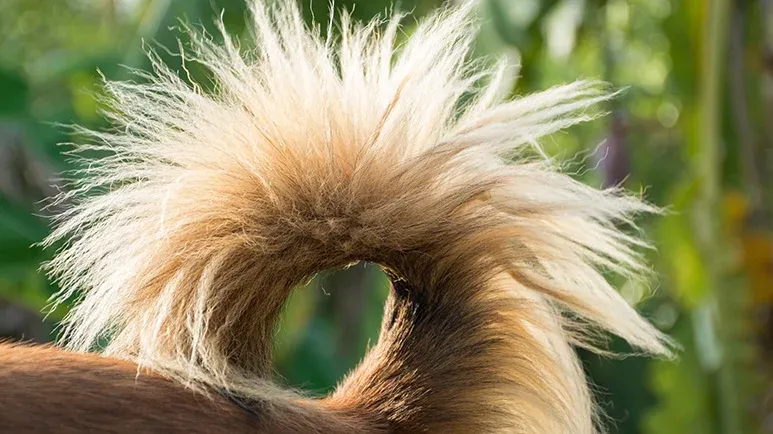
Floppy ears, cute white patches, curly tails, shorter muzzles, and gentle behavior — you almost never see these traits in the wild. Why are domesticated animals different? Does that mean our pets have smaller brains, too?
STORY AT-A-GLANCE
- Domestication syndrome describes a group of distinctive genetic traits seen in domesticated animals, but not in their wild counterparts
- Scientists have long wondered why domesticated animals have similar features and behaviors. A team of researchers discovered that the process of domestication seems to lead to genetic changes that affect a group of embryonic stem cells called the neural crest
- Neural crest cells create a variety of tissue types, including pigment cells, parts of the head, and the adrenal glands. They are also indirectly involved in brain development
- Neural crest cells are also indirectly involved in in brain development, which may help explain why house pets have smaller brains than their wild counterparts
- The researchers believe that when certain species were bred by humans for tameness, individuals with mild neural crest deficits were selected, resulting in smaller or slow-maturing adrenal glands, as well as certain physical abnormalities
Editor’s Note: This article is a reprint. It was originally published January 29, 2015.
If the term “domestication syndrome” is unfamiliar, picture a wolf, and then picture a dog with floppy ears, a sweet little patch of white fur, and a baby (puppy) face.
According to a study published last year in the journal Genetics, domestication syndrome is a term Charles Darwin coined to describe his discovery that “domesticated mammals possess a distinctive and unusual suite of heritable traits not seen in their wild progenitors.”1
And domestication syndrome isn’t seen exclusively in mammals like dogs, rabbits, foxes, pigs, horses, or sheep. It has also been observed in domesticated birds and even fish.
Domestication Leads to Genetic Changes
Scientists, including Darwin, have long been puzzled by why domesticated animals have many similar features and behaviors. These include:
- Depigmentation (white patches, brown regions)
- Floppy ears
- Smaller ears
- Shorter muzzles
- Smaller teeth
- Docile behavior
- Smaller brain or cranial capacity
- More frequent estrous cycles
- Juvenile behavior
- Curly tails
According to the authors of the Genetics study, when certain species are domesticated with the goal of taming them, it leads to genetic changes that affect a group of embryonic stem cells called the neural crest.
Neural crest cells form near the spinal cord of early vertebrate embryos. As the embryo develops, the cells travel to other locations in the body and create different tissue types, including pigment cells, parts of the head (skull, jaws, teeth, ears), and the adrenal glands, which are responsible for the fight-or-flight response. Neural crest cells are also indirectly involved in brain development.
Lack of Fear of Humans Had Its Start as a Cell Abnormality
According to co-author Adam Wilkins of Berlin’s Humboldt University:
“When humans bred these animals for tameness, they may have inadvertently selected those with mild neural crest deficits, resulting in smaller or slow-maturing adrenal glands. So, these animals were less fearful.”
The neural crest abnormalities Wilkins speaks of could also lead to physical signs of tameness — and not all of them good. For example, floppy ears are an appealing feature on dogs and rabbits, but unfortunately, they’re the result of deformed ear cartilage. Animals with ears flopped over and hanging alongside their faces presumably don’t hear as well as those with erect ears.
Domesticated animals also appear to have smaller brains than their counterparts in the wild. The reduced size of the forebrain observed in most domestic animals could be indirectly related to neural crest changes.
According to Wilkins, “Animal domestication was a crucial step in the development of human civilizations. Without these animals, it’s hard to imagine that human societies would have thrived in the way they have.”
In this free guide, you’ll discover:
-
How your pet’s biology influences their nutritional needs -
Why conventional feeding advice often falls short -
Practical ways to choose better food for your dog or cat
View our Privacy Policy and Terms of Service.
