
STORY AT-A-GLANCE
- Venison contains more protein than any other type of red meat and has up to two times more amino acids than beef
- Venison is higher in healthy fatty acids, particularly omega-3 fats, than factory farmed beef
- Venison is a good source of B vitamins, which play a role in skin health, energy and carbohydrate metabolism, as well as enzyme function
- Venison is considered a novel protein source, making it a potential protein source for pets with food allergies
- You can feed venison to your pet raw, freeze-dried, dehydrated or cooked. When fed as treats, keep in mind that it should constitute less than 10% of your pet’s daily caloric intake
Editor’s Note: This article is a reprint. It was originally published November 1, 2022.
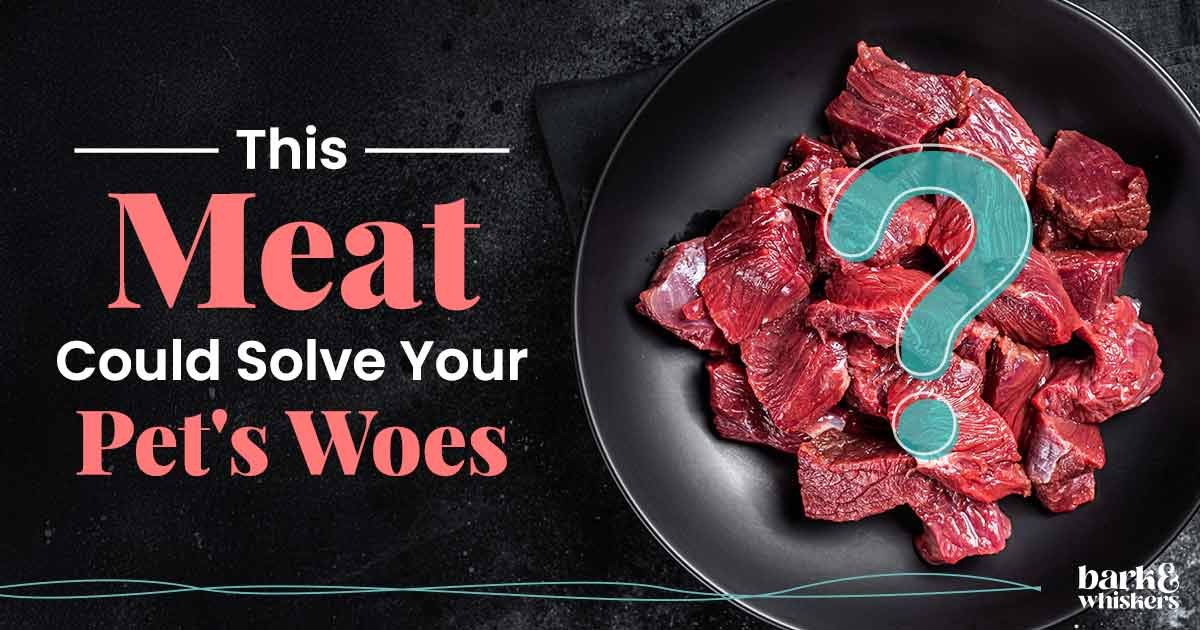
Venison, or deer meat, has gained popularity as a leaner, healthier red meat because it contains less fat, cholesterol and calories than beef.1 It’s also far more sustainable than meat from concentrated animal feeding operations (CAFOs), since deer are raised on pasture. In fact, venison has been dubbed one of the most eco-friendly foods on the planet.2 And the good news is you can share this novel protein with your pet!
Venison Fun Fact
The term “venison” comes from the Latin word “venari,” which means “to hunt.” Venison originally referred to meat from any large game animal, such as elk, buffalo, moose, caribou and even hare and wild boar. However, nowadays its usage has narrowed down almost exclusively to wild and farm-raised deer meat.3
Venison Is Richer in Protein and Amino Acids
According to The Guardian, venison contains more protein than any other type of red meat.4 A 100-gram serving of venison contains 21.8 grams of this macronutrient,5 whereas beef contains 19.4 grams for the same serving size.6 Like beef, it’s also considered a complete protein, as it contains all essential amino acids. But what gives venison an edge over beef is that it contains up to two times more amino acids.7
Just as amino acids are the building blocks of proteins, proteins are the building blocks of your pet’s organs and tissues, including their muscles, skin, hair, nails and bones. Proteins also play a role in hormone and enzyme production, cell signaling, energy production, oxygen and nutrient transport, and immune health.8
Consuming protein-rich foods like venison may also be beneficial against the growing problem of obesity in dogs and cats. A study published in the Journal of Animal Science found that increased protein intake “facilitates loss of body fat while minimizing loss of lean body mass” during weight loss, which in turn helps reduce your pet’s risk of obesity-related chronic diseases such as cardiovascular disease, diabetes and osteoarthritis.9
Venison Is Also an Excellent Source of Omega-3s and CLA
Another advantage venison has over CAFO beef is its higher content of healthy fatty acids, particularly omega-3 fats. A study published in the Journal of the Science of Food and Agriculture, which evaluated the composition of meat from red and fallow deer versus commercially raised Aberdeen Angus and Holstein cattle, found:10
“Deer species provided meat with higher polyunsaturated/saturated fatty acid ratio and lower atherogenic index. In addition, the venison of red deer contained five times as much n-3 [omega-3] polyunsaturated fatty acids as the beef.”
These healthy fatty acids help address chronic inflammation, which is the root cause of many health problems in animals, including allergies, arthritis, heart disease and diabetes, among others.11 Venison also contains conjugated linoleic acid (CLA), which may help reduce the risk of obesity12 and cancer.13
What Does Venison Taste Like?
Venison has an herbaceous, nutty flavor, influenced by deer’s diet of grasses, leaves, berries, fruits and acorns. It has a firm, smooth texture because of its short, thin muscle fibers, but since it’s leaner than beef, it also tends to be less juicy.14,15
B Vitamins Support Your Pet’s Body Functions
B vitamins are water-soluble compounds that play numerous roles in your pet’s body. Your pet cannot store them in their fat cells, so they need to consume foods rich in B vitamins like venison.16 A 100-gram serving of venison contains 0.29 milligrams (mg) of riboflavin, 5.7 mg of niacin, 0.69 mg of pantothenic acid (vitamin B5) and 0.46 mg of pyridoxine (vitamin B6),17 all of which are essential for skin health. According to Veterinary Practice:18
“Deficiencies can lead to dry flaky seborrhoea accompanied by alopecia, anorexia, weight loss and pruritus. As an example, a deficiency in riboflavin can lead to head and neck alopecia, especially in cats.”
In addition to skin health, these vitamins also play a role in energy and carbohydrate metabolism as well as enzyme function. Vitamin B6, in particular, is especially vital, as it’s responsible for your pet’s immune response, glucose generation, red blood cell formation, hormone regulation and gene activation.19
Venison Provides Your Pet with Iron, Zinc, and Selenium
In terms of mineral content, venison has slightly higher levels of iron at 2.92 mg per 100-gram serving,20 compared to beef with 1.99 mg.21 Iron is an “essential trace mineral for dogs, largely due to its role in biochemical activities,”22 which include enzymatic functions and red blood cell and hemoglobin formation, as well as oxygen transport within the circulatory system.23
Venison is also a particularly good source of zinc,24 which is necessary for healthy skin and fur, and proper immune and thyroid function.25 It also contains selenium, another important trace mineral for immune and thyroid health. Further, venison helps support your dog’s metabolism and joint health, and exerts antioxidant activities.26
Should You Be Worried About Chronic Wasting Disease?
One of the common concerns about consuming venison is that the deer meat may carry chronic wasting disease (CWD), a type of progressive, fatal prion disease that affects deer, elk and moose, usually targeting their brain and spinal cord. Fortunately, there are currently no reported cases of companion animals with CWD,27 and according to the U.S. Centers for Disease Control and Prevention (CDC), this disease “does not appear to naturally infect cattle or other domesticated animals.”28
To help ensure that your family, including your furry friends, is safe from this disease, make sure you buy venison from a reputable farmer who uses humane, sustainable farming practices and avoid feeding your pet the head, spine and spleen of deer or elk.29 Freezing wild game meat prior to feeding helps reduce any potential parasites.30 Feeding wild tripe (intestines) is not recommended.
Where Is Most Venison Produced Worldwide?
New Zealand is the world’s leading producer and exporter of venison, with around 1 million farmed deer. Spain is the second largest exporter, producing 11,259 tonnes of wild venison.31 In the U.S., over 60% of the deer farms are in Pennsylvania, Texas, Ohio, Michigan and Minnesota.32
How to Safely Feed Venison to Your Pet
“Since venison is not a common ingredient in pet foods, it’s considered a novel protein source, making it ideal for pets with food allergies. You can feed it to your pet raw, freeze-dried, dehydrated or cooked.”
If you can’t find venison at your local farmers market, try to look for reputable specialty butchers or search online, via suppliers of frozen meats for homemade pet food. Purchase pasture-raised venison from a trustworthy source that uses sustainable farming methods, making sure they strictly adhere to industry health and safety standards to guarantee that you’re getting a safe, high-quality product for your pet.
Venison can be a nutritious treat or a component of a homemade diet, in conjunction with other ingredients that comprise a nutritionally complete meal. When fed as treats, chop the meat into small, bite-sized pieces and keep in mind that all treats should constitute less than 10% of your pet’s daily caloric intake. If you’re planning to use venison as the basis for your pet’s homemade diet, do not guess at a recipe — make sure to follow a recipe that meets their minimum nutrient requirements.
- 1,4 The Guardian, September 28, 2013
- 2 The Washington Post, September 23, 2021
- 3,14 The Spruce Eats, September 14, 2022
- 5,17,20 FoodData Central, Game meat, deer, ground, raw
- 6,21 FoodData Central, Beef, grass-fed, ground, raw
- 7 57th International Congress of Meat Science and Technology, 7-12 August 2011, Comparison of Venison and Beef Chemical Composition
- 8 Today’s Veterinary Practice, October 16, 2015
- 9 Journal of Animal Science, Volume 90, Issue 5, May 2012, Pages 1653–1662
- 10 J Sci Food Agric. 2015 Aug 30;95(11):2299-306
- 11 Dogs Naturally Magazine, May 25, 2022
- 12 The Journal of Nutrition, Volume 136, Issue 7, July 1, 2006, Pages 1940S–1946S
- 13 Critical Reviews in Food Science and Nutrition, Volume 45, 2005 – Issue 2 Pages 135-144
- 15 Food Network, November 15, 2021
- 16,18 Veterinary Practice, August 1, 2024 (Archived)
- 19 American Kennel Club, February 23, 2026
- 22 Journal of Food Nutrition and Metabolism. August 2019 DOI: 10.31487/j.JFNM.2019.02.02
- 23 Wag Walking, April 18, 2023
- 24 Nutrition Advance, November 8, 2024
- 25 Animals (Basel). 2021 Apr 1;11(4):978
- 26 Asian Journal of Animal Sciences January 2011 5(1):64-70
- 27 Wag Walking, Can Dogs Get Chronic Wasting Disease?
- 28 CDC, January 21, 2026
- 29 Perfectly Rawsome, Wild Game
- 30 South Carolina Department of Natural Resources, October 22, 2018
- 31 Scientific Reports, Volume 10, Article number: 12157 (2020)
- 32 PennState Extension, October 26, 2015
In this free guide, you’ll discover:
-
How your pet’s biology influences their nutritional needs -
Why conventional feeding advice often falls short -
Practical ways to choose better food for your dog or cat
View our Privacy Policy and Terms of Service.
