

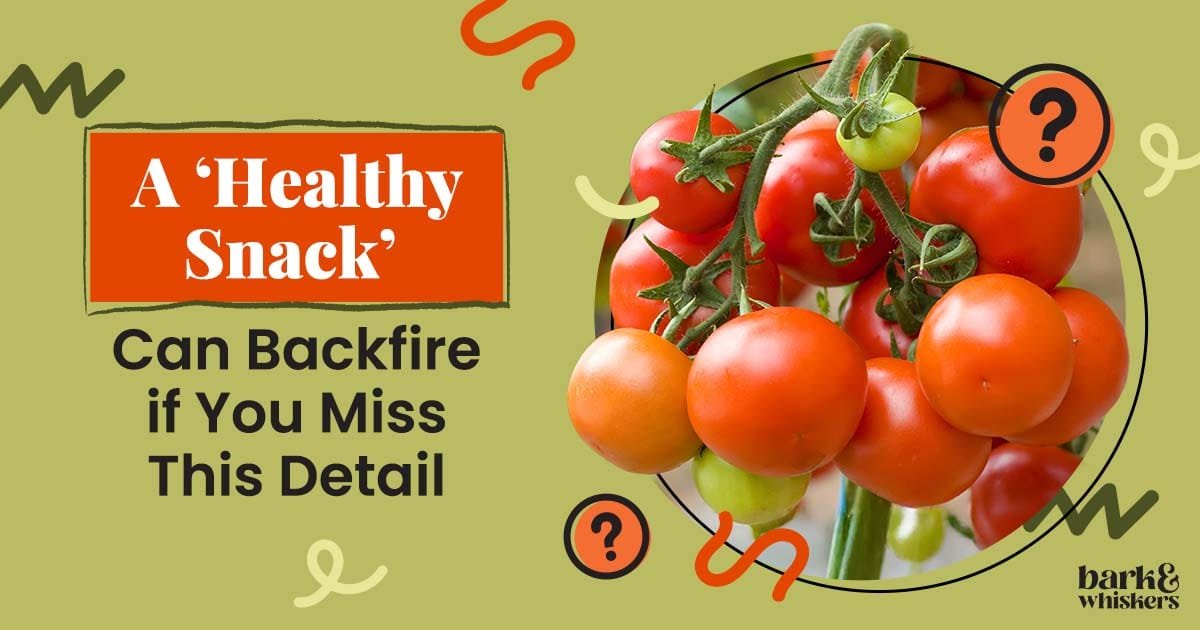
This red fruit is renowned for its bioactive compound, lycopene, which may support your pet’s well-being in a multitude of ways.
STORY AT-A-GLANCE
- Ripe tomatoes can be given as fresh, healthy pet treats or added to your pet’s nutritionally adequate, species-appropriate diet
- Tomato’s claim to fame is its lycopene content, a carotenoid with “antioxidant, anti-inflammatory, antihypertensive, antiplatelet, anti-apoptotic, and protective endothelial effects”
- A 20-gram serving of fresh tomato contains 24.6 micrograms of lutein and zeaxanthin, which have been greatly valued for their benefits on macular health. Lutein may also have immune health benefits — a 2000 study found that dietary lutein “stimulated both cell-mediated and humoral immune responses in the domestic canine”
- The green parts of the tomato plant, particularly the stems and leaves, contain a glycoalkaloid called solanine, which is toxic to dogs, cats, and horses, so make sure to keep your pets away from any tomato plants growing in your garden
- Slice the tomatoes in pieces big enough for your pets to easily swallow. Fresh, raw ripe tomatoes are the best — avoid canned varieties
Editor’s Note: This article is a reprint. It was originally published October 2, 2018.
Tomatoes (Solanum lycopersicum) bring a distinct sweet-sour taste to any dish and leave a wide array of nutrients at your disposal. But while tomatoes are a ubiquitous part of the human diet, you might find yourself wondering whether this fruit (botanically speaking) can be part of your pet’s diet as well. Keep reading to find out how to feed tomatoes to your pets.
Yes, Ripe Tomatoes Are Safe for Your Pets!
Misinformation about many healthy fruits, vegetables, nuts and seeds abounds on the internet. This is because websites have labeled all risks (such as the risk of over-consumption causing gastrointestinal issues, or choking on too large of pieces or pits) as “toxicities,” which isn’t true but has managed to confuse millions of pet lovers, nonetheless.
In the case of tomatoes, the myth is you shouldn’t feed tomatoes to pets because they’re toxic. The truth is they’re safe and good for your pets, as long as you make sure to use only the actual fruit, and in moderation. Tomatoes make great healthy treats or can be added to a nutritionally adequate, species-appropriate diet. However, the tomato plant — the green stems and leaves — are not safe for your pets. We’ll discuss this more in detail later.
Did You Know?
Tomatoes are related to potatoes and chili peppers. They belong to the nightshade plant family, or Solanaceae, along with eggplants and tobacco.1
Tomatoes Are Rich in Vitamin C and Other Antioxidants
The primary reason why tomatoes are so valued in human health is the presence of antioxidant molecules in them. Carotenoids and phenol compounds such as flavonoids are present in this food.2
Another antioxidant that’s found in tomatoes is vitamin C, with a 20-gram slice (1/4-inch thick) containing 2.74 milligrams of this nutrient.3 This valuable antioxidant has been associated with disease prevention and free radical-scavenging, and it also helps protect the immune system and fight infections.4 While your dogs and cats can produce their own vitamin C through their liver,5 giving them this nutrient by feeding them a species-appropriate diet would be a boon for their health.
Lycopene — Tomato’s Superstar Carotenoid
However, tomato’s “claim to fame” is its lycopene content. A single slice of fresh tomato contains 514 micrograms of lycopene,6 which is a carotenoid that gives the red or pink colors to tomatoes as well as grapefruit, watermelon, papaya, and other foods.7
“In humans, lycopene is known to provide numerous benefits, such as supporting heart health.”
It has “antioxidant, anti-inflammatory, antihypertensive, antiplatelet, anti-apoptotic, and protective endothelial effects” as well.8 A 2010 animal study looked into the anticarcinogenic effects of lycopene in animals. Published in the American Journal of Veterinary Research, the researchers aimed to look at how lycopene affected the growth and apoptosis of osteosarcoma cells in dogs. They found:9
“[L]ycopene may be beneficial during treatment of osteosarcomas. Lycopene did not negatively or positively affect survival of osteosarcoma cells during doxorubicin treatment and independently induced apoptosis in the HMPOS cell line. These findings warrant further in vitro and in vivo studies into the use of this natural compound as an adjuvant antiproliferative, proapoptotic treatment in dogs with osteosarcoma.”
Lutein and Zeaxanthin May Help Support Eye Health
A 20-gram serving of fresh tomato contains 24.6 micrograms of lutein and zeaxanthin,10 nutrients that have been greatly valued for their benefits on macular health. Like humans, dogs are also prone to retinal and lens functional decline as they age,11 so providing them with foods that may help supply this nutrient may help maintain their eye health.
Lutein in particular may also have immune health benefits. A 2000 study found that dietary lutein “stimulated both cell-mediated and humoral immune responses in the domestic canine.”12
Tomato Fun Fact
Is tomato a fruit or a vegetable? Botanically speaking, it’s a fruit, since fruits are defined as “a ripened flower ovary that contains seeds.” But because tomatoes are generally used in savory dishes, and not in desserts as most fruits are, it’s not uncommon for this crop to be classified as a vegetable. Plus, it’s closely related to other fruit-vegetables like eggplants and peppers.13
Whatever you call it, there’s no denying that the humble tomato is good for you — and your pet, too!
Note — Keep Your Pet Away from Tomato Plants
So if tomatoes can be good for your pet, why are many people cautioning against them? The reason is that the plant (not the fruit) contains a glycoalkaloid called solanine, which is toxic to dogs, cats, and horses, as noted by the ASPCA. When ingested, it can lead to severe gastrointestinal upset, weakness, hypersalivation, and slow heart rate.14,15
However, keep in mind that solanine is only found in the green parts of the plant: the leaves, stems, flowers, and young green tomatoes. Ripe red tomatoes contain only minute traces of solanine, making them safe for your furry friends.16 So feel free to feed your pets moderate quantities of fresh ripe tomatoes — but make sure to keep them away from the tomato plants growing in your garden.
Where Do Tomatoes Grow?
It’s believed that tomatoes were first grown in what’s known today as Peru. Today, the top three tomato-producing countries are China, India, and Turkey.17 In the U.S., California and Florida are the top tomato-growing states.18
Choose Organic, ‘Spray-Free’ Tomatoes
When feeding tomatoes to your pets, make sure to exercise common sense and slice the tomatoes in pieces big enough for your pets to easily swallow. Fresh, raw ripe tomatoes are the best — avoid canned varieties. If giving this food to your pet as a treat, make sure to feed it in moderation. Treats should make up less than 10% of your pet’s daily caloric intake.
Tomatoes rank No. 27 on the Environmental Working Group’s “Shopper’s Guide to Pesticides in Produce,” which ranks the most pesticide-ridden crops in the U.S.19 So as much as possible buy organic or “spray-free” tomatoes from local farmers markets, in order to minimize your pet’s exposure to harmful pesticides and insecticides.
- 1 Theor Appl Genet. 2016;129(12):2281–2294, Abstract
- 2 Mol Nutr Food Res. 2007 May;51(5):609-17, Abstract
- 3,6,10 Food Data Central, Tomatoes, red, ripe, raw, year round average
- 4 Indian J Clin Biochem. 2013 Sep 1;28(4):314–328, Abstract
- 5 Canadian Veterinary Medical Association, November 16, 2023
- 7 Annu Rev Food Sci Technol. 2010;1:10.1146, Abstract
- 8 Front Pharmacol. 2018;9:521, Abstract
- 9 Am J Vet Res. 2010 Nov;71(11):1362-70
- 11 J Nutr Sci. 2016;5:e18. Abstract
- 12 Veterinary Immunology and Immunopathology, May 2000;74(3-4):315-327
- 13 Britannica, Is a Tomato a Fruit or a Vegetable?
- 14 ASPCA, Tomato Plant
- 15 Can Vet J. 2015 Dec;56(12):1283–1286, Abstract
- 16 AKC, August 19, 2025
- 17 World Atlas, The World’s Leading Tomato Producing Countries
- 18 Statista, Leading Tomato Producing States in the United States in 2024 (in 1,000 centum weight)
- 19 EWG’s 2025 Shopper’s Guide to Pesticides in Produce
In this free guide, you’ll discover:
-
How your pet’s biology influences their nutritional needs -
Why conventional feeding advice often falls short -
Practical ways to choose better food for your dog or cat
View our Privacy Policy and Terms of Service.
