

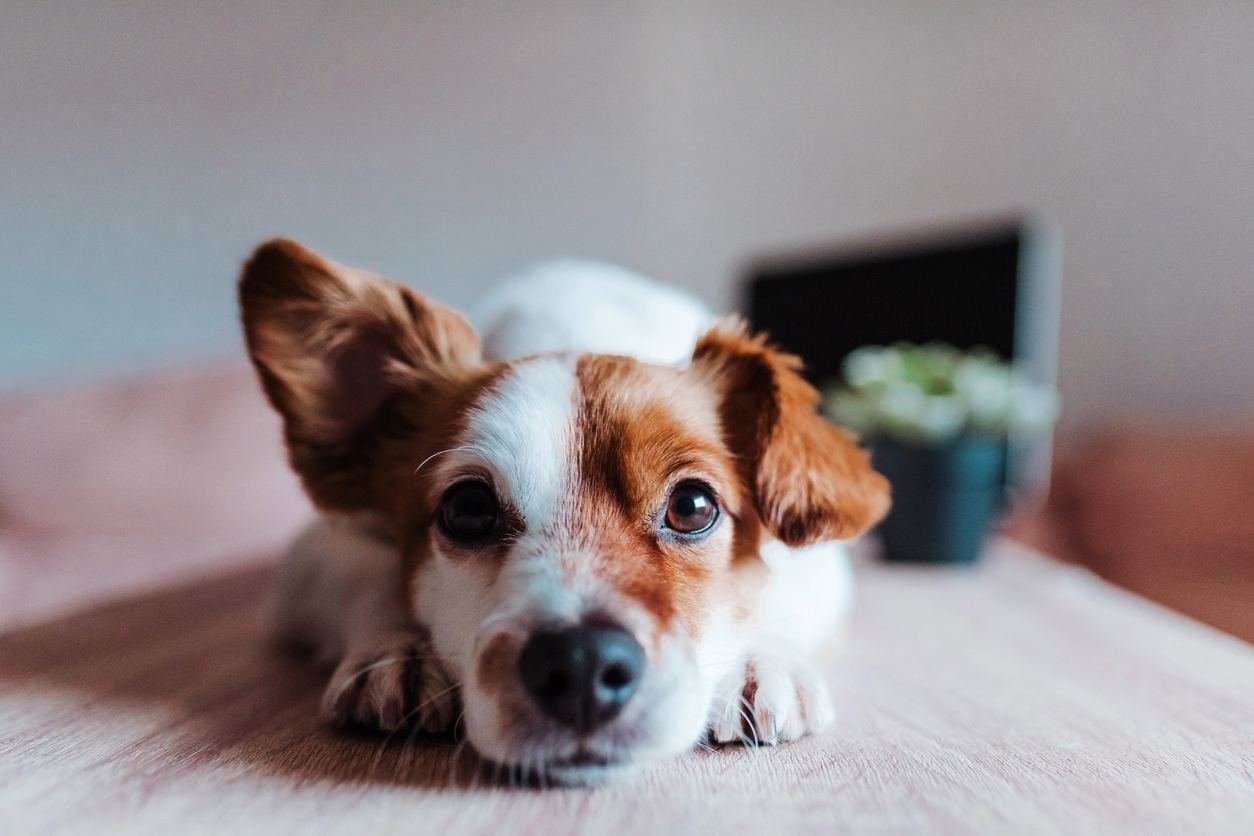
As all dog owners find out, puppies are very curious, which can lead to some destructive behavior if they aren’t supervised. Puppies are can be inventive with what they chew on, from dog toys, phone chargers, carpet to the corner of your chairs. They can also get into naughty habits if not closely watched, like going potty in another room or the corner of a room. Fortunately, we can help prevent these incidents by puppy proofing your home. Let’s start by discussing how you can best confine and monitor your puppy.
Puppies need constant supervision and should have limited access to the home
The first step to stopping your puppy from getting into mischief, like chewing up your socks or your child’s toys, is always to have them within your line of sight. You can:
- Block off sections of the house with puppy gates (or baby gates). You can use these to block off stairs and rooms, which is very useful in open plan homes.
- When you are busy, you can tether your puppy to sturdy furniture so they can’t wander away from you.
- Use a puppy playpen, if you have tested this and know that your puppy can’t climb out of it.
- When you are unable to monitor your puppy, including overnight, you should put your puppy in a crate.
For further help on crate training, we recommend checking our blogs on “Understanding Crate Training and Separation Anxiety” and “Crate Training Your Puppy”. We also have helpful videos on our TikTok channel, including how to address a puppy being scared of the crate.
Now that we have discussed how you can confine and monitor your puppy safely, let’s talk about the importance of puppy toys.
Chew toys are great for enrichment
Chew toys are great because they help keep your puppy occupied and entertained. This stops them from getting bored and from leaning into destructive behavior. We have listed some of our favorite toys on our Amazon shopping list.
Make sure you regularly rotate at least eight to twelve toys as it will help keep your puppy’s interest. Toys that we recommend include Nylabones, Kongs, unfilled white bones, treat ringers, Benebones, and Nerf rings.
We don’t recommend giving your puppy rope or plush toys. The textures of rope and plush toys can be too similar to household items, which can encourage shredding and chewing on furniture, clothing, carpet and other household items your puppy could access.
Obedience commands that help with puppy proofing your home
Sit
Sit is a great command for managing your puppy. You can teach your puppy to sit while you are completing household chores like emptying the dishwasher or folding the laundry. Remember to give your puppy lots of praise and a treat for sitting. Over time, your puppy is likely to sit without you even asking, making it much easier to monitor and spend time with your puppy.
Place
Place is a useful command to teach your puppy to relax and stay on their bed. They can chew a toy and relax while you are resting on the couch, keeping your puppy away from your child when they are playing with their own toys or are busy on the phone. With proper training, your puppy will stay in the place position until you release them. You can teach this command by:
- Leading your puppy to their bed and giving them a treat.
- Reinforcing them to stay on the bed by giving them treats, while increasing the time between treats as they get better at staying in place.
Place and sit are great commands because they teach patience and help prevent them from getting into mischief. While giving your puppy lots of praise, rewards and attention that will encourage further good behavior.
For tips on teaching your puppy obedience commands, you can check out our co-founder and Certified Dog Behavior Consultant, Sean Savage, who talks about the five most important puppy commands on our TikTok page.
Name Recognition
Teaching your puppy to quickly respond to their name is helpful for you to check in on them as they get older and get more space to explore the home. You can help your puppy recognize their name by saying their name once and then giving them a treat.
Calling out their name can help stop them from chewing on furniture or potentially swallowing something they shouldn’t be getting into, like a food wrapper they just found on the ground.
The best part of teaching sit, down, name recognition, and other obedience commands is that it can be generalized to any environment, whether it is just in the backyard, at the park, or during a very appointment.
We are here to help
Would you like help teaching your puppy high-level obedience, manners, or addressing any behavioral concerns? Beyond the Dog Sarasota offers personalized one-on-one training sessions, including training at your home, local neighborhood, board and train programs, and virtual training programs. You can schedule afree consultation with our Pet Behavior Team to discuss your training goals and receive a personalized recommendation.
Beyond the Dog offers personalized board and train programs and virtual training programs to clients nationwide. During our dog board and train programs, your dog will live and train with our co-founders, Dr. Kristyn Echterling-Savage, a Certified Applied Animal Behaviorist (CAAB) and Board Certified Behavior Analyst (BCBA), and Sean Savage, a Certified Dog Behavior Consultant (CDBC) and Certified Professional Dog Trainer-Knowledge Assessed (CPDT-KA) in Tampa Bay, Florida. After completing the board and train program, we will conduct return and follow-up lessons with you at your home and local neighborhood. Where you will learn how to manage your dog’s new skills and transition these to your home.
We use scientifically proven training methods, backed by over 20 years of hands-on experience. Beyond the Dog Tampa Bay is led by our co-founders, Dr. Echterling-Savage, a Certified Applied Animal Behaviorist (CAAB) and Board Certified Behavior Analyst (BCBA), and Sean Savage, a Certified Dog Behavior Consultant (CDBC) and Certified Professional Dog Trainer-Knowledge Assessed (CPDT-KA).
