

STORY AT-A-GLANCE
- Canine freestyle is a choreographed sport in which dogs and handlers perform to music, showing teamwork, athleticism, creativity and control
- The sport includes two styles: freestyle heeling, which stays close and precise, and musical freestyle, which adds tricks, distance work and more expressive moves
- Building a routine involves choosing music, teaching skills in small sections, planning movement and, for some events, matching costumes to the theme
- Competitive freestyle is judged on both technical skill and artistic presentation, while exhibition routines often allow more props, cues and theatrical elements
- Dogs best suited for freestyle are agile, eager learners, but training should wait until physical maturity and be avoided or modified for dogs with health limitations
Editor’s Note: This article is a reprint. It was originally published March 26, 2015.
Unless you’ve been living under a rock, you’ve probably seen at least one video of a dog dancing with his owner or handler to music. But what you might not know is that many canine-human dance duos are involved in a dog sport called musical canine freestyle (also known as musical freestyle, freestyle dance, and canine freestyle).
Canine freestyle popped in many different countries right around the same time in 1989, including the U.S., Canada, England, and the Netherlands. The pioneers of the sport were interested in creating more expressive obedience and dog training demonstrations, and were inspired by the equine sport of musical kur, which is a form of dressage.
The first official freestyle organization was started in British Columbia in 1991, and soon after, groups began forming in the U.S. and England. Each region evolved its own style. Americans preferred more trick-based routines and costuming. In England, the focus was on heelwork and the dog, and less on costumes and design.
Dances with Dogs
Canine freestyle is a relatively new and up-and-coming competitive activity. Here’s how Patricia Ventre, founder of the World Canine Freestyle Organization (WCFO) defines it:
“Musical Freestyle is a choreographed musical program performed by handlers and their dogs. The object of musical freestyle is to display the dog and handler in a creative, innovative and original dance, using music and intricate movements to showcase teamwork, artistry, costuming, athleticism, and style in interpreting the theme of the music.”1
According to the WCFO, if you want to dance with your dog to music, there are a few guidelines you should follow:
- Start by selecting music you would like to dance to. It can be one piece of music or several different pieces edited to create your own dance tune.
- Next you’ll need to choreograph a routine by designing steps and movements for both you and your dog that relate to the music you’ve selected. The movements can include basic obedience steps, variations on obedience steps, dressage movements, tricks, or something unique that you come up with. Your movements should take place within a defined area, covering the area as fully as possible.
- Step three is deciding on costumes for you and your doggy dance partner. They should complement the theme of the music, but not detract from the performance.
- In addition to the three steps just listed, if your goal is to enter a musical freestyle competition, you’ll also need to meet the rules or guidelines established by the governing organization.
2 Types of Canine Freestyle
The first step in teaching your dog freestyle is training her to work on both sides of your body, not just the left side, which is the standard for obedience training. It’s also important to break the routine into sections, linking just two or three moves together at a time. As your dog gets the hang of it, you can begin linking the sections together.
There are actually two types of musical canine freestyle: freestyle heeling (also called heelwork to music), and musical freestyle.
Freestyle heeling showcases your dog’s ability to stay in variations of the heel position while you move to music. You and your dog remain physically close at all times, almost as if you’re tethered to each other. Sending your dog away, working with her from a distance, and any move that is not heeling isn’t part of the routine. Your routine should include moving together diagonally, backwards, and forwards to the music, as well as pivoting.
Musical freestyle involves a variety of tricks and other obedience skills. You can also combine heelwork with moves such as leg weaving, sending your dog away, moving in synch at a distance, jumping, spinning, bowing, and rolling over. If your dog is a regular Fred Astaire or Ginger Rogers, you’ll get extra props if he or she can be trained to play off your dance moves, for example, dancing in place. And don’t forget to plan a big finish, like having your dog jump into your arms or over or onto your back.
Freestyle Competitive Events
Competition rules are set by the individual organization and vary from one organization to the next, and from country to country, however, the focus of most is on a variety of technical and artistic merit points. With the exception of some beginner events, no leashes or training aids are allowed.
Competition teams can consist of one dog-one handler, a pair of dogs and handlers, or a full team of three or more dogs and their handlers. One dog per handler is the rule for most events.
Choice of music is important, as is the way the routine interprets or reflects the music.
The type of canine freestyle most often seen on TV or YouTube videos is actually called exhibition freestyle. These routines include moves, props, cues, and costumes that you won’t typically see on the competition circuit. They are designed to showcase the full extent of the creativity involved in the sport.
Which Dogs are Good Candidates for Freestyle?
The dogs who do best at freestyle are typically agile, fast learners who thrive on attention. The breeds and breed mixes seen most often in freestyle competitions include Australian Shepherds, Border Collies, Dachshunds, Golden Retrievers, Papillons, and Poodles. Occasionally, you’ll also see a fleet-footed Great Dane, Greyhound, Mastiff, Rottweiler, Saluki, or Shar-Pei. Truly dedicated guardians have even trained blind and three-legged dogs to freestyle!
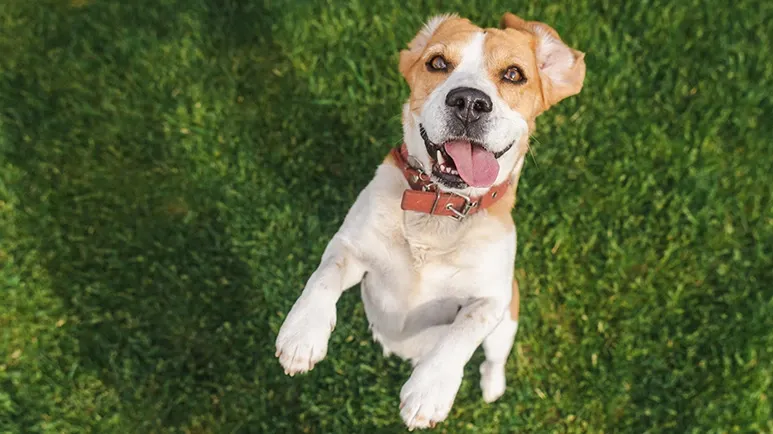
Freestyle tends to favor dogs who can walk on their hind legs, back up, spin, roll, and jump. If your dog is a Jack Be Nimble type and you love having fun with him, this could be your sport. First, you’ll want to check with your veterinarian to insure your dog is healthy and his anatomy lends itself to typical freestyle moves. For example, if he has back or mobility problems, obviously jumping isn’t advisable.
Your dog’s bones and joints should be fully developed before he learns any moves that involve jumping or standing on his hind legs. For most dogs this means waiting until they are at least 14 months age, and giant breeds may need more time to fully mature.
Keep in mind that while some dogs seem to easily walk on their hind legs, back up and move sideways, their normal posture is walking forward on all four feet. Anything outside of that is hard work for your dog, so keep training sessions short, especially in the beginning, and increase the length gradually.
For guardians and dogs who enjoy the sport, freestyle can keep both of you active, while building flexibility, strength, and endurance. It will also keep you and your dog mentally challenged, and enhance the bond you share.
In this free guide, you’ll discover:
-
How your pet’s biology influences their nutritional needs -
Why conventional feeding advice often falls short -
Practical ways to choose better food for your dog or cat
View our Privacy Policy and Terms of Service.
