

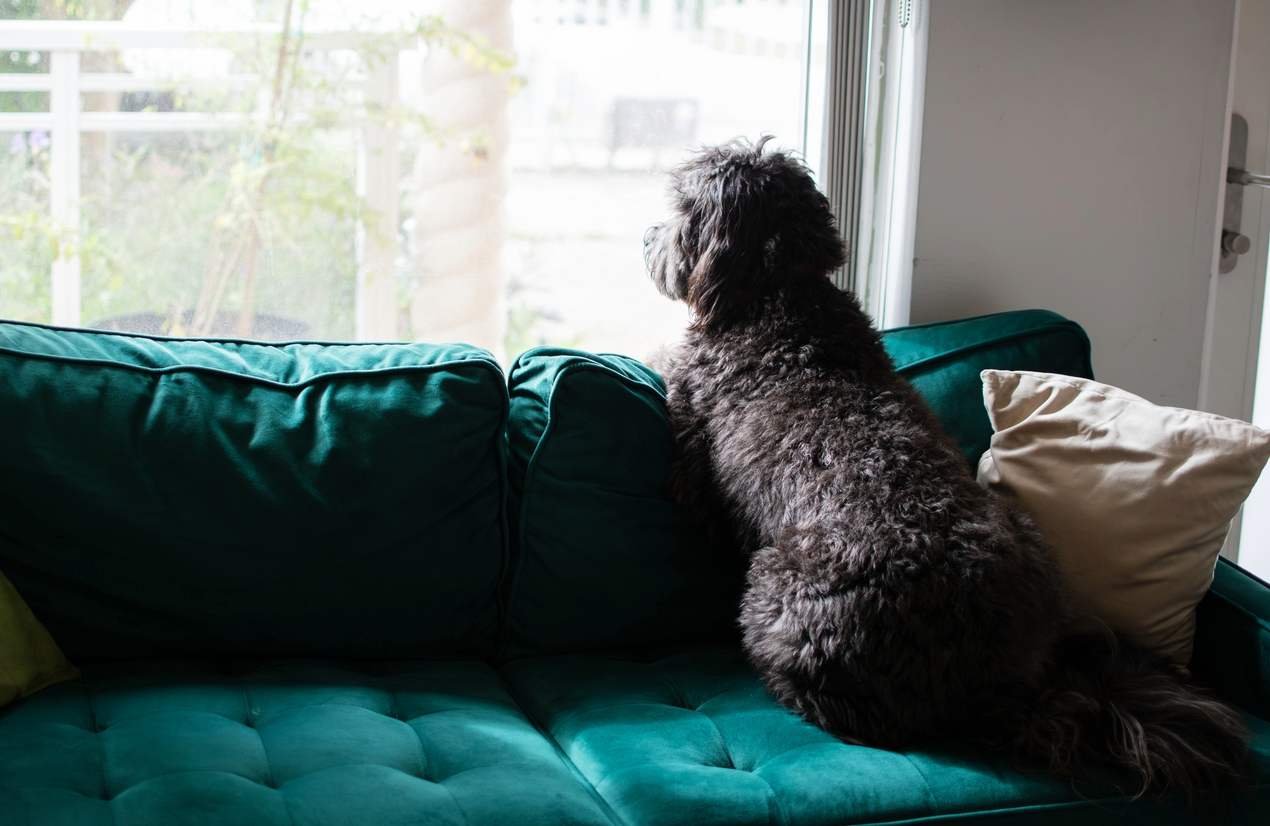
It can be hard recognizing separation anxiety in puppies, especially if you are a first time puppy owner. Separation anxiety is when puppies get highly stressed when left alone or put in their crate. A highly stressed puppy could bark incessantly, try to break through the crate door, or rip apart the bedroom blinds to escape. Fortunately, we can effectively treat separation anxiety through behavior modification training. In this blog we will help you better recognize separation anxiety in puppies. Let’s start by discussing common signs of separation anxiety.
Signs of separation anxiety
Puppies who are highly stressed from being alone may show the following signs, including inside and outside of the crate:
- Excessive crying, whining, and barking
- Chewing or scratching the crate, walls, curtains, or doors where they can escape. Usually, this will be in the direction their owner has gone.
- Increased bodily functions in response to stress, including salivating, urinating, and pooping.
You may be wondering how can you tell the difference between stressful puppy behaviors and attention seeking puppy behaviors? After all, puppies love to bark and whine for attention, and they love to shred and destroy things in the house which can include blinds, corners of furniture and carpet. To help differentiate this, let’s discuss typical and atypical behavior by a puppy’s age, and then get into some signs of separation anxiety in more detail.
A puppy’s age
It can be difficult for puppies to settle down at night when they first come home. After all, an eight week old puppy has spent their whole life with their mom and siblings, so sleeping alone is a big change for them.
It’s normal for an eight to ten week old puppy to whine, bark, and cry when left alone. You can comfort a puppy by placing the crate close to you, where they can see you. You can also help soothe them and help them sleep by sticking your fingers in their crate.
A ten to sixteen week old puppy is old enough to be effectively crate trained. This is useful for reducing crying, whining, and barking in the crate. Crate training teaches your puppy to be comfortable alone. Positive associations with the crate can be built over time through toys, verbal cues, and treats such as stuffed kongs. For a great stuffed Kong recipe, we recommend you check out our blog on “how to stuff a Kong like a dog trainer”.
If your sixteen week-old puppy’s separation behaviors are getting worse and your puppy doesn’t seem to be following typical developmental behaviors, we recommend that you reach out to a certified applied animal behaviorist or a certified dog behavior consultant. You can contact our Pet Behavior Team for a free consultation to receive a personalized recommendation for your training goals and to talk about any questions you may have.
A six month old crate trained puppy should be comfortable being alone in the crate. It is also harder to tell between attention seeking behavior and separation anxiety behaviors by this age. At this stage, you should also consider looking at other factors, including individual history and the breed of the dog.
Your Puppy’s Breed and Individual History Can Be a Factor
Separation anxiety behaviors tend to emerge when a dog is around three to five years old. However, some breeds, particularly hunting dogs, are more likely to develop separation anxiety and may begin showing this behavior at a younger age.
A puppy’s individual history can influence whether they develop separation anxiety behaviors. A puppy is more likely to develop these behaviors if the puppy:
- Hasn’t had long periods of time away from you. Particularly if you work from home and the puppy rarely spends any time alone.
- Spends lots of time cuddling with you. Perhaps your puppy clings to you by sitting on your lap, at your feet, and follows you from room to room.
It’s important that your puppy is comfortable in their own space. Now that we’ve discussed how individual histories and dog breeds can influence separation anxiety behaviors, let’s talk about how dogs with separation anxiety may behave when left alone.
Barking, Whining and Crying
When does whining, barking and crying become a concern? It’s normal behavior for a puppy to vocalize for 15 minutes or less. Though it may be hard to hear your puppy’s distress, it’s a typical attention seeking behavior.
However, if your puppy whines, barks, or cries for over an hour with other signs of stress, like excessively salivating and bloodshot eyes, then your puppy is showing separation anxiety behaviors.
Escaping confinement
Does your puppy try to escape from confinement, whether it is a crate or bedroom, when left alone? Signs of severe separation anxiety are when a puppy:
- Breaks out of a secure crate
- Injures themselves breaking out of a crate or bedroom more than once. These injuries could include bloody gums or paws.
- Destroys exit areas of the home, such as doors, blinds, and baseboards, in an attempt to get out.
We are here to help
For more information on crate training and separation anxiety, you can check out our blog on “Understanding crate training and separation anxiety”. You can check out our Tik Tok, Youtube, Puppy Training Blogs and Dog Friendly Guide Blogs.
Do you have any behavioral concerns for your puppy, or would like help teaching your puppy high level obedience training? You can schedule a free consultation with our Pet Behavior Team to receive a personalized recommendation on your training goals and any questions you may have. Beyond the Dog Tampa Bay offers personalized one-on-one training sessions, including training at your home and local Tampa neighborhood, board-and-train programs, and virtual training programs.
We use scientifically proven training methods, backed by over 20 years of hands-on experience. Beyond the Dog Tampa Bay is led by our co-founders, Dr. Kristyn Echterling-Savage, a Certified Applied Animal Behaviorist (CAAB) and Board Certified Behavior Analyst (BCBA), and Sean Savage, a Certified Dog Behavior Consultant (CDBC) and Certified Professional Dog Trainer-Knowledge Assessed (CPDT-KA).
