

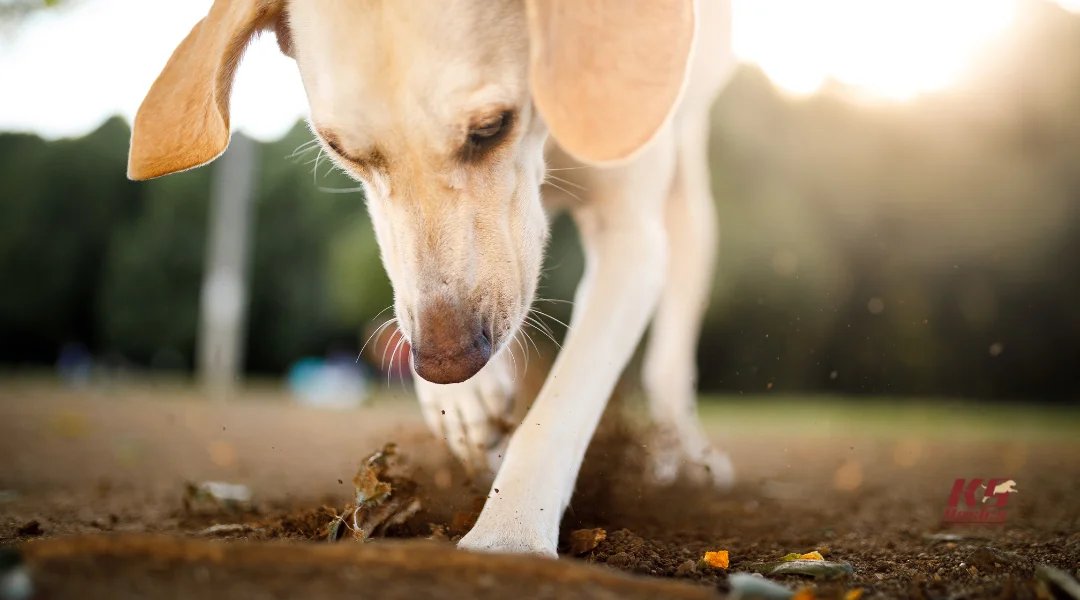
Spring yard dangers are real, and without the right approach, these habits can escalate quickly.
What looks harmless to you can feel like a jackpot to your dog. Sticks, mulch, compost, animal remains, even gardening tools all become “finds” worth grabbing, chewing, or protecting.
Dogs begin scavenging things they shouldn’t eat, or worse, guarding them when you try to take them away.
The key is understanding why they happen and how to address them in a way that keeps both your dog and your family safe.
What Your Dog Finds Valuable in the Yard
Items that seem unimportant or even unpleasant to you can be highly rewarding to them based on smell, texture, or novelty.
Sticks, Mulch, and Toxic Plant Material
Sticks are one of the most common “finds,” but they can splinter or cause internal injury if swallowed. Mulch and plant material often carry strong scents from moisture and decomposition, which attracts dogs. Some plants, fertilizers, and treated mulch can also be toxic, even in small amounts.
Dead Animals and Organic Debris
As the ground thaws, dogs may come across dead animals, bones, or decaying organic matter. These are extremely high-value to a dog because of their scent and instinctive appeal. They also carry bacteria and parasites, posing a high risk of illness.
Gardening Tools and Household Items
Spring yard work introduces new objects like gloves, tools, bags of soil, and chemicals. Dogs may pick these up out of curiosity or boredom. Items like these are not only unsafe to chew but can quickly become something a dog refuses to give up.
Why Dogs Scavenge and Guard “Finds”
Scavenging and guarding are not random behaviors. They are driven by instinct and reinforced by the environment. Understanding this helps explain why the behavior can escalate quickly if not addressed properly.
Instinct, Value, and Possession
Dogs are natural scavengers. Finding and keeping resources is part of how they are wired. When a dog picks something up, there is often an immediate sense of ownership. If that item feels valuable, the dog is more likely to hold onto it and resist giving it up.
Why “High-Value” Items Trigger Guarding
Not all items are equal in a dog’s mind. The stronger the smell, the rarer the find, or the more rewarding the texture, the higher the value. High-value items increase the likelihood of guarding because the dog perceives a real loss if it is taken away.
The Link Between Scavenging and Resource Guarding
Scavenging and guarding are closely connected. A dog finds something, assigns value to it, and then works to keep it. If an owner tries to remove the item without proper handling, the dog may respond with avoidance, tension, or even aggression. What starts as simple scavenging can quickly turn into a repeated guarding behavior if the pattern is not corrected.
When Taking It Away Makes It Worse
Most owners act quickly when they see their dog grab something dangerous. The instinct is to reach in and take it away. In many cases, this reaction is what pushes the behavior from manageable to risky.
Why Reaching for the Item Can Trigger Aggression
When a dog has something they value, a hand reaching toward them can feel like a direct threat. The dog is not thinking about safety. They are reacting to the possibility of losing something important. This can cause immediate tension in the body, stiffening, or quick avoidance.
Growling, Snapping, and Escalation
Growling is often the first warning. If that signal is ignored or punished, the dog may skip it next time and go straight to snapping.
Each time the situation is handled with pressure or force, the dog learns to respond faster and more defensively. What starts as hesitation can become a consistent aggressive response.
How Owners Accidentally Reinforce Guarding
It is common for owners to back off when a dog growls, which teaches the dog that guarding works. On the other hand, forcibly removing the item can create a pattern where the dog feels they need to defend it more intensely next time. Both reactions strengthen the behavior, even though the intention is to stop it.
The Risks You Can’t Ignore
This is not just a training issue. Scavenging and guarding carry real risks that affect both your dog’s health and the safety of the people around them.
Health Dangers from Eating the Wrong Items
Dogs can ingest harmful materials without hesitation. Toxic plants, chemicals, spoiled organic matter, and sharp objects can all lead to serious health problems. These range from digestive upset to blockages, poisoning, or infection, some of which require emergency care.
Bite Risk and Family Safety Concerns
When a dog begins to guard items, the risk of a bite increases. This is especially concerning in homes with children or frequent visitors who may not recognize warning signs. A dog that feels pressured around valuable items can react quickly, making everyday situations unpredictable if the behavior is not addressed properly.
How a K9 Basics Addresses Resource Guarding
Resource guarding is not handled with force or guesswork. At K9 Basics, the focus is on understanding the behavior, controlling the environment, and guiding the dog through clear, repeatable patterns that reduce conflict and build trust.
Identifying Triggers and Thresholds
The first step is assessing what actually sets the dog off. Not every item or situation carries the same value. Our trainers look at when the behavior starts, how quickly it escalates, and what level of pressure causes a reaction.
This allows us to work below the dog’s threshold, where they can stay calm and make better decisions instead of reacting defensively.
Structured Behavior Modification
Once triggers are clear, training is built around controlled exposure. Dogs are guided through situations where they learn to disengage from items, release them, and remain neutral when approached.
This is done in a structured setting where timing, repetition, and consistency are controlled. The goal is not just compliance, but a change in how the dog responds to pressure around valuable items.
Building Control Without Creating Conflict
The priority is to remove the need for the dog to guard in the first place. Instead of creating confrontation, we teach the dog that giving something up does not lead to loss or pressure.
Clear communication, consistent handling, and structured routines replace tension with predictability. Over time, the dog learns to stay calm, release items, and look to the handler instead of reacting defensively.
Work with a K9 Basics Trainer Today!
Call us at (866) 457-3815 or, if you’re from New Jersey, Pennsylvania, Delaware, or New York, visit us at 131 Kennilworth Road, Marlton, NJ 08053, to learn more about our group training classes.
Also, browse our blog and social media for various topics about dogs and their lives with us!
