

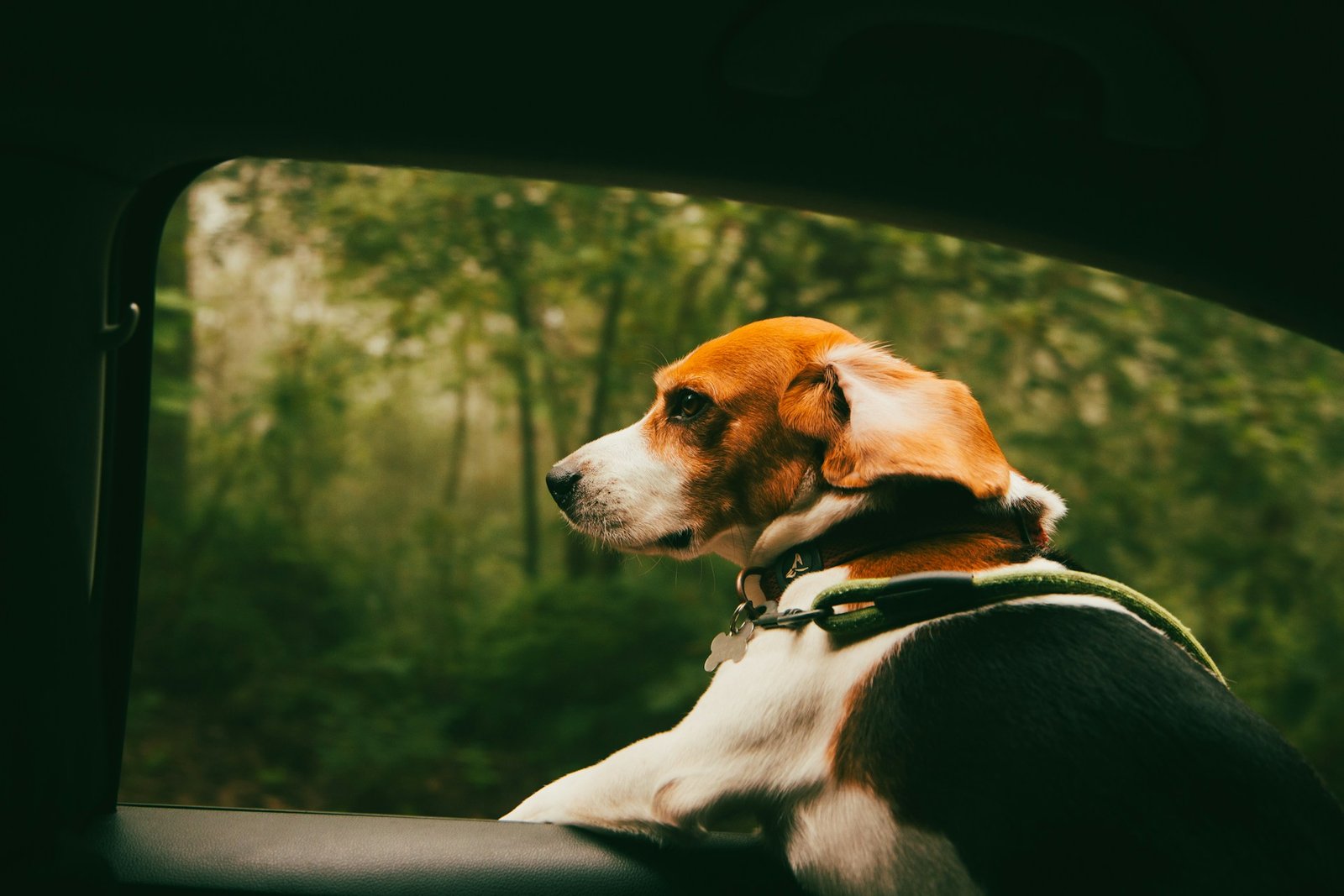
Travelling with a dog should be one of life’s great pleasures. In practice, it’s often a stressful negotiation between logistics, anxiety, and the creeping fear that something will go wrong the moment you leave the driveway.
The good news is that most travel anxiety – canine and human – comes down to preparation. The dogs who travel well aren’t necessarily calmer or better bred. They belong to owners who’ve thought through the details before the trip begins.
Here’s how to get both of you to your destination relaxed, safe, and ready to enjoy it.
Start With the Car, Not the Destination
Most dogs don’t arrive at a holiday anxious about the cottage. They arrive anxious because the car ride unsettled them. For dogs that associate the car with vet visits or motion sickness, the journey itself is the problem – and it needs to be addressed weeks before departure day.
Short, positive car trips are the foundation. Drive to a park. Drive to a friend’s house where the dog gets treats. Drive around the block and come home. The goal is to rewrite the association: car equals good things happening, not just needles and waiting rooms.
For dogs with genuine motion sickness, consult a vet about anti-nausea medication before the trip. It’s a common issue, especially in puppies, and there are safe, effective options that can make the difference between a dog that arrives calm and one that arrives covered in drool and shaking.
Car safety matters too. A loose dog in a car is a projectile in an emergency stop. Crash-tested harnesses like those from Sleepypod or a properly secured crate in the boot offer genuine protection. It’s one of those details that feels excessive until the first time someone brakes hard in front of you.
Get the Anxiety Toolkit Right
Not every dog needs pharmaceutical intervention for travel anxiety, but every anxious traveller benefits from a layered approach. Think of it as building a toolkit rather than relying on a single solution.
Compression wraps work well for dogs whose anxiety is triggered by noise or movement. The ThunderShirt, which applies gentle, constant pressure to the torso, has a surprisingly loyal following among owners of noise-sensitive dogs. It won’t sedate a panicking dog, but for mild to moderate anxiety, it can take the edge off during a long drive or a stormy evening in an unfamiliar rental.
Pheromone products offer another layer. Adaptil, available as a spray, collar, or plug-in diffuser, releases a synthetic version of the calming pheromone that nursing mothers produce. A quick spritz inside the car or the holiday accommodation can help some dogs settle more quickly in a new environment.
Mental enrichment during travel is often overlooked. A frozen Kong, a lick mat smeared with peanut butter, or a snuffle toy can keep a dog occupied and calm for stretches of the journey. Dogs that are busy rarely have the bandwidth to be anxious. For owners looking for training approaches to build longer-term calm, dog training apps have improved dramatically in recent years and can help establish routines before you travel.
None of these tools are magic. But stacked together – compression wrap for the drive, pheromone diffuser at the destination, enrichment toys throughout – they create an environment where anxiety has fewer footholds.
Sort the Paperwork Before You Pack the Treats
Depending on where you’re travelling, the administrative side of dog travel can range from straightforward to surprisingly complex.
Within the UK or US, the requirements are minimal: up-to-date vaccinations, a form of identification, and confirmation that your accommodation is pet-friendly. But cross a border – even within Europe – and things escalate quickly. Pet passports, rabies titre tests, tapeworm treatments, and specific timing windows all come into play.
Start the paperwork early. Some requirements, like rabies antibody tests, have mandatory waiting periods that can’t be rushed. A vet visit six to eight weeks before departure gives enough buffer to handle surprises.
While you’re at the vet, confirm that your dog’s microchip is registered to your current details. It’s one of those tasks that gets perpetually deferred, but microchip databases are only useful if the phone number they hold actually reaches you. This is especially important if you’ve moved recently or changed numbers – exactly the kind of detail that slips through the cracks during the chaos of holiday planning.
Rethink What Your Dog Is Wearing
A dog’s travel collar and tag setup deserves more thought than most owners give it. The standard engraved disc with a name and phone number has been the default for decades, but it has real limitations – particularly when travelling.
The engraving wears down. There’s room for one phone number, maybe two. And if that number is unreachable – because you’re on a flight, because you’re in a different time zone, because you’ve lost signal in rural France – the tag becomes decorative rather than functional.
Newer options address this. Digital ID tags that link to an online profile let you store multiple contacts, medical information, and behavioural notes that anyone with a smartphone can access by scanning or tapping the tag. The profile can be updated on the fly – meaning you can add the address of your holiday rental and the nearest emergency vet before you arrive. For dogs with specific dietary needs or medical conditions, having that information instantly accessible to a stranger who finds your dog is genuinely valuable.
For owners who want real-time location tracking as well, GPS devices like Tractive clip onto the collar and broadcast the dog’s position to a phone app. These are particularly useful for dogs staying in rural areas with unfenced land or for breeds with a strong prey drive that might bolt after wildlife. The trade-off is battery life and bulk – they need charging every few days and add weight to the collar – but for high-flight-risk dogs, the peace of mind is considerable.
A sensible travel setup might combine both: a lightweight digital ID tag for everyday identification and a GPS tracker switched on during the higher-risk moments of the trip.
Choose Accommodation That Actually Works
“Pet-friendly” is one of the most abused phrases in the hospitality industry. It can mean anything from “we have a dedicated dog wash station and treat menu” to “we won’t charge you extra if we don’t notice.”
Before booking, ask specific questions. Is the property fenced? Are there restrictions on where the dog can go inside? Is there a charge per night for pets? Are there other dogs on site, and how is shared space managed? A dog-friendly listing that shares a courtyard with three other guest dogs might be perfect for a social Labrador and a nightmare for a reactive terrier.
Holiday rentals often work better than hotels for dogs, simply because they offer more space and fewer shared corridors. A dog that has its own garden to sniff around will settle faster than one confined to a hotel room with unfamiliar footsteps passing the door every few minutes.
Wherever you stay, recreate familiarity. Bring the dog’s own bed, their usual food, and a blanket that smells like home. These small anchors of routine help a dog understand that even though the walls have changed, the important things haven’t. It ties into the same principle behind why consistent care matters – dogs thrive on predictability, and travel is the ultimate disruption to it.
Have a Plan for When Things Go Sideways
No amount of preparation eliminates risk entirely. Dogs escape from holiday cottages. They eat something they shouldn’t on a coastal walk. They have an unexpected reaction to the stress of travel. The owners who handle these situations best are the ones who planned for them before they happened.
Before you leave, identify the nearest emergency vet at your destination. Save the number in your phone and share it with anyone travelling with you. If your dog takes regular medication, pack more than you need – running out of a prescription in an unfamiliar area on a bank holiday weekend is a problem nobody needs.
For dogs that are prone to anxiety or stress-related behaviours, have a de-escalation plan. Know what calms your dog – whether that’s a quiet room, a specific toy, or simply your presence – and be prepared to cut an activity short if they’re overwhelmed. A dog that’s pushed past their comfort zone on day two will be harder to manage for the rest of the trip.
It’s also worth having a recent, clear photo of your dog saved on your phone – not the artfully filtered one from Instagram, but a straightforward image that shows their size, colouring, and any distinguishing marks. If the worst happens and your dog goes missing, this photo becomes the most important tool you have.
The Dogs That Travel Well
The calmest travel dogs aren’t a specific breed or temperament. They’re dogs whose owners have invested in the boring work: the practice car rides, the slow introductions, the consistent routines, the backup plans that hopefully never get used.
Travel with a dog is never going to be as simple as throwing a bag in the boot and driving. But it doesn’t have to be a source of dread either. With the right preparation – for the journey, the destination, and the unexpected – it becomes something genuinely enjoyable. The kind of trip where the best moments are the unplanned ones: a beach your dog discovers, a pub garden where they make a new friend, a sunset walk along a trail neither of you has seen before.
That’s the version of dog travel worth working towards. And it starts long before you leave home.
