

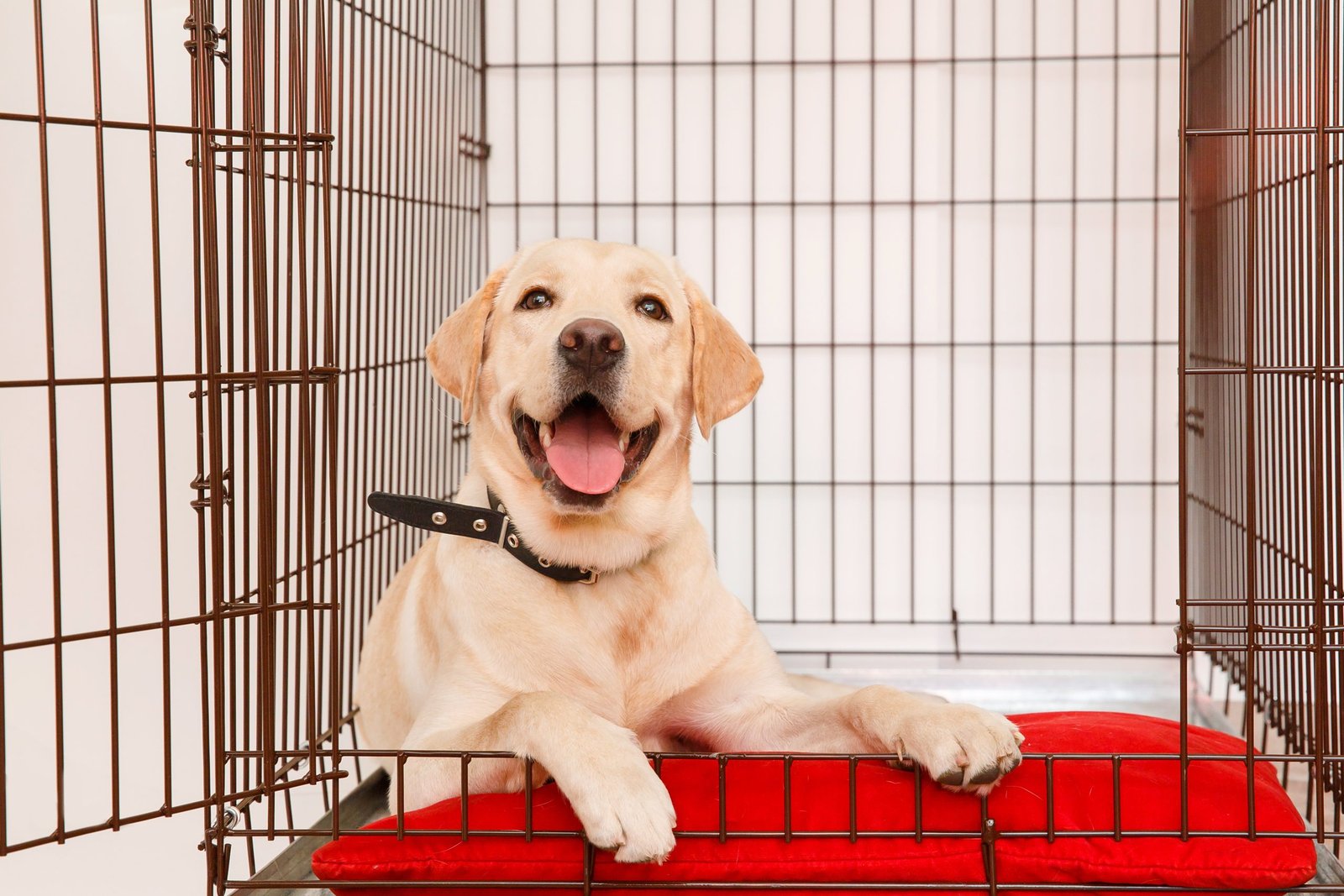
Puppy crate training for relaxation is one of the most misunderstood parts of raising a young dog. Many owners are told to use a crate, but very few are shown how to teach a puppy to actually feel calm and comfortable inside it. Without that piece, it can quickly turn into a stressful experience for both you and your puppy.
So what happens? The puppy cries, barks, or panics, and now you’re stuck wondering what to do next. It can feel confusing and even frustrating when you’re trying to do the “right” thing but it doesn’t seem to be working.
Do you let them cry? Let them out? Cover the crate? Try again later? These are common questions, and most owners have heard conflicting advice at some point.
If you’ve been there, you’re not alone. More importantly, your puppy isn’t being difficult. They’re missing the skills they need to succeed, and that’s something we can teach.
Puppy Crate Training for Relaxation: Why Most Puppies Struggle
Most crate issues don’t come from stubbornness or defiance. They come from a mismatch between what we expect and what the puppy has learned. When expectations are too high too quickly, puppies respond the only way they know how.
We often expect puppies to walk into the crate willingly, settle quickly, and stay calm for increasing periods of time. But from the puppy’s perspective, the crate can feel like a sudden loss of freedom, a barrier between them and their people, or a place where nothing is happening.
That combination can easily lead to frustration, vocalizing, or even panic. When we understand that, it becomes much easier to approach crate training in a way that actually helps the puppy succeed.
Puppy Crate Training for Relaxation Starts With Understanding Your Puppy
Before you can teach crate skills successfully, it helps to look at the situation from your puppy’s point of view. Puppies are young, social, active, and still learning how to handle frustration, rest, and independence.
That means crate training is not just about getting them used to a piece of equipment. It is about teaching them that the crate is safe, predictable, and connected to calm feelings rather than stress.
When we take the time to build that understanding early, everything else becomes easier. Your puppy is no longer guessing what the crate means, and that clarity matters.
The Biggest Mistake in Puppy Crate Training
One of the most common mistakes is focusing on containment instead of emotional state. It’s easy to measure success by whether the puppy is quiet or staying in the crate, but that doesn’t tell the whole story.
The goal is not just for your puppy to be in the crate. The goal is for your puppy to be calm, relaxed, and able to settle in the crate. Those are very different outcomes, and they require different training approaches.
When we move too quickly by closing the door, increasing duration, or expecting quiet before the puppy is ready, we often create the very behaviors we are trying to avoid. A puppy that barks or cries in the crate is not misbehaving. They are telling you the current step is too hard.
Puppy Crate Training for Relaxation Is a Skill, Not a Shortcut
Relaxation in a crate is not automatic. It is a skill that needs to be taught just like any other behavior. Puppies need guidance and repetition to understand what we are asking.
That means breaking the process down into small, achievable steps. Your puppy needs to learn how to choose to go into the crate, feel comfortable with the door closed, settle their body, and gradually handle more duration.
When these steps are taught clearly and progressively, puppies learn that the crate is predictable and safe. That predictability is what allows real relaxation to develop.
Why “Cry It Out” Hurts Puppy Crate Training for Relaxation
Letting a puppy cry it out can sometimes suppress noise, but it does not teach relaxation. In fact, it often increases stress, especially for young or sensitive puppies.
Instead of learning that the crate is a place to relax, the puppy may learn that it is a place where they feel stuck, upset, or ignored. That emotional experience can stick, making future crate training more difficult.
Over time, this approach can lead to stronger frustration or even anxiety around the crate. Teaching the right skills early is a much more effective and humane path.
Puppy Crate Training Requires Meeting Needs First
Before working on crate duration, it is important to look at what your puppy needs outside the crate. A puppy who is not in the right state physically or mentally will struggle no matter how good your training plan is.
A puppy who is under-exercised, mentally understimulated, overtired, or over-aroused is much less likely to settle successfully. Even a well-planned crate session can fall apart if the puppy is simply not ready to rest.
Meeting those needs first sets the stage for success and helps prevent unnecessary frustration. It also makes your training much more efficient.
Early Warning Signs in Puppy Crate Training for Relaxation
Not all crate struggles look the same, and catching early signs can make a big difference. Small signs often show up before bigger problems develop.
Watch for whining that escalates quickly, repeated attempts to get out, inability to settle even when quiet, or rising arousal instead of relaxation. These are signs that your puppy may be overwhelmed or that the current step is too difficult.
Adjusting early helps prevent bigger problems later. It also helps your puppy stay confident and successful in the learning process.
Teaching Relaxation for Better Puppy Crate Training
One of the missing pieces in many crate training plans is teaching relaxation as a separate skill. Puppies do not automatically know how to settle, especially in a new environment.
They need practice learning how to lie down calmly, stay relaxed without constant interaction, and disengage from everything happening around them. These are foundational skills that support crate training.
This is where calm settle work or station training can make a huge difference. When a puppy already understands how to relax outside the crate, it becomes much easier for them to do it inside the crate.
The Goal of Puppy Crate Training for Relaxation
The end goal of crate training is not silence. It is not just duration, and it is not about forcing compliance. Those approaches often miss the bigger picture.
The goal is a puppy who walks into the crate willingly, settles quickly, and remains calm without stress. That kind of behavior reflects true understanding and comfort.
This does not come from forcing the process. It comes from building it step by step in a way the puppy can succeed with.
Puppy Crate Training for Relaxation Sets Up Long-Term Success
Crates are part of many dogs’ lives. They are used at home, during travel, and often in training or competition environments, so this skill matters beyond puppyhood.
Taking the time to teach this skill properly early on can prevent frustration, create a safe and predictable space, and make everyday life easier for both of you. It also reduces the likelihood of future behavior struggles.
Most importantly, it builds trust. When your puppy learns that the crate is a place where they can truly relax, you are teaching a life skill, not just managing behavior.
Get Help With Puppy Crate Training for Relaxation
If you are just starting out, or already seeing some struggles, my Calm in the Crate class is designed to guide you through this process step by step. You will learn how to build skills in a way that makes sense for your puppy.
We focus on teaching relaxation, building skills gradually, and helping your puppy feel confident and comfortable in the crate from the very beginning. The goal is clarity, not pressure.
Because crate training should not feel like a battle. It should feel like something your puppy understands and can succeed with.
