

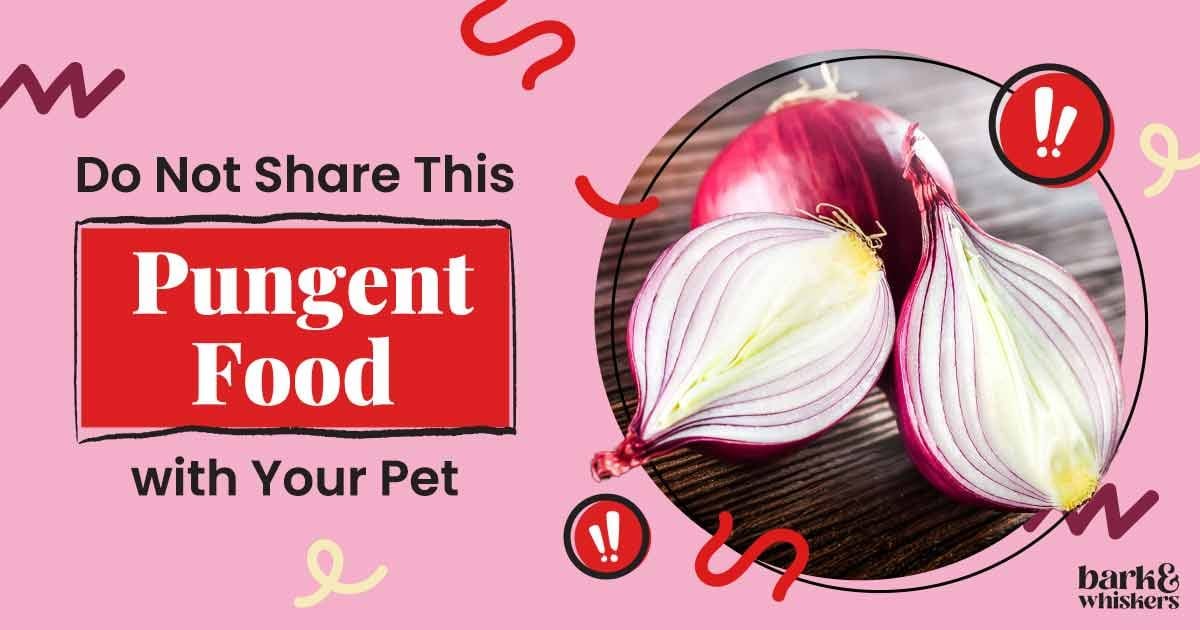
Known for its pungent odor and flavor, this kitchen staple may be well-loved in many different cuisines, but it should never be shared with animals. Even small amounts could be harmful, so make sure to keep it out of your pet’s reach.
STORY AT-A-GLANCE
- Around 105 billion pounds of onions are grown each year, and the average annual consumption per person is 13.67 pounds
- According to research, as little as 5 grams of onions per kilogram of body weight in cats, or 15 to 30 grams per kilogram in dogs, may create drastic hematologic changes
- Onions can cause damage to red blood cells in animals once consumed
- If you keep allium vegetables in your kitchen, get a pet-proof container to store them in
- If you believe your pet has consumed onions, contact your veterinarian immediately
Editor’s Note: This article is a reprint. It was originally published January 24, 2022.
Onions are one of the most commonly used vegetables around the world. According to the National Onion Association, around 105 billion pounds of onions are grown each year, and the average annual consumption per person is 13.67 pounds.1
It’s highly probable that from the billions of pounds of onions cultivated annually, some small scraps will eventually be consumed by household pets. However, onions are one of the vegetables that you should avoid feeding to your pet, as they may pose health risks.
Did You Know?
The origin of the onion isn’t clear, but historians generally agree that it came from central Asia. Prehistoric humans most likely consumed onions long before agriculture came into existence.2
The Allium Plant Family Isn’t Generally Recommended for Pets
Members of the allium plant family have various organosulfur compounds and polyphenols that hold tremendous potential for optimal well-being in humans.3 However, these same compounds can make your beloved pet sick.
According to a study published in Interdisciplinary Toxicology, the compounds inherent in onions may cause damage to a pet’s red blood cells and even cause hemolytic anemia. Furthermore, researchers noted that not only cats and dogs are affected, but other animals as well, such as cattle and horses.4 The actual mechanism of action isn’t fully understood, but this is what the researchers observed:5
“The toxic components in all type of onions, garlic, leeks, shallots, and other plants of the Allium family, are sulfoxides and aliphatic sulfides, specifically allyl and propyl di-, tri-, and tetrasulfides. Onions contain also the relatively rare amino acids S-meth and S-prop (en)ylcysteine sufoxides (SMCO).It is widely agreed that n-propyl disulphide is the principal toxin that reduces the activity of glucose-6-phosphate dehydrogenase in red blood cells; thereby interfering with regeneration of reduced glutathione needed to prevent oxidative denaturation of haemoglobin. Denaturated haemoglobin, when developed, precipitates on the surface of red blood cells (named Heinz bodies) and triggers intra- and extravascular haemolysis. The haemolytic effect of sodium n-propylthiosulphate, which had been isolated from boiled onions, was studied in dogs by Yamato et al. (19986).”
That being said, in the case of garlic very large quantities are needed to be dangerous — much more than you would typically feed to your dog. Dogs can healthfully consume 1/4 teaspoon of freshly chopped garlic per 15 pounds of body weight and reap substantial health benefits, just don’t overdo it.
Which Country Grows the Most Onions?
China is the world’s top producer of onions, producing over 20,507,759 tons in 2018. India trails closely with 13,372,100 tons. Third place belongs to the U.S., with 3,320,870 tons.7
What Are the Signs of Allium Poisoning in Your Pet?
“Consumption of even a small amount of onions may produce side effects in animals.”
According to research, as little as 5 grams of onions per kilogram of body weight in cats, or 15 to 30 grams per kilogram in dogs, may create drastic hematologic changes.8 Health problems may appear within a day of consumption (if eaten in large amounts) or several days later. If you think your pet has consumed onions, here are telltale symptoms you need to watch out for:9
- Vomiting
- Diarrhea
- Abdominal pain
- Smell of onion in breath
- Loss of appetite
- Depression
- Dehydration
If the red blood cells have already been damaged, these symptoms may appear:10
- Pale mucous membranes
- Rapid respiratory rate
- Rapid heart rate
- Difficulty breathing
- Lethargy
- Dark-colored urine (reddish or brown)
- Jaundice
- Weakness
- Depression
- Sensitivity to cold
Onion Trivia
Onions are notorious for making people cry in the kitchen. This is because of their defense mechanism, which is a chemical known as lachrymatory factor. When the flesh is crushed or sliced, the chemical is released and irritates the eyes to ward off predators.11
What to Do if Your Pet Accidentally Ate Onions
If your pet just ate onions (including leeks and chives), contact your veterinarian immediately. Any food or dish that contains onion, even in small amounts, may harm your pet.12
There is no specific cure for allium toxicity among pets. Instead, treatment focuses on supporting the pet’s body for optimal recovery. However, there are approaches that may require medical intervention. Examples include gastrointestinal decontamination, intravenous therapy and administration of vitamins C and E. In more severe cases, blood transfusion and supplemental oxygen therapy may be required.13 Your veterinarian will decide which strategy is the best to facilitate a full recovery for your pet.
For Your Pet’s Safety, Don’t Leave Onions Out in the Open
Based on the published evidence, it’s clear that you shouldn’t feed onions — or any food that contains alliums — to your dog or cat. If you keep allium vegetables in your kitchen, get a pet-proof container to store them in. Knowing that onions (and other dangerous foods) are safely stored away from your pet will give you peace of mind whenever your pet decides to wander into the kitchen.
- 1 National Onion Association, Consumption
- 2 National Onion Association, Onion History
- 3 Antioxidants (Basel). 2020 Sep; 19(9): 888, Abstract
- 4,5,8,12 Interdiscip Toxicol. 2009 Sep 28;2(3):169–176
- 6 Vet Rec. 1998;142(9):216–219
- 7 Current Anthropology, 3(2), June 2018, Table 3
- 9,10 The Journal of Venomous Animals and Toxins including Tropical Diseases, Volume 17, Issue 1, Pages 4-11, Clinical Signs
- 11 The New York Times, September 5, 2017
- 13 The Journal of Venomous Animals and Toxins including Tropical Diseases, volume 17, issue 1, Pages 4-11, Treatment
In this free guide, you’ll discover:
-
How your pet’s biology influences their nutritional needs -
Why conventional feeding advice often falls short -
Practical ways to choose better food for your dog or cat
View our Privacy Policy and Terms of Service.
