

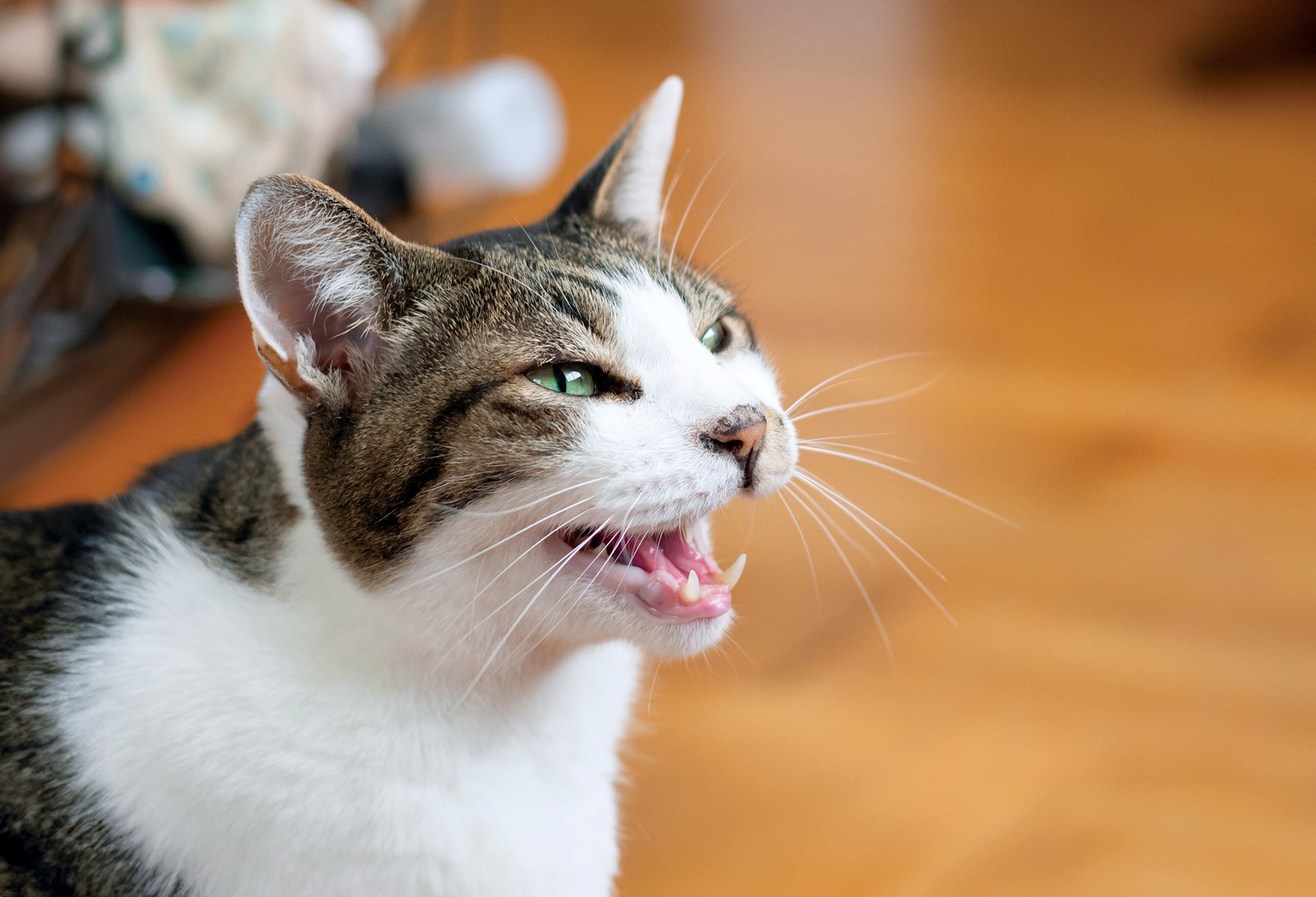
A new study found that cats greet male caregivers with more vocalizations
By:
Rose Frosek
Last Updated: June 10, 2026
Read Caption
Featured Photo: rai106/Shutterstock
When Dr. Kaan Kerman, an instructor in the psychology department at Bilkent University in Turkey, asked cat owners if he could film inside their homes as part of a feline study, the response was enthusiastic. The cat caregivers were eager for any insight into their cats’ behaviour. The research findings, however, may not have been as welcomed—at least among male cat owners.
In the small study, published in the journal Ethology, Kerman and colleagues reported that cats meow more frequently when greeting male caregivers. The team concluded that men “require more explicit vocalizations to notice and respond to the needs of their cats.” In short, the researchers are suggesting that cats have determined that men don’t always listen and that they need to meow more to get their attention.
To gather the research, volunteer cat owners self-identifying as their cats’ primary caregivers wore a camera and filmed the first few minutes upon their return home. The cat owners were instructed to behave as naturally as possible. The researchers then studied the first 100 seconds of footage from 31 volunteers, focusing their attention on the first cat in multi-cat homes to approach the caregiver.
ststoev/Bigstock
“So the authors suggest that we men are clueless, that we’re ignoring cats, and they need to get our attention more. Could be true.”
Study Links Increased Cat Meowing to Male Caregivers
Only one factor among all demographic variables—including age and gender of the cat, breed, and number of cats—was linked to increased vocalization: the sex of the caregiver. On average, cats produced 4.3 meows in the 100-second greeting window with men versus 1.8 with women. Vocalizations such as trilling, chirping, growling or purring were also included.
The researchers hypothesize that the variation relates to differences between how women and men interact with their cats. Previous research has found that female cat owners tend to talk to their cats more frequently and are also better at interpreting the meaning of feline vocalizations.
“So the authors suggest that we men are clueless, that we’re ignoring cats, and they need to get our attention more,” Dr. Jonathan Losos, an evolutionary biologist at Washington University in St. Louis and author of “The Cat’s Meow,” told the New York Times. “Could be true”—though Losos mentioned that other explanations, such as differences in how men and women follow instructions, needed to be ruled out. He also noted the small sample size.
Cat Behaviourists Express Doubts About Study Findings
Dr. Mikel Delgado, a Purdue Senior Research Scientist and cat behaviour consultant at Feline Minds, is likewise not entirely persuaded. “The researchers did not account for other reasons that cats may meow more at the men than women in this study, including how long the caregivers were gone and when the cat was last fed,” she says. “For example, perhaps men on average work longer hours or feed their cats less frequently. Although this finding received a lot of media attention, it’s important to read the actual study and understand why the results are not entirely convincing.”
Although this finding received a lot of media attention, it’s important to read the actual study and understand why the results are not entirely convincing.
Other Variables That Could Influence How Much Cats Vocalize
The researchers also did not make note of how much the owners spoke to their cats, Delgado notes, a variable that could influence how much the cats vocalize. This, in part, could be cultural, Kerman and his colleagues acknowledge. All the study participants live in Turkey where, the researchers say, men often engage less frequently in verbal interaction, a factor that could cause the cats to meow more to get a response.
Chalabala/AdobeStock
To address this, Kerman would like to duplicate this study in other parts of the world.
Delgado, too, would like to see further research. “I’m waiting for a larger study that accounts for other possible explanations before concluding this finding is likely true!”
This article originally appeared in the award-winning Modern Cat magazine.
Subscribe today!
Last Updated: June 10, 2026
