

STORY AT-A-GLANCE
- Ginger has a long history of use in culinary and therapeutic applications, particularly in traditional Ayurvedic and Chinese medicine; its pharmacological actions are due to its high phytochemical content
- Gingerol is the major polyphenol in ginger; as ginger undergoes dehydration, gingerol turns into shogaol. Both of these compounds exhibit potent medicinal properties that may help lower the risk for chronic diseases
- Ginger has been used for thousands of years to help relieve nausea and vomiting in humans, and studies show it exerts the same effects on animals
- This spice can be enjoyed in many different forms, including fresh, dried, powdered and even steeped to make tea; you can offer it in these forms to your pet or use it as a food topper or ingredient in their homemade meals or healthy treats
- If you’re using fresh ginger, the taste can be strong, and many pets don’t like the pungent taste, so steeping a few fresh slices of ginger in hot bone broth is a great way to reduce the spicy taste while still offering health benefits
Editor’s Note: This article is a reprint. It was originally published October 5, 2023.
One of the most versatile spices in the culinary world, ginger lends a spicy “zing” to a wide array of savory dishes, desserts, drinks, sauces, condiments and spice blends from all over the world. And the good news is it has myriad benefits to pets’ health, too. Continue reading to learn more about the health benefits of ginger and how you can offer it to your furry best friend.
What Is Ginger and How Can It Benefit Pets?
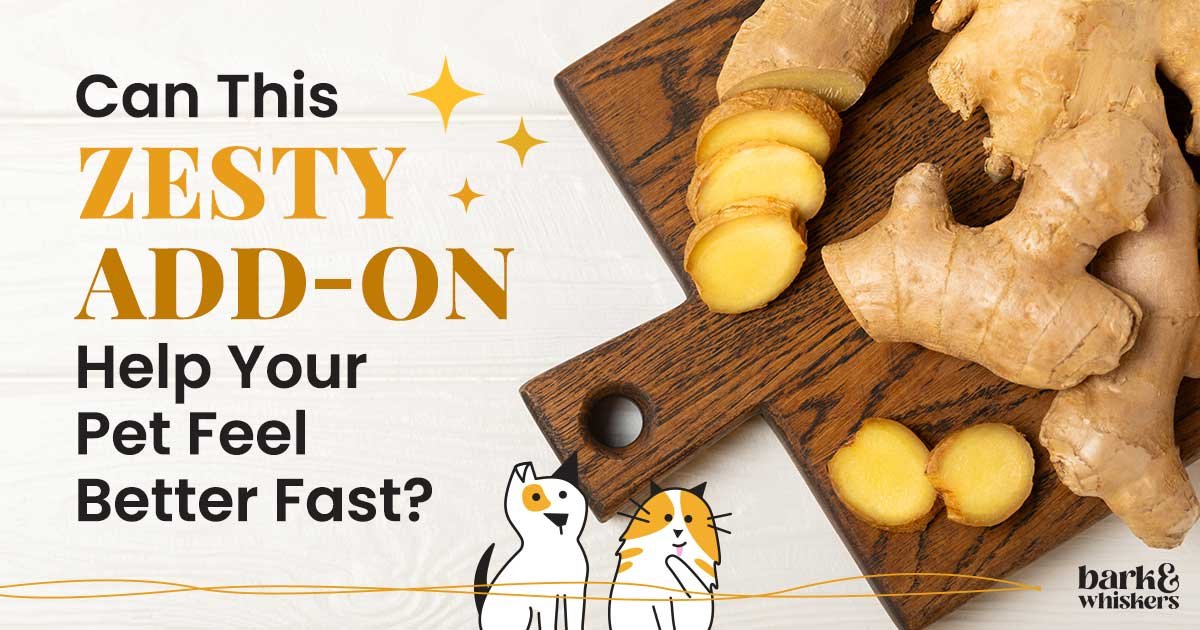
Native to Southeast Asia,1 ginger (Zingiber officinale) belongs to the Zingiberaceae plant family, along with galangal, cardamom and turmeric. Botanically speaking, the gnarled, bumpy root that we’ve come to know as ginger is actually the rhizome of the ginger plant.2 Although it’s the main part that’s commonly consumed, the leaves and flowers are edible as well.3
Ginger root has light brown skin and stringy yellow flesh that tastes slightly peppery and sweet, with a pungent aroma. It has a long history of use in culinary and therapeutic applications, particularly in traditional Ayurvedic and Chinese medicine. According to a study published in the journal Foods:4
“Accumulated investigations have demonstrated that ginger possesses multiple biological activities, including antioxidant, anti-inflammatory, antimicrobial, anticancer, neuroprotective, cardiovascular protective, respiratory protective, antiobesity, antidiabetic, antinausea, and antiemetic activities.”
These pharmacological actions are due to ginger’s rich phytochemical content. In addition, this spice is high in vitamins C and B6, as well as fiber and various minerals.5 It can be enjoyed in many different forms, including fresh, dried, powdered and even steeped to make a soothing, healing tea. You can also include it as an ingredient in your pet’s homemade meals or healthy treats.
Ginger vs. Turmeric: What’s the Difference?
Turmeric looks similar to ginger, except it has an orange hue and tastes similar to mustard or horseradish, with only a slightly gingery flavor.6 The primary bioactive compounds of these two spices are also different. The active constituent in turmeric is curcumin, while for ginger it’s gingerol and shogaol.7
Gingerols and Shogaols Give Ginger Its Healing Powers
Gingerol is the major polyphenol in ginger. As ginger undergoes dehydration, gingerol turns into shogaol, which imparts the characteristic pungent flavor of this spice. Hence, gingerol is abundant in fresh ginger, whereas shogaol is more abundant in dried preparations.8
According to a study published in Phytochemistry, “Both gingerols and shogaols exhibit a host of biological activities, ranging from anticancer, antioxidant, antimicrobial, anti-inflammatory and anti-allergic to various central nervous system activities.”9 These pharmacological properties make it useful in the management of chronic diseases, including arthritis, diabetes, and cardiac and hepatic disorders in humans and animals.10
Moreover, in an animal study published in the journal Biochemical and Biophysical Research Communications, the memory-enhancing effects and antioxidant action of shogaol against neurodegenerative diseases were evaluated on animal models of dementia. The researchers found it helped attenuate neuroinflammation and reduced memory impairment, making it a potential treatment for dementia.11
Ginger May Help Soothe Your Pet’s Tummy Troubles
“Ginger has been used for thousands of years to help relieve nausea and vomiting in humans, and studies show it exerts the same effects on animals.”
According to a study published in the Journal of Ethnopharmacology, ginger extract exerted anti-emetic effects in dogs experiencing chemotherapy drug-induced nausea and emesis (vomiting).12 Studies found that gingerol and shogaol, in particular, are responsible for ginger’s anti-emetic actions, as they function as an antiserotonergic and a 5-hydroxytryptamine (5-HT3) and NK1 antagonist. 5-HT3 and NK1 both play a key role in triggering nausea and vomiting.13
Other Powerful Bioactive Components in Ginger
In addition to gingerols and shogaols, ginger contains other notable phenolic compounds, including quercetin,14 which has antidiabetic, anti-inflammatory, antioxidant, anti-allergy, antiarthritic, neuroprotective and wound-healing properties.15 An animal study published in RSC Advances found that the gingerol and quercetin in ginger helped reduce the lipid and fasting glucose levels in diabetic rats, making it helpful for managing Type 2 diabetes and hyperlipidemia.16
Zingerone is another powerful component in ginger. It’s responsible for giving this spice a sweet flavor when cooked. It exerts potent anti-inflammatory, antidiabetic, antilipolytic, antidiarrheal and anti-spasmodic actions, and also functions as an immunomodulator, appetite stimulant, anxiolytic, antithrombotic, radiation protective and antimicrobial agent. Plus, it inhibits reactive nitrogen species, which play a role in the development of dementia.17
Is Growing Ginger Sustainable?
Ginger production does not cause significant damage to the air, water, land and soil, so it’s considered relatively sustainable.18 However, testing has shown that conventionally grown ginger contains pesticide residues.19 To ensure that the ginger you’re using in your family’s meals, including your pet’s, is safe and sustainable, buy spray-free, certified organic ginger and ginger products whenever possible, preferably from your local farmers market. You can also try growing ginger in your home garden.
How to Prepare and Offer Ginger to Your Pet
You can offer ginger to your pet as a nontoxic remedy for gastrointestinal (GI) upset or to simply supercharge their meals or treats. If you’re using fresh ginger, the taste can be strong, and many pets don’t like the pungent taste, so steeping a few fresh slices of ginger in hot bone broth is a great way to reduce the spicy taste while still offering health benefits. The following amounts of dried ginger (from the spice cabinet) can also be added to a dollop of plain yogurt, cottage cheese, steamed pumpkin or soft food daily:
- Kitten — 1/16 teaspoon (no more than a pinch)
- Small dogs under 10 pounds — 1/8 teaspoon
- Medium-sized dogs — 1/4 teaspoon
- Large dogs — 1/2 teaspoon
- Giant breeds — 3/4 teaspoon
If you want to use this herb to lessen motion sickness during travels, offer a ginger-infused treat (using the above dosing) an hour before traveling. Alternatively, you can add cooled ginger tea to your pet’s meal daily (1/4 cup per 20 pounds of body weight) to lower the risk of GI issues, or use it to rehydrate dehydrated or freeze-dried food.
Ginger makes a good topper for dry food meals as well, as its bioactive components may help mitigate damage caused by mycotoxins. You can add ginger when making homemade bone broth or add ginger tea to your pet’s dry meal to create “gravy” and add hydration.
Top Ginger-Producing Countries
The largest ginger producer in the world is India, which produces around 1.79 million metric tons a year. Nigeria takes second place, producing 691,239 metric tons, while China is in third place, producing 605,123 metric tons.20 In the U.S., most commercial ginger is grown in Hawaii.21
Use This Mighty Spice to Create a GI-Friendly Pet Treat
If your pet has a sensitive stomach, try offering them these healthy treats made of anti-inflammatory, low-residue ingredients that have been specifically chosen to calm gastrointestinal issues.
GI Soothing Bites
Ingredients:
- 1/4 cup slippery elm powder
- 1 cup canned pumpkin
- 1 teaspoon freshly ground ginger root
- 3 fresh peppermint leaves or 3 drops essential oil of peppermint
- 1/4 cup potato flour
Procedure:
- Blend all the ingredients together. Note that the mixture will be very stiff.
- Roll into quarter-sized balls, and then press flat with a fork.
- Place on a greased cookie sheet and bake at 325 degrees F (163 degrees C) for 25 minutes.
- Let cool before giving to your pets. Store extra portions in the fridge (up to 1 week) or in the freezer (up to 3 months).
- 1 Britannica, Ginger
- 2,5 StatPearls [Internet]. Ginger Root
- 3 Specialty Produce, Ginger Leaves
- 4,14 Foods. 2019 May 30;8(6):185
- 6 The Spruce Eats, September 9, 2019
- 7 Am J Chin Med. 2011;39(2):215-31
- 8 Herbal Medicine: Biomolecular and Clinical Aspects. 2nd edition, Chapter 7: The Amazing and Mighty Ginger
- 9 Phytochemistry. 2015 Sep:117:554-568
- 10 Adv Exp Med Biol. 2016;929:177-207
- 11 Biochemical and Biophysical Research Communications. Volume 449, Issue 1, 20 June 2014, Pages 8-13
- 12 Journal of Ethnopharmacology. Volume 57, Issue 2, July 1997, Pages 93-96
- 13 The Journal of Alternative and Complementary Medicine 2012. May;18(5):440-444
- 15 ACS Omega. 2020 May 14;5(20):11849–11872
- 16 RSC Advances 6(15):12235-12242
- 17 ScientificWorldJournal. 2015 May 27;2015:816364
- 18 ShopLogic, January 3, 2025
- 19 Sigma Aldrich, Pesticide Residue Analysis in Ginger Powder with QuEChERS
- 20 Nation Master, Ginger Production
- 21 NASS, August 14, 2001
In this free guide, you’ll discover:
-
How your pet’s biology influences their nutritional needs -
Why conventional feeding advice often falls short -
Practical ways to choose better food for your dog or cat
View our Privacy Policy and Terms of Service.
