

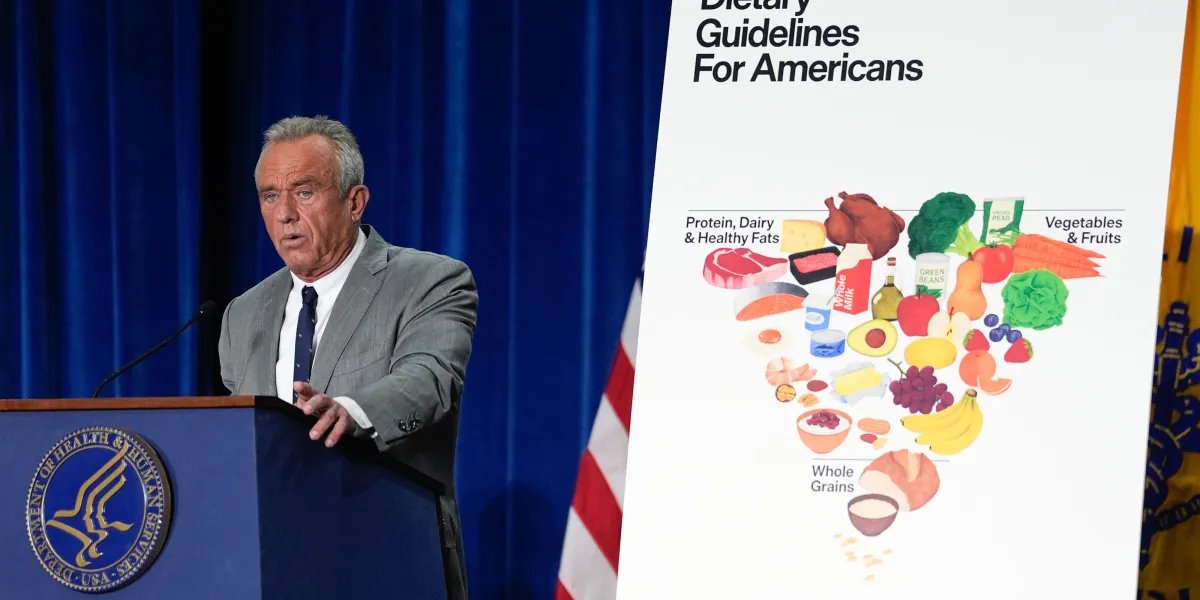
Robert F. Kennedy Jr.’s vision for a healthy America has triggered the most significant shift in federal nutrition policy in decades. Leading the “Make America Healthy Again” movement, Kennedy, as head of Health and Human Services, has enacted dramatic changes that have started to trickle down to the grocery aisle. Central to this shift is a fundamental change in how the government views nutrition.
“The philosophy here is that if you eat whole foods and don’t eat ultra-processed foods, you’ll be eating much more healthfully,” Marion Nestle, a nutrition policy expert, told Fortune.
What the MAHA movement entails is a push against the “industrial food complex and drug companies who have engaged in deception, misinformation, and disinformation when it comes to Public Health,” President Donald Trump said in his post on Truth Social announcing Kennedy as his pick for head of HHS. And that movement has gained steam, with nearly four in 10 parents saying they support it.
In the past year, Kennedy and the Trump administration have dramatically transformed American food policy. Here are five ways the MAHA movement is already reshaping supermarket shelves.
1. Dairy’s revival
The Department of Agriculture on Jan. 7 overhauled dietary guidelines, flipping the food pyramid on its head. This included an emphasis on full-fat dairy and all types of fat, including both healthy and saturated fats. The guidelines recommend three servings of full-fat dairy per day as Kennedy declared the USDA was “ending the war on saturated fats.” The guidelines de-emphasized whole grains, which were previously considered the most important part of diets. “It was actually upside down before,” RFK Jr. argued when unveiling the guidelines.
Yet the dairy trend has been hot long before the food pyramid flip. Americans consumed 650 pounds of dairy per person in 2024, with butter consumption at an all-time high. Yogurt and cottage cheese consumption also rose dramatically, according to USDA data. On the flipside, plant-based milk sales have declined, with brands like Oatly, known for its oat milk, reporting a U.S. sales slump.
2. Beef tallow and seed oil backlash
Kennedy has pushed seed oils from a fringe concern to a policy and cultural target, using his position as HHS secretary to repeatedly question the health and safety of canola, corn, and similar oils. While he hasn’t banned seed oils, federal nutrition messaging now emphasizes “healthy fats,” touting animal fats like beef tallow as an alternative. But other nutrition experts aren’t as convinced.
“The philosophy behind it is that if you eat natural, whole foods, that you’ll reach satiety sooner and won’t eat other things,” Nestle told Fortune. “I think that remains to be seen.”
Nestle says consuming high amounts of animal fats could be linked to health complications like heart disease: “People who eat diets that are high in animal fats have higher blood cholesterol and higher risk for heart disease.”
Food and beverage companies like PepsiCo have announced they will remove canola and soybean oil from Lay’s and Tostitos chips, with smaller companies like Real Good Foods following suit with “seed oil-free” frozen products.
3. Saying bye to artificial dye
Last April, Kennedy announced the U.S. would phase out synthetic dyes, claiming they were “petroleum-based chemicals,” poisonous, and a danger to children’s health. Since then, the health secretary has launched a coordinated effort with regulators to remove the most common synthetic dyes, substituting them with natural alternatives, including galdieria extract blue, a colorant derived from algae.
Several companies—including PepsiCo and Tyson Foods—have already removed synthetic dyes from their products, meaning some Doritos and Cheetos will appear colorless or paler on store shelves. Other companies—including Hershey, Utz, and Campbell’s—have committed to removing dyes within the next several years. Mars Wrigley also announced Skittles, M&Ms, and Extra Gum will be available without artificial colors.
As a result, grocery stores are likely to feature fewer neon and fluorescent-colored products, more “no artificial colors” callouts on packaging, and a growing share of naturally-colored food and beverages in the snack aisle.
4. ‘Protein maxxing’
From Starbucks’ protein lattes and matcha drinks, to Sweetgreen’s 106-gram protein bowl, the macronutrient seems to be the ubiquitous selling point for brands. This trend is aligned with Kennedy’s push to recast protein as the central macronutrient of his nutrition reset. Kennedy’s new federal guidelines announced earlier this month recommended about 1.2 to 1.6 grams of protein per kilogram of body weight per day and urged Americans to “prioritize protein at every meal.”
“That’s what people are already eating,” Nestle told Fortune. “So that doesn’t require a change in anybody’s protein intake. Most people are already eating twice the protein they need.”
Still, grocery aisles have transformed amid Americans’ protein craze, with shelves housing everything from protein Cheerio’s to protein in ice cream from brands like Protein Pints, which witnessed significant revenue growth in 2025, raking in more than $10 million.
5. Swapping out high-fructose corn syrup
Kennedy has also launched a crusade against high-fructose corn syrup (HFCS), casting the sugar alternative as an emblematic ingredient of disease-driving food supply. Some brands, including Tyson and Kraft Heinz, have committed to removing HFCS from its products.
Despite federal changes and rhetoric shifts toward natural foods and high-protein diets, Nestle says Americans still food shop less with their appetites than with their wallets.
“Nobody follows dietary guidelines,” she said. “As long as ultra-processed foods are less expensive than real foods, that’s what people are going to be eating because they don’t have any other choice.”
