

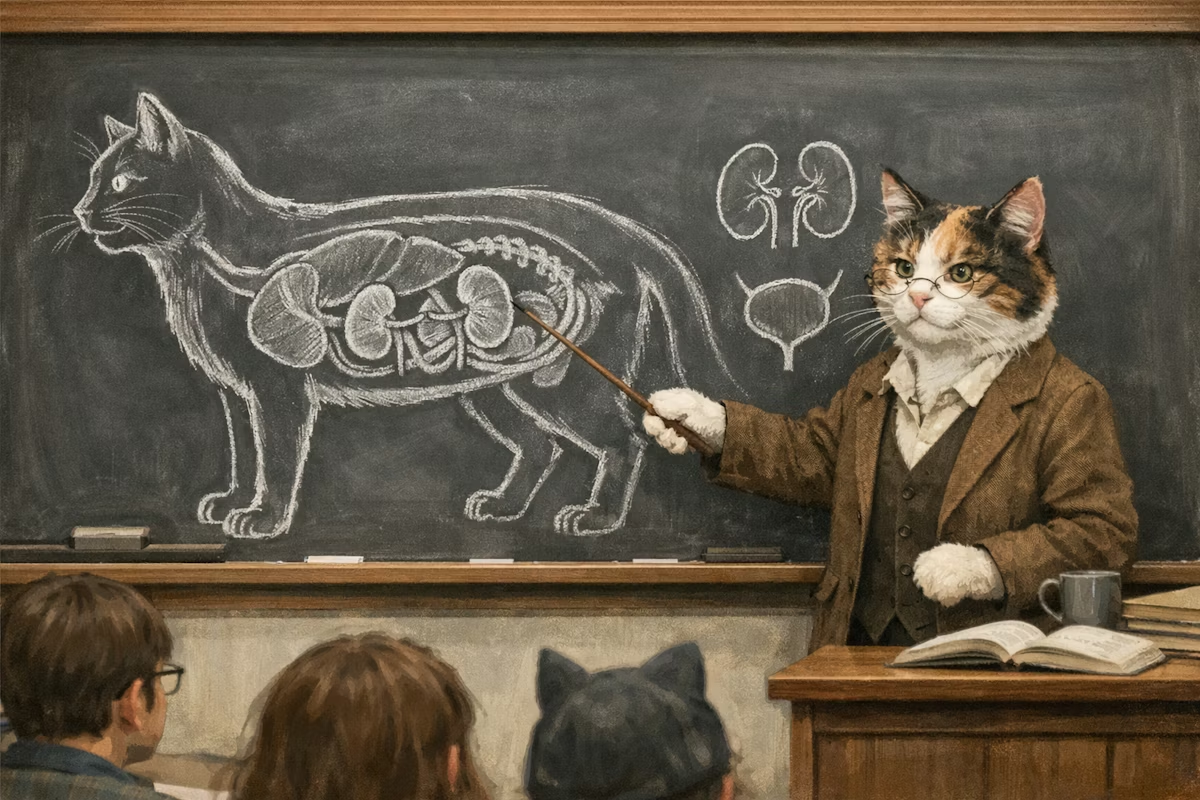
Biology is the primary barrier to proper hydration in cats. “When we talk about felines, we inevitably talk about kidney problems,” said Bianca Santos Matheus, DVM, co-owner of the As Vets veterinary clinic.
In veterinary practice, it is widely accepted that kidney issues related to insufficient hydration are among the most common reasons cats are brought to clinics. Cats tend to produce highly concentrated urine, which increases relative supersaturation (RSS), a measure of the likelihood of crystal and stone formation in the urinary tract.
This predisposition is rooted in feline ancestry. Modern domestic cats descend from the African wildcat (Felis silvestris lybica), a subspecies adapted to desert environments across Africa, East Asia, Central Asia, northern India and western China. “All desert animals have specific renal adaptations to conserve water. In domestic cats, this inherited adaptation mainly affects the number of nephrons, which are responsible for filtering the blood,” Matheus explained.
For comparison, according to the Regional Council of Veterinary Medicine of the State of São Paulo (CRMV-SP), humans have more than 1 million nephrons, dogs have approximately 450,000, while cats have only about 250,000.
Beyond anatomy, feline behavior also contributes to low water intake. “Cats are not considered ‘picky’ without reason. It’s common for owners to struggle to get their cats to drink water because many prefer only running water. Even with fountains or leaving a tap slightly open, some cats simply won’t drink,” the veterinarian said.
As a result, cats are more susceptible to urinary tract diseases, including idiopathic cystitis and bacterial infections. “Virtually every cat will experience some related issue over its lifetime — and if not, it’s likely because it didn’t live long enough,” Matheus added.
At the same time, the growing number of cats in households and the increased longevity of pets are bringing feline urinary health into sharper focus.
In this context, nutrition plays a critical role in compensating for low voluntary water intake. According to Mayara Andrade, DVM, with GranPlus, one of the most effective ways to balance a cat’s diet is through mixed feeding, a practice that combines dry and wet foods to increase water intake indirectly.
Why wet food supports feline hydration
Including wet food in a cat’s diet increases total water intake and, as a result, leads to greater urine volume and lower urine concentration.
Even though cats may reduce voluntary water consumption when fed wet diets, Andrade said the overall hydration balance remains higher than with dry-only diets even when water is added to dry food.
In mixed feeding, the combination offers benefits for both health and palatability. Beyond moisture content, Andrade noted that the nutritional profile and high digestibility of wet food further enhance outcomes. Higher protein-to-starch ratios help reduce RSS for calcium oxalate, while improved digestibility minimizes water loss through feces, allowing more fluid to be excreted through urine.
Mixed feeding aligns with health-driven trends
In recent years, pet owners have shown a greater willingness to pay for diets that deliver tangible health benefits. In line with this trend, promoting mixed feeding and expanding the availability of premium wet foods may represent an opportunity for manufacturers looking to connect with cat owners.
However, the benefits of wet food inclusion depend on offering products designed to meet these needs without creating new health concerns. Drawing a parallel with human nutrition, Matheus cautioned that feeding only wet food may not be the ideal solution. “It’s like someone needing to increase protein intake but doing so by eating fast food every day. That creates more health problems than it solves.”
For this reason, she emphasized that premium wet foods should avoid additives such as artificial colorants — especially caramel color IV, also found in soft drinks — and thickeners like guar gum and carrageenan. “In large amounts, these ingredients can cause digestive issues such as diarrhea, vomiting and gastritis, and owners end up replacing one problem with another,” she said.
According to Andrade, in addition to high-quality ingredients, products that focus on calorie control for weight management and balanced mineral levels are best suited for cats. “It’s important that feeding guidelines are clearly stated on packaging and that owners are encouraged to consult a veterinarian before making dietary changes. This ensures the most appropriate feeding plan based on each pet’s individual needs,” said the GranPlus veterinarian.
