

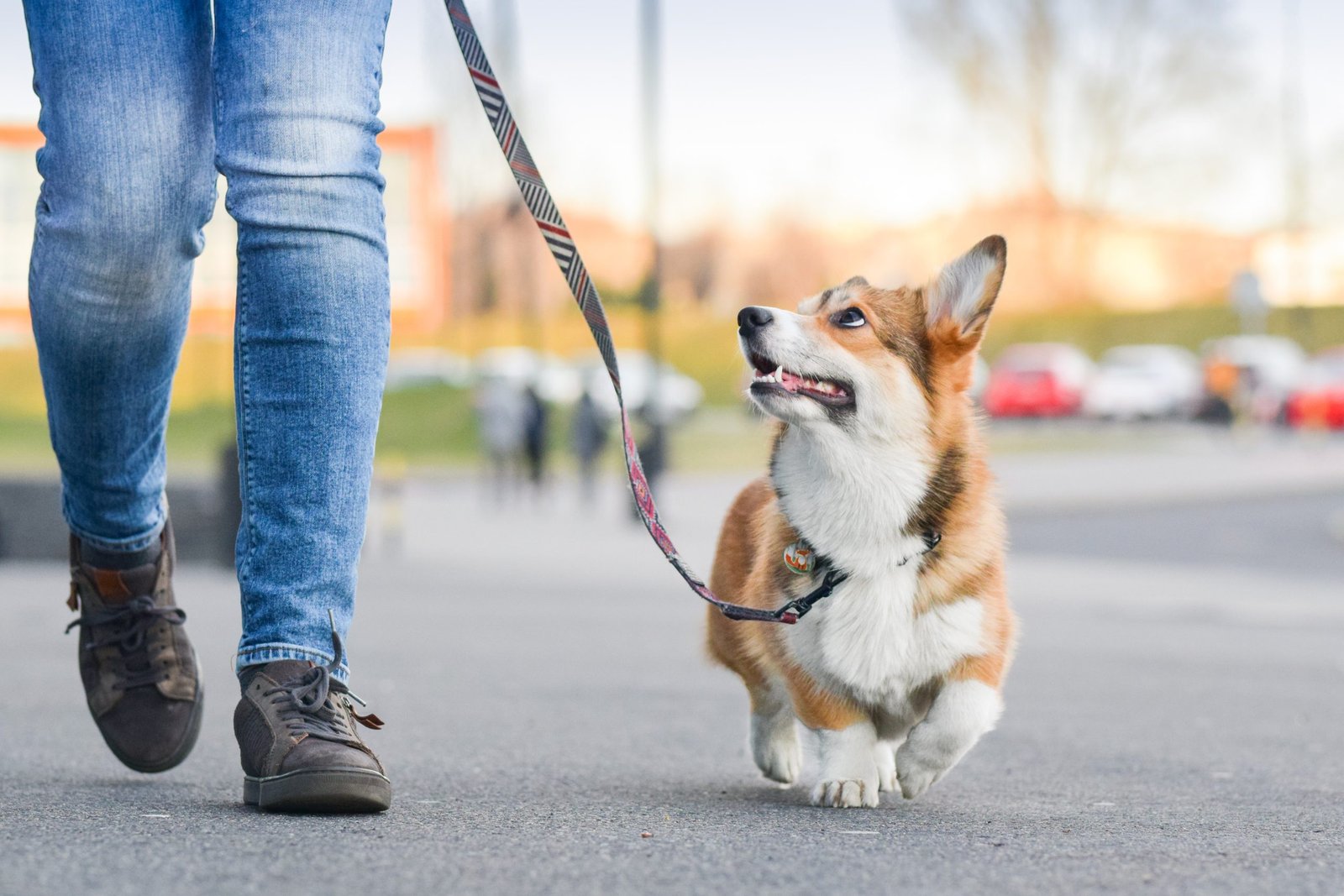
Loose leash walking for puppies can feel frustrating in the beginning. If your puppy suddenly turns into a tiny sled dog the moment you clip on the leash, you are not alone.
Pulling is not defiance. It is curiosity. It is enthusiasm. It is a young brain wired to move toward interesting smells, sounds, people, and dogs. Puppies are not born understanding leash pressure. They do not automatically know that tension means “come back.”
When we understand that, everything shifts. Instead of trying to stop pulling through correction, we start building a skill. Loose leash walking is learned. And it starts with connection.
Start Where Your Puppy Can Succeed
One of the biggest mistakes people make with loose leash walking for puppies is starting in an environment that is simply too exciting. If you begin on a busy sidewalk filled with squirrels and neighborhood activity, the environment will almost always win.
Start inside your house. Or in your yard. Somewhere quiet. Let your puppy practice staying near you when the world is calm. Once they understand the game, you can slowly add difficulty. New driveways. New sidewalks. Slightly busier areas.
Progression builds confidence. Jumping straight into chaos builds frustration.
Reinforce What You Want to See
When teaching loose leash walking for puppies, focus on reinforcing the behavior you like rather than correcting what you don’t.
If your puppy chooses to walk next to you, mark and reward.
If they check in with eye contact, reward.
If they slow down to match your pace, reward.
Reinforcement makes behavior stronger. If you consistently pay attention to the moments your puppy chooses you, those moments grow. Over time, staying near you becomes more valuable than forging ahead.
And here is something important: you are not looking for perfection. You are looking for effort.
Use Movement to Create Engagement
Stillness can be difficult for young puppies. Instead of walking in a straight line and hoping for the best, make yourself interesting.
Change direction.
Speed up slightly.
Walk in a small curve.
When you add playful, unpredictable movement, your puppy starts paying attention. They learn that walking with you is dynamic and engaging. Loose leash walking for puppies becomes a shared activity instead of a power struggle.
Define the “Zone”
Choose a general area near your leg where you would like your puppy to walk. It does not need to be a competition-level heel position. This is everyday walking.
When your puppy is in that zone, reward. When they leave the zone and create tension, simply stop moving or change direction. No dragging. No yanking.
Your puppy learns something very clear: staying near you keeps the walk going. Pulling makes forward motion pause.
That clarity builds understanding quickly.
Let the Environment Work for You
Food rewards are wonderful, but they are not the only reinforcement available. For many puppies, sniffing is incredibly powerful.
Imagine your puppy spots a patch of grass they desperately want to investigate. Instead of letting them drag you there, wait for a moment of slack in the leash. The instant the leash loosens, walk forward together and let them sniff.
Now the environment becomes the reward for loose leash walking. Your puppy learns that cooperation opens doors.
This is often the moment when training clicks.
Keep It Short and Positive
Loose leash walking for puppies does not require long training sessions. In fact, shorter is better. Five focused minutes can accomplish more than a twenty-minute struggle.
If your puppy becomes overstimulated, take a break. Training works best when your puppy is mentally available to learn. We are building habits, not testing endurance.
Connection Over Control
At its heart, loose leash walking for puppies is not about control. It is about teaching your puppy that choosing you is worthwhile.
When you consistently reward attention and effort, your puppy begins checking in more often. Walks start to feel lighter. Less like a tug-of-war. More like teamwork.
When we approach leash training this way, we are not just stopping pulling. We are building a dog who wants to walk with us.
