

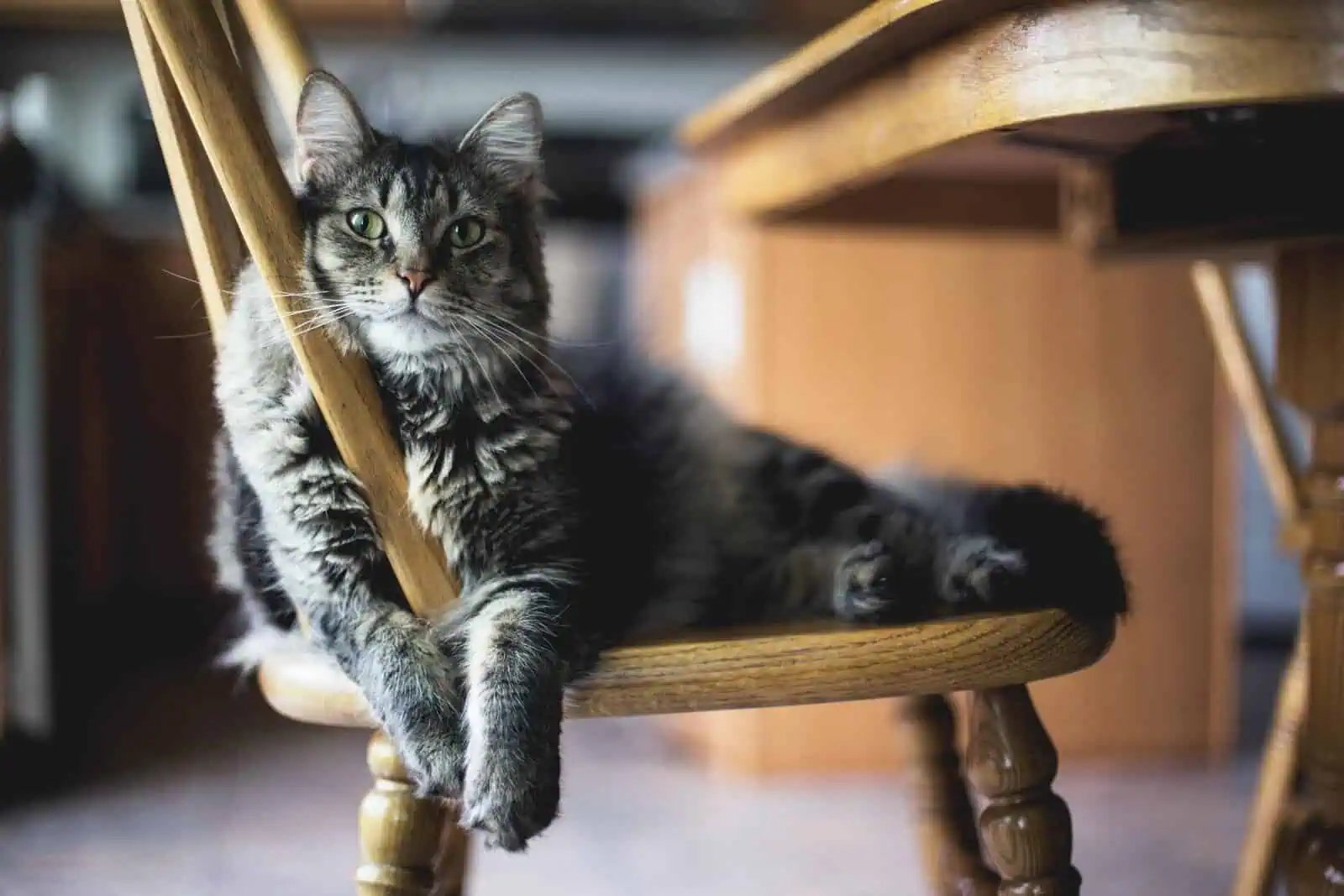
Several years ago, I wrote about the discovery that certain probiotic strains could help support a cat’s ailing kidneys. Knowing that Chronic Kidney Disease (CKD) is terribly common in senior cats, I’m excited to share the latest on this. More research has been done, more products are available, and a close friend recently reported that specific probiotics have made a huge difference for her two CKD cats!
I know a lot of you are looking for anything that could help your beloved cat with CKD. I’ve been there, and I’m glad you’re here.
What probiotic strains help cats with kidney disease?
Back in 2015, I shared research on three specific probiotic strains that have been studied for their ability to reduce azotemia — the buildup of waste compounds that happens when the kidneys can’t filter efficiently. Our three magic microbes:
- Streptococcus thermophilus
- Lactobacillus acidophilus
- Bifidobacterium longum
Richard Palmquist, DVM’s research found that elevated kidney blood values (BUN and creatinine) decreased significantly in cats given these probiotics with canned food. Instead of waiting for struggling kidneys to clean up waste in the bloodstream, these little bacteria get to work metabolizing uremic toxins before they accumulate. These probiotics say,“Hey kidneys, you’ve worked hard enough — we’ve got this.”
Meet another kidney-friendly bacteria: B. lactis
Since I last wrote about this, you may have noticed that some products list Bifidobacterium lactis rather than (or alongside) B. longum. Good news: B. lactis is considered beneficial for kidney health in its own right, and for similar reasons.
Research shows that Bifidobacterium strains generally — including both B. longum and B. lactis — can help reduce harmful waste products like blood urea nitrogen (BUN) and p-cresyl sulfate that build up when kidneys are underperforming. Here’s what they’re doing behind the scenes:
- Reducing uremic toxins: They can break down or sequester nitrogenous wastes produced by bad bacteria, reducing the filtration burden on the kidneys.
- Restoring gut balance: CKD cats (and humans) often have a disrupted gut microbiome. Bifidobacterium strains help bring balance back, which in turn reduces systemic inflammation.
- Strengthening the gut barrier: By improving intestinal integrity, these probiotics help prevent toxins from leaking through the gut wall into the bloodstream, which would otherwise trigger inflammation that further strains the kidneys.
So if you see B. lactis/longum on a label (as with the Pet Wellbeing product below), consider that a feature. We are still learning about which strains are beneficial for kidneys. In fact, it appears that some other Lactobacillus strains are also kidney-supportive!
What newer research says about probiotics for kidney health
A 2024 pilot study out of National Taiwan University tested a different Lactobacillus combo — L. paracasei and L. plantarum — delivered in probiotic-coated cat treats rather than capsules or powder. The results? Over 8 weeks, the cats ate the treats and creatinine levels were reduced or held steady in every single CKD cat, appetite bounced back for most of them, and one cat actually improved from CKD stage 3 to stage 2.
Then, a 2025 review in the World Journal of Nephrology confirmed that the OG three probiotic bacteria mentioned above look promising for managing CKD, with encouraging effects on blood toxin levels, inflammation, and quality of life.
Finally, a 2026 roundtable of kidney specialists broke down what each probiotic actually does: S. thermophilus helps lower key markers of kidney stress in the blood; L. acidophilus helps keep harmful bacteria from colonizing the small intestine, which reduces the production of uremic toxins before they even get started; and B. longum rounds out the Bifidobacterium work of clearing toxic bacterial byproducts, which may help slow CKD’s progression. Team work makes the dream work!
Researchers emphasize that this is a promising adjunct therapy, not a cure or replacement for medical care, but the evidence is encouraging. Which brings me to my friend Jenna.
My friend’s real world experience with probiotics for CKD cats
My close friend Jenna has two senior cats, both diagnosed with CKD a couple years ago. She has been working with her vet to support them. Phosphate binders in their food helped slow the damage that excess phosphorus can do to already-stressed kidneys.
Then, several months ago she added Pet Wellbeing Ultimate Probiotic 9 Strains for Cats to their food. She was amazed to report that both cats noticeably revived with this addition: more energy, better appetite, and less vomiting. They continue to outperform veterinary expectations for 16+ year-old CKD cats! Now, this is one person’s experience. But Jenna is a very attentive cat mama, and she was genuinely struck by the change after introducing these probiotics.
Best probiotics for cats with CKD
Here are the cat-specific probiotic products I’m aware of that contain key kidney-helper strains.
- Pet Wellbeing Ultimate Probiotic 9 Strains with FOS Prebiotics for Cats — This is the one Jenna used and her cats don’t mind it in food because it’s tasteless. It’s a powder containing nine strains, including the kidney-helpers L. acidophilus, S. thermophilus, B. lactis/longum, and L. plantarum, plus a prebiotic to help the good bacteria thrive. This product gets rave reviews and is designed to be mixed into food.
- Azodyl — The OG three strains plus fiber, recommended specifically for CKD. It comes in capsule form. The company prefers you give it whole on an empty stomach as the coating is designed to protect the bacteria until they reach the right part of the gut. But let’s be real: some cats are nearly impossible to pill. Their guidance for the rest of us: open the capsule into a small amount of a high-fat treat or food like a pill pocket, cheese or plain, full-fat yogurt. Less food in the stomach is better, since the goal is getting those microbes as far into the digestive tract as possible.
- Adored Beast Feline Gut Soothe — The maker of this popular product specifically highlights renal (kidney) support. It contains our three target strains at a robust 15 billion CFU, plus kidney-friendly B. lactis, L. paracasei, and L. plantarum. It also includes gut-soothing herbs like slippery elm bark, marshmallow root, and L-glutamine, which may be helpful for cats dealing with the digestive side effects of CKD. Simply mix into your cat’s food. Requires refrigeration after opening.
Bear in mind that while probiotics can be helpful for earlier stage renal issues, they may have a less noticeable impact in very advanced cases. Also, phosphorus binders or a low-phosphorus diet and other medical assistance can be critical for helping CKD cats live a healthier, longer life.
Practical tips for kidney-supportive probiotics for cats
🧊 Refrigerate. Most of these probiotics, including Pet Wellbeing and Adored Beast, need to stay cool to keep those microbes alive and effective. Even if a product doesn’t strictly require it, refrigerating after opening is generally smart practice.
💊 Azodyl has its own rules. See the notes above about the empty-stomach preference and the high-fat food workaround. Do what you can, even imperfect delivery has shown encouraging results in some research.
🩺 Combine with other CKD strategies. As Jenna’s experience suggests, these probiotics can be a great complement to phosphate binders and other vet-recommended approaches. They’re not a standalone fix. They’re a team player. As always, talk to your vet.
📅 Don’t wait for a crisis. Probiotics may be ideal as an ongoing part of your cat’s health routine rather than a last resort. The gut-kidney connection is real, and supporting gut health now could matter a lot down the road.
If you have tried any of the probiotics above with your CKD cats, I would love to hear how it went in the comments. This is the kind of topic where our collective experience is valuable to each other.
Further reading if you want to nerd out
Standard disclaimer: The information here is not a substitute for professional veterinary care. Please consult your vet when making changes to your cat’s kidney health regimen. 🐾
