

STORY AT-A-GLANCE
- Whether fresh or frozen, blackberries make for a healthy addition to your pet’s nutritionally balanced, species-appropriate diet
- Blackberries are valued not only for their culinary versatility but also for their therapeutic properties. In fact, they’re considered functional foods, providing health benefits beyond basic nutrition
- Blackberries are chock-full of health-boosting polyphenols, and one of their primary constituents are anthocyanins, which have antioxidant, anti-inflammatory and neuroprotective actions, among others
- Large dogs can enjoy a handful of berries daily. For smaller dogs or cats, offer two to four berries for every 10 pounds of body weight
- You can also stuff blackberry slices into an interactive toy, puree and smear it over a lick mat, or use it as an ingredient in a homemade treat
Editor’s Note: This article is a reprint. It was originally published July 11, 2022.
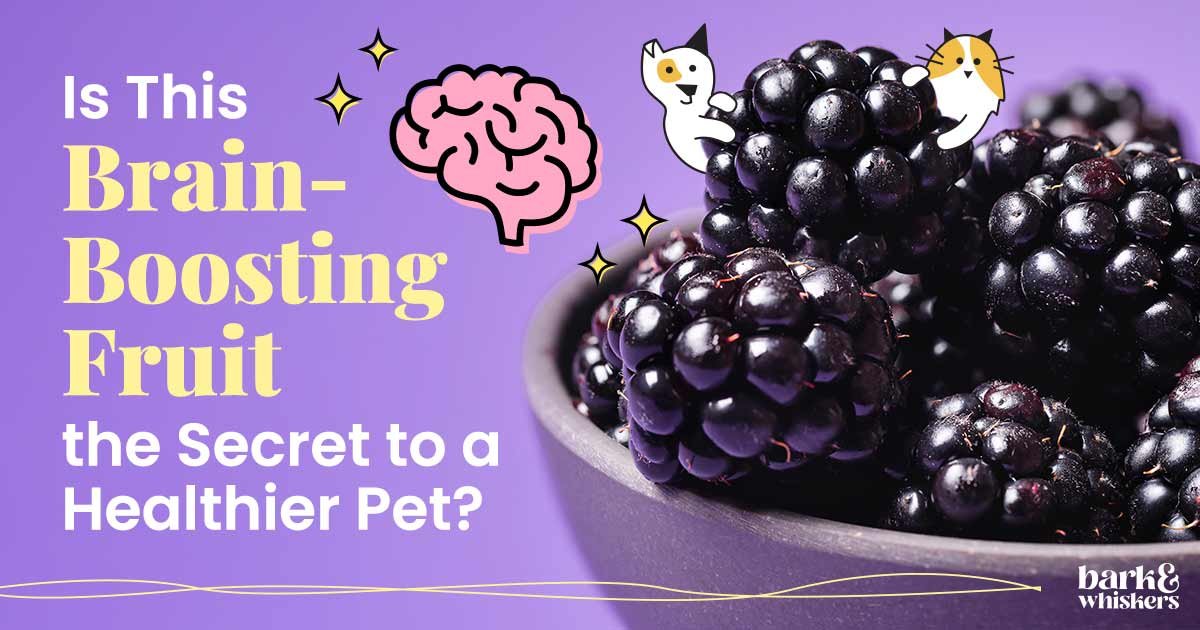
Known for their sweet, tangy flavor and inky-black color, blackberries are often used in jams, pies, cobblers and other delectable desserts. You’ll be pleased to know that these little gems, whether fresh or frozen, also make a healthy addition to your pet’s nutritionally balanced, species-appropriate diet. Continue reading to find out the health benefits of these fruits and how to offer them to your animal companion.
What Are Blackberries?
Blackberries (Rubus fruticosus L.) belong to one of the most diverse genera of plants, Rubus, which is categorized under the rose plant family. Despite their name, blackberries are botanically not true berries but are actually an aggregate fruit made up of small drupelets forming a soft flesh around one seed.1 They’re in season from July to August, but you can also find them frozen in groceries year-round.2
Blackberries are valued not only for their culinary versatility but also for their therapeutic properties. In fact, they’re considered functional foods, providing health benefits beyond basic nutrition. According to a study published in the journal Molecules:3
“R. fruticosus contains vitamins, steroids and lipids in seed oil and minerals, flavonoids, glycosides, terpenes, acids and tannins in aerial parts that possess diverse pharmacological activities such as antioxidant, anti-carcinogenic, anti-inflammatory, antimicrobial, anti-diabetic, anti-diarrheal, and antiviral.”
Misinformation about many healthy fruits, vegetables, nuts and seeds abounds on the internet. This is because websites have labeled all risks (such as the risk of overconsumption causing gastrointestinal issues, or choking on too large of pieces or pits) as “toxicities,” which isn’t true but has managed to confuse millions of pet lovers, nonetheless.
In the case of blackberries, one concern pet parents may have about feeding them to pets is the naturally occurring xylitol they contain. Xylitol is a sugar alcohol that is toxic to dogs, causing low blood sugar, seizures, vomiting and loss of consciousness.4
However, the amount of xylitol in blackberries is so small that you don’t really have to worry about it endangering your pet, especially if you offer this fruit to them in moderation, keeping in mind that treats and healthy extras like this should only make up less than 10% of their daily caloric intake. So, don’t be afraid to make blackberries a part of your pet’s nutritionally balanced, species-appropriate diet.
Where Do Blackberries Grow?
Blackberries are native to many continents, including Europe, Asia, and North and South America. Today, bulk of U.S. blackberry production takes place in Oregon, with an estimated yearly yield of 20,100 tons.5
Anthocyanins Contribute to Blackberries’ Medicinal Effects
“Anthocyanins are able to cross the blood-brain barrier and may have protective effects against age-related degenerative changes in brain cells of animals and humans.”6
Blackberries are chock-full of health-boosting polyphenols, and one of their primary constituents are anthocyanins. Responsible for blackberries’ dark hue, this compound also contributes to their antioxidant, anti-inflammatory, cardioprotective, antidiabetic, antiobesity, neuroprotective and chemopreventive properties.7
A study published in the journal Applied Sciences evaluated the effects of anthocyanins in the cognitive function of elderly dogs. The researchers found that dietary intake of this compound led to improved cognitive dysfunction scores and a significant reduction in amyloid-beta oligomers, which are the markers for canine cognitive dysfunction (CCD). They also exerted neuroprotective action in the central nervous system of aging dogs by helping “downgrade the expression of inflammatory cytokines in the brain cortex region.”8
Ellagic Acid — Another Potent Polyphenol in Blackberries
Blackberries are rich in ellagic acid, an antioxidative polyphenol that exerts neuroprotective, anti-inflammatory, antihepatotoxic, antiviral, antifibrogenic, anti-atherogenic and anticancer properties.9,10
According to a study published in the Planta Medica journal, although the antioxidant effect of ellagic acid contributes to many of its pharmacological properties, it also has other mechanisms of action that make it useful for different aspects of health, including the ability to “reduce lipid metabolism, alter proinflammatory mediators (tumor necrosis factor-α, interleukin-1β, interleukin-6) and decrease the activity of nuclear factor-κB.”11
Ellagic acid is also converted into urolithins by gut bacteria. Urolithins have anti-inflammatory, anticarcinogenic, antiglycative, antioxidant and antimicrobial effects,12 and has been shown to protect mitochondria and improve longevity in animal models.13
Blackberries Fun Fact
A study published in the journal Animal (Basel) found the smell of blackberries to be one of the most attractive scents to dogs, along with blueberries, mint, rose, lavender and linalool. The dogs in the study interacted more frequently with these scents than the other odor samples.14
In addition to phytochemicals, blackberries contain an assortment of nutrients that may help improve your pet’s health in various ways. High amounts of vitamin C are found in this fruit; a tablespoon contains almost 2 milligrams of vitamin C.
Known as a powerful antioxidant, vitamin C plays important roles in supporting the immune system and skin health.15,16 Although dogs can synthesize vitamin C in their body,17 getting supplementary amounts of this vitamin from fresh foods can be beneficial for their health.
Blackberries are also rich in vitamin K, with a tablespoon serving providing 1.78 micrograms. Vitamin K is crucial for blood clotting, allowing your pet’s body to recover in case of injuries.18 It also plays a role in heart health by keeping calcium from accumulating in the arteries.19 Moreover, blackberries are an excellent source of prebiotic fibers that may help nourish your pet’s gut microbiome.20
Is Growing Blackberries Sustainable?
Blackberries are considered a sustainable crop, since cultivating them does not cause significant damage to the air, water, land and soil. This fruit also has a relatively low carbon footprint; it only takes 0.28 kg CO2e to produce 1 kilogram (2.2 pounds) of fresh blackberries — that’s equivalent to a car driving 1.25 kilometers (0.78 miles).21
However, some commercial growers may use pesticides on their crop, which can harm your and your pet’s health when consumed. To make sure that your blackberries are safe and sustainable, buy organic, spray-free varieties from your local farmers market whenever possible.
How to Choose Blackberries and Offer Them to Your Pet
When buying blackberries, look for berries that are plump, firm and dull black — these indicate that the fruits are fully ripe. They’re highly perishable so don’t leave them at room temperature if you’re not planning to eat or offer them to your pet yet.
You can store blackberries in the fridge or freezer; if possible, in their original container. If you’re planning to transfer them to a different container, handle them carefully and remove any damaged, moldy berries you see while you’re at it. Do not wash the berries before storing, as this might cause them to become moldy or mushy.22,23
Wash blackberries right before you offer them to your pet. Depending on your pet’s size, you may need to cut the berries into smaller pieces that your pet can comfortably chew, so they won’t be a choking hazard.
You can offer a few slices of blackberries as a training treat or sprinkle them over your pet’s meal as a healthy topper. You can also stuff blackberry slices into an interactive toy, puree and smear it over a lick mat, or use it as an ingredient in a homemade treat. Here’s a simple recipe you can try:
Frozen Coconut and Berry Treats Recipe
Ingredients:
- Coconut oil
- Blackberries and fruits of your choice (blueberries, raspberries or cranberries)
Procedure:
- Get the coconut oil to a liquid consistency.
- Wash your berries of choice and place in an ice tray.
- Add the coconut oil and allow to freeze for a few hours.
Tip: If your pet is the type to “inhale” their food without chewing it, freeze this treat on a loaf pan to prevent them from swallowing it whole.
When offering treats to your furry best friend, keep in mind that healthy extras should make up less than 10% of your pet’s daily caloric intake. Large dogs can enjoy a handful of berries daily. For smaller dogs or cats, offer two to four berries for every 10 pounds of body weight.
- 1 Veritable Vegetable, February 2, 2023
- 2,22 Gardening Know How, Picking Blackberries
- 3 Molecules. 2014 Jul 28;19(8):10998–11029
- 4 VCA Animal Hospitals, Xylitol Poisoning in Dogs
- 5 AgMRC, September 2021
- 6 J. Agric. Food Chem. 2018, 66, 44, 11531–11543
- 7 Journal of Food Composition and Analysis. Volume 23, Issue 6, September 2010, Pages 554-560
- 8 Appl. Sci. 2022, 12(23), 12130
- 9 Planta Med 2018; 84(15): 1068-1093
- 10,11 Pharmacological Research. Volume 97, July 2015, Pages 84-103
- 12 Evid Based Complement Alternat Med. 2013;2013:270418
- 13 Food Research International. Volume 45, Issue 1, January 2012, Pages 1-8
- 14 Animals (Basel). 2022 Jun 8;12(12):1488
- 15,18 AKC, February 23, 2026
- 16 NIH ODS, Vitamin C
- 17 Can J Vet Res. 2006 Oct;70(4):305–307
- 19 Open Heart. 2021 Nov;8(2):e001715
- 20 Dogs Naturally, March 31, 2022
- 21 Shop Logic, January 3, 2025
- 23 North American Raspberry and Blackberry Association, Picking Your Own Blackberries
In this free guide, you’ll discover:
-
How your pet’s biology influences their nutritional needs -
Why conventional feeding advice often falls short -
Practical ways to choose better food for your dog or cat
View our Privacy Policy and Terms of Service.
