
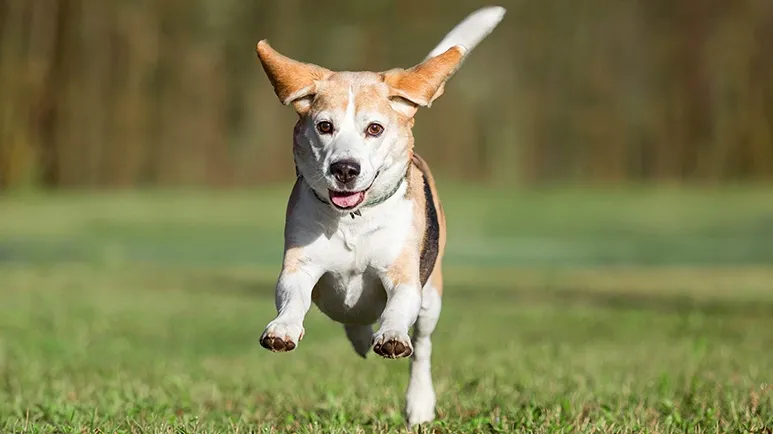
When your pet starts slowing down, it is hard not to worry. The good news is that a noninvasive therapy may help ease your furry friend’s pain and help them move more comfortably.
Advertisement
Join the Bark & Whiskers™ Family
Sign up today for our FREE newsletter, packed with expert advice and insider tips to keep your beloved pet in tip-top shape.
View our Privacy Policy and Terms of Service.
STORY AT-A-GLANCE
- Shockwave therapy is a noninvasive, drug‑free treatment that uses focused sound waves to help pets manage pain, reduce inflammation, and support healing deep within muscles, tendons, joints, and bone
- This therapy is commonly used for arthritis, joint stiffness, tendon and ligament injuries, back pain, fractures, and post‑surgical recovery
- By improving blood flow, stimulating collagen production, and breaking down calcium buildup, shockwave therapy supports the body’s natural repair process instead of simply masking pain symptoms
- Most pets tolerate shockwave therapy well, with short sessions lasting 15 to 30 minutes
- For pet parents concerned about long‑term medication use, shockwave therapy offers a supportive alternative that may ease discomfort and improve mobility
Chronic pain is a common problem in pets, particularly as they age or develop joint and orthopedic conditions that make everyday movements like walking, standing, or climbing stairs increasingly difficult. These issues are often managed with long‑term medications, but that approach is not always ideal, especially when treatment stretches on for months or years.1
The good news is that other options exist to help reduce pain without relying solely on pills. One alternative is shockwave therapy, a supportive treatment that uses targeted acoustic waves to stimulate healing in injured or inflamed tissues.2 By calming inflammation at its source, this approach may help ease discomfort and allow your pet to move more freely again.
Shockwave Therapy Is a Gentle Treatment
Despite its name, shockwave therapy does not involve electrical shocks or anything harsh and scary. Instead, the treatment delivers high‑energy acoustic waves through the skin and into deeper tissues such as muscles, tendons, and bones.3,4 According to Animal Wellness, these sound waves act like a deeply focused massage that reaches areas the hands simply cannot. It is a noninvasive option that many pets tolerate quite well.5
However, shockwave therapy is not a one-size-fits-all treatment. Different technologies can generate the acoustic waves, and each method affects how deeply the energy travels and how precisely it can be focused. VCA Animal Hospitals identifies several types used in veterinary practice:6
- Piezoelectric — Uses crystals to generate highly focused shockwaves, allowing treatment to target a specific area with precision
- Electromagnetic — Produces shockwaves through electromagnetic energy that can be adjusted for controlled, consistent delivery
- Electrohydraulic — Generates shockwaves through an electrical discharge in fluid, creating a powerful pulse capable of reaching deeper tissues
- Radial pressure waves — Delivers lower-pressure waves that spread more broadly but do not penetrate as deeply, which is why some specialists do not classify it as true shockwave therapy. Radial pressure waves are used to target more superficial issue, such as muscle pain or trigger points
At this point, no single type is considered universally superior. The most appropriate approach often depends on the condition being treated, the location of the injury, and the equipment available at a veterinary clinic.
Decades of Helping Pets Heal
Shockwave therapy may feel like a modern breakthrough, but its roots go back more than four decades. Extracorporeal shockwave therapy (ESWT) was first introduced in human medicine in 1982, where it was used to treat urologic conditions such as kidney stones.7
Further research also showed that ESWT improved healing in bone and soft tissue. The therapy eventually earned FDA approval for human applications. By the 1990s, veterinarians began using ESWT in equine medicine to help horses recover from fractures, tendon and ligament injuries, and arthritis.8
Encouraged by these results, major university veterinary schools began researching shockwave therapy for dogs and have found that it has also shown promise for back pain, chronic wounds, and recovery after orthopedic procedures, including tibial plateau leveling osteotomy (TPLO) performed to treat cranial cruciate ligament (CCL) rupture in dogs.9
What Happens When Your Pet Gets Shockwave Therapy?
Shockwave therapy sessions are designed to be simple and as stress‑free as possible for pets. The goal is to deliver focused sound waves directly to the tissue that needs support, so preparation and technique matter. While each treatment plan is customized, the process itself tends to follow a consistent routine:10
- The treatment area is prepared — Fur over the area is clipped short. Fur can trap air between the probe and the skin, which reduces how efficiently the energy reaches the target tissue.11
- Ultrasound gel is applied — A layer of gel helps eliminate remaining air pockets and helps the acoustic waves travel efficiently from the device into the underlying muscle, tendon, or bone.
- Acoustic pulses are delivered — A handheld probe is placed against the area, delivering controlled pulses of energy at specific depths. These pulses stimulate circulation and activate the body’s natural repair responses.
- Sessions are short and spaced out — Treatments usually last 15 to 30 minutes, with one to three sessions spaced several weeks apart. While the process is simple, the benefits often build gradually over time.
Some pets may develop small bruises and mild swelling that usually resolve after two to three days. However, these brief side effects are outweighed by reduced pain, along with the following long-term benefits:12
- Improved blood flow — The sound waves stimulate tiny capillary changes in damaged tissue, encouraging the formation of new blood vessels. This improved circulation delivers oxygen and nutrients that are essential for healing tissues.
- Reduced chronic inflammation — Shockwave therapy helps stimulate mast cells, which are specialized immune cells that help coordinate the body’s healing response. Once activated, they help restart the normal repair process in tissues where inflammation has lingered too long.
- Stronger tissue repair — The treatment increases the production of collagen, the main structural protein that gives tendons and ligaments their strength. It also encourages new collagen fibers to align properly, creating denser, stronger tendons and ligaments as they heal.
- Breakdown of calcifications — Repeated micro-tears in tendons can lead to small calcium deposits that interfere with healing. Shockwave therapy helps break up these deposits so the body can remove them naturally.
Not All Pets Are a Good Fit for Shockwave Therapy
While shockwave therapy is considered safe and well-tolerated, it is not the appropriate choice for every pet or every situation. There are certain areas where this treatment should be avoided, including spots with active infections, tumors, or over a pregnant animal’s abdomen. That is why it is important not to self-diagnose or jump into the treatment without guidance.13
If you are wondering whether this treatment could benefit your pet, the next best step is to speak with your veterinarian. They can examine your pet, review their medical history, and determine whether shockwave therapy is suitable for their specific condition. From there, your veterinarian can recommend a care plan that supports healing while keeping your pet safe and comfortable.
For the right patient, shockwave therapy offers a different approach to managing pain, encouraging healing, and restoring confidence without relying solely on habit-forming medications. For pet parents watching their companions slow down, that can feel like a breath of fresh air.
- 1 Apex Animal Hospital, Chronic Pain
- 2,5,10 Animal Wellness Magazine, February 13, 2026
- 3 Front. Vet. Sci., 24 July 2025
- 4 Veterinary and Comparative Orthopaedics and Traumatology, 18(3), 147-152
- 6,11 VCA Animal Hospitals, Extracorporeal Shockwave Therapy
- 7,8,9,12 Midwest Veterinary Specialists, January 7, 2023
- 13 Animal Wellness, March 2, 2026
In this free guide, you’ll discover:
-
How your pet’s biology influences their nutritional needs -
Why conventional feeding advice often falls short -
Practical ways to choose better food for your dog or cat
View our Privacy Policy and Terms of Service.
