

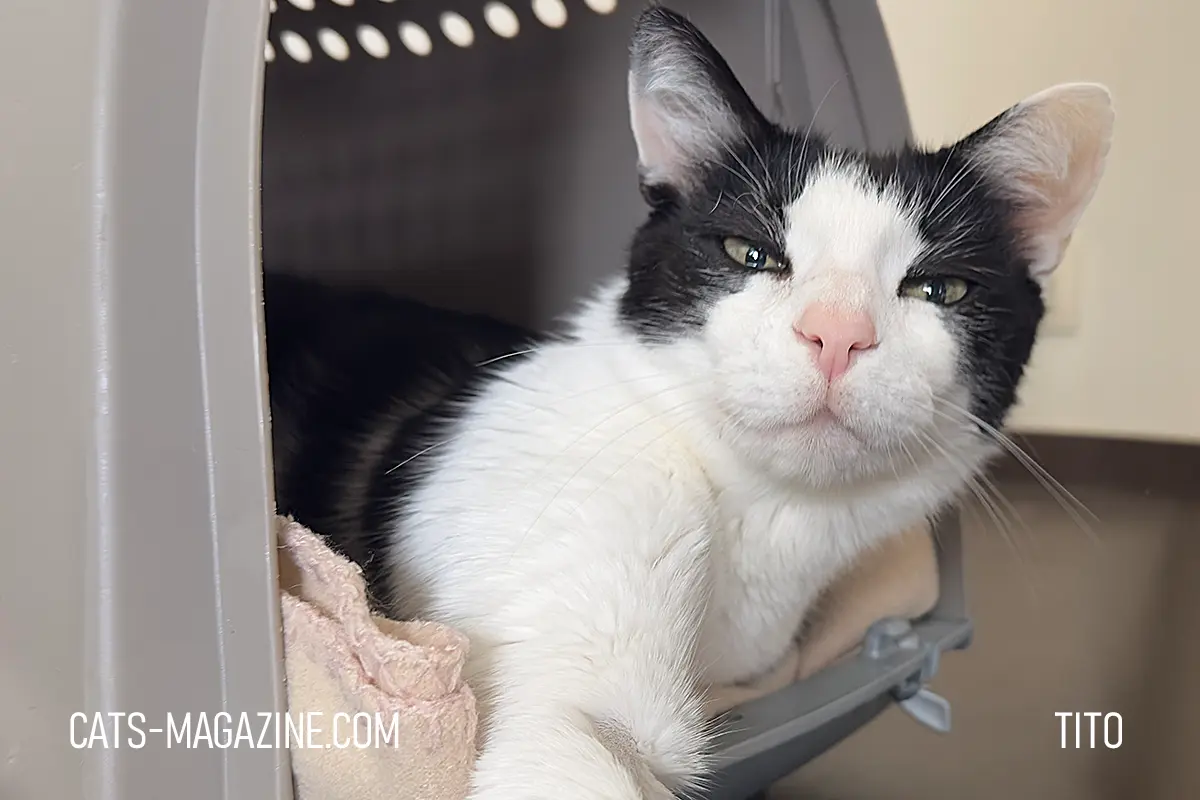
I haven’t written much lately on Cats Magazine, and now I can finally tell you why.
Life became a full-time cat emergency unit.
My cat Tito, professional chaos manager, part-time singer, and full-time food enthusiast, suddenly became the center of a health mystery that turned our home into a mix of pharmacy, laundry room, and emotional support headquarters.
If you’ve ever had that feeling that something is off with your cat, even when they still seem mostly like themselves, you’ll understand this story immediately.
And if your cat is suddenly eating more, losing weight, vomiting, pooping like it’s a competitive sport, or acting weirdly turbo-charged… keep reading.
Tito Was Always… Tito
Tito has never been a sleepy decorative cat.
He has always been:
- fast
- energetic
- vocal
- food-obsessed
- curious to a suspicious degree
- very slim despite eating like a small lion
Some cats nap elegantly for 19 hours a day.
Tito behaves like he has deadlines to meet.
Because he had always been like this, I assumed it was simply his personality.
And for a long time, maybe it was.
Sometimes healing looks like medicine, blankets, and a quiet place to nap.
The First Problem: The Litter Box Told the Truth
Things started changing when Tito developed stool problems.
I had already written about his previous digestive drama after he managed to pick up giardia — likely thanks to one of his favorite hobbies: drinking stale water from flower pots like it’s a five-star wellness spa.
(Which is exactly why I can’t use random plant treatments when watering flowers.)
We treated that episode, and I thought we had peace again.
We did not.
Soon the litter box became… dramatic.
There was:
- constant pooping
- terrible smell
- endless hunger
- more hunger
- and then hunger with extra hunger
At first, it looked like a stomach issue.
Then it escalated.
Then Came the Vomiting
Tito began vomiting almost daily.
Not just food.
He also started randomly chewing greenery around the house like a goat with no boundaries.
Even though I keep mostly cat-safe plants, I became genuinely worried he’d chew the wrong thing at the wrong moment.
Something deeper was going on.
After difficult days of illness, Tito finally relaxed and started feeling better again.
Then Everything Hit at Once
Suddenly, Tito developed:
- sneezing
- watery eye
- fever
- vomiting
- diarrhea
- weakness
- poor appetite
For a cat who usually moves like caffeine in fur form, seeing him tired and not wanting food was the real alarm bell.
That’s when we went back to the vet.
What Our Vet Recommended First
Before jumping into expensive diagnostics immediately, our veterinarian suggested a practical first step.
Because Tito had previous digestive parasite issues, we started with:
- Panacur (for possible giardia or parasites)
- antibiotics
- anti-vomiting medication
- medication to reduce fever
- vitamins/supportive care
We were told:
If he isn’t clearly better within 24 hours, come back for full bloodwork.
That was sensible medicine: treat the most likely immediate causes first, then escalate if needed.
It Was Better… But Not Better Enough
The vomiting stopped.
That was encouraging.
But Tito still had:
- diarrhea
- weakness
- poor appetite
- that unmistakable “not himself” feeling
So back we went.
This time we did the blood test.
Tito’s daily treatment setup: Apelka oral solution for hyperthyroidism alongside supportive supplements during recovery.
The Diagnosis: Hyperthyroidism
The result was hyperthyroidism.
Honestly? I wasn’t expecting that.
I thought we were dealing with stomach problems, infection, parasites, food sensitivity, or some weird Tito-only lifestyle consequence.
Instead, the thyroid was the real story.
What Is Hyperthyroidism in Cats?
Hyperthyroidism means the thyroid gland produces too much thyroid hormone.
These hormones regulate metabolism. When levels are too high, the body runs too fast.
It’s like your cat’s internal engine is stuck in overdrive.
Hyperthyroidism is common in older cats, especially seniors, and one of the most frequently diagnosed hormonal diseases in aging felines, according to the Cornell Feline Health Center. It is treatable, and many cats do very well once therapy begins.
Common Cat Hyperthyroidism Symptoms
My vet explained that many signs fit Tito perfectly.
Common symptoms include:
- increased appetite
- weight loss despite eating well
- hyperactivity
- restlessness
- vomiting
- diarrhea
- frequent stooling
- excessive vocalization
- increased thirst
- increased urination
- poor coat over time
- fast heart rate
Not every cat shows every symptom.
Some just seem “extra lively.”
That’s why it can hide in plain sight.
Why I Missed It
Because Tito had always been energetic, noisy, hungry, and slim.
When a symptom looks like personality, it’s easy to normalize it.
That’s the tricky part.
Sometimes we don’t miss disease because we’re careless.
We miss it because it wears familiar clothes.
Tito supervising the treatment process like the tiny manager he believes he is.
Treatment and the Change After 10 Days
It has now been 10 days.
And wow.
Tito is back.
He is currently on Apelka, an oral methimazole (thiamazole) treatment for hyperthyroidism, and the difference has been remarkable.
Now he is:
- running
- jumping
- singing the songs of his people at extreme volume
- eating normally
- drinking normally
- using the litter box normally
- acting like a tiny athlete again
No sneezing.
No diarrhea.
No fever.
No daily vomiting.
Just Tito.
Loud, fast, ridiculous Tito.
What I Learned
This whole experience reminded me of something important:
Cats can compensate for illness incredibly well.
They often don’t collapse dramatically at the beginning. They simply shift little by little until one day you realize something isn’t right.
Changes worth taking seriously:
- appetite shifts
- weight changes
- new vomiting
- diarrhea
- behavior changes
- unusual vocalization
- weakness
- litter box changes
- “something feels off”
You know your cat best.
Trust that instinct.
If You Suspect Hyperthyroidism
Please don’t diagnose from the internet alone — or from an AI doctor known as ChatGPT, Claude, or Gemini (even if we sound strangely confident).
See your veterinarian and ask whether bloodwork, including thyroid testing, is appropriate.
A simple test can bring huge answers.
Why I Was Quiet Here on Cats Magazine
Because sometimes life pauses publishing schedules.
Sometimes instead of writing articles, you are cleaning floors, giving medicine, watching litter trays like a detective, worrying at 3 a.m., and celebrating when your cat finally eats again.
Many of you know that Cats Magazine is built from real life.
This was real life.
Final Purr
If your cat seems “too hungry,” “too thin,” “too hyper,” or suddenly develops vomiting and digestive chaos, don’t assume it’s just age or personality.
Sometimes the loudest cat is quietly asking for help.
And sometimes, with the right diagnosis, they come sprinting back.
