

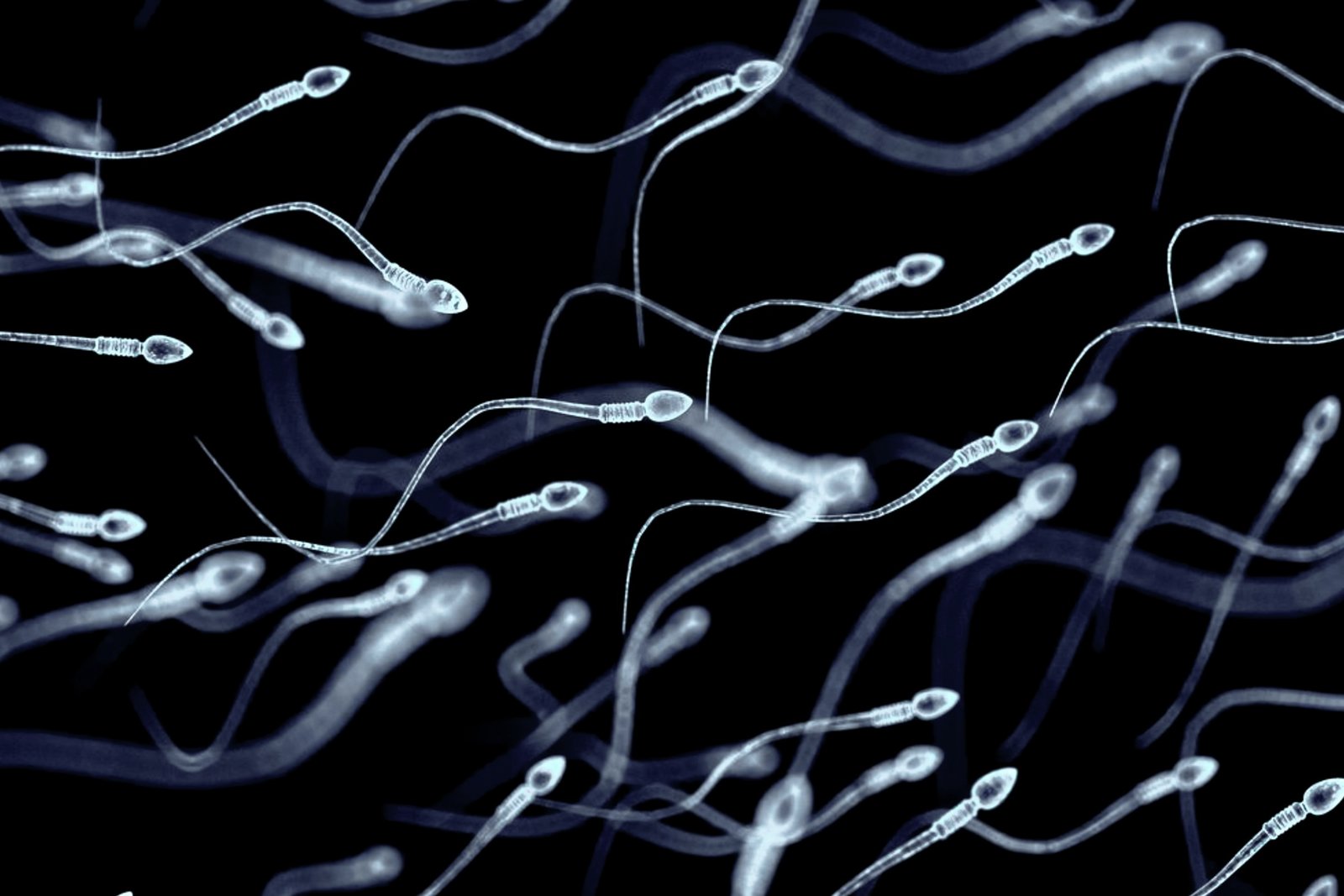
Previous work in Chen’s lab had established that RNA in sperm could be changed by a father’s environment, including diet, and that those changes could impact the next generation. But the kinds of RNA molecules that seemed to be most important were difficult to detect with standard techniques. Chen’s team developed an advanced RNA sequencing method, called PANDORA-seq, to “see” this previously undetectable world of sperm RNAs.
When they used this new tool to analyze sperm in mice, the researchers spotted a pattern that traditional techniques couldn’t detect—a sharp, dramatic transition in sperm RNA contents in mice between 50 and 70 weeks of age. In addition to this “aging cliff,” they found what appeared to be a molecular clock. As males age, the proportions of certain sperm RNAs change progressively—longer fragments become more common, while shorter fragments become less common. And when they looked at RNA in human sperm, they found the same progressive shift.
“At first glance, this finding seems counterintuitive,” Chen says. “For decades, we have known that as sperm age, their DNA becomes more fragmented and broken. One might expect RNA to follow this pattern. Instead, we found the opposite: specific sperm RNAs actually become longer with age.”
These changes in RNA may affect offspring health in important ways, the results suggest. When the team introduced a cocktail of “old RNA” into mouse embryonic stem cells, which are biologically similar to early embryos, the cells displayed changes in gene expression associated with metabolism and neurodegeneration, potentially suggesting a mechanism by which RNA could impact the health of the next generation.
