

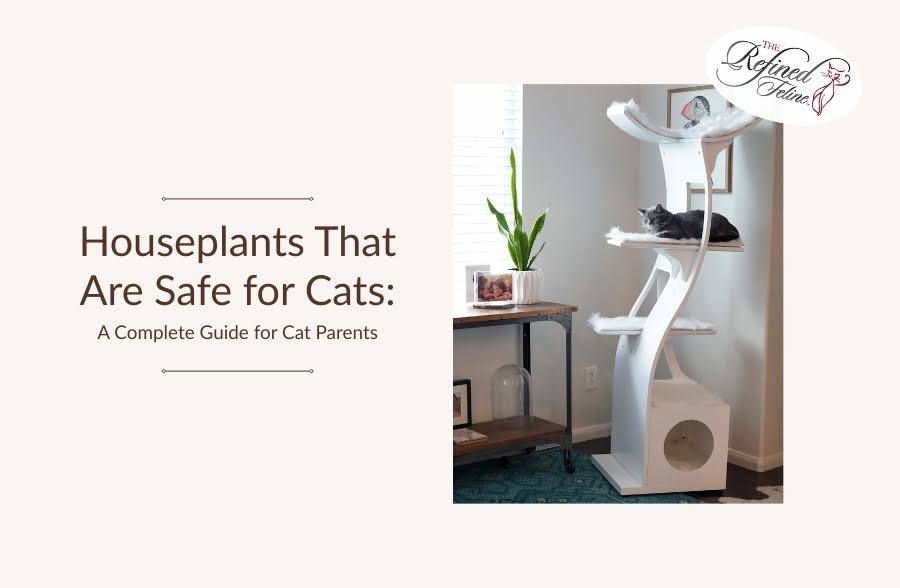
If you love filling your home with greenery but worry about your cat nibbling on a leaf, you are not alone. Many cat parents feel caught between wanting a lush living space and keeping their feline companion safe. The good news is that plenty of beautiful houseplants pose zero threat to your cat.
Not every plant sold at your local nursery is cat-friendly. The ASPCA maintains a detailed list of toxic and non-toxic plants, and checking it before any purchase is always wise. The options below give you a great starting point.
Which Houseplants Are Safe for Cats?
Cats are natural explorers, and even the most well-behaved kitty might take a nibble on something leafy. Choosing non-toxic houseplants means you can relax knowing a curious taste won’t lead to a vet visit.
Here are some of the most popular and widely available houseplants that are safe for cats:
- Spider Plant (Chlorophytum comosum): A hardy, cascading plant that thrives in indirect light and works beautifully in hanging baskets or on a floating cat shelf.
- Boston Fern (Nephrolepis exaltata): Lush, feathery fronds that prefer humidity, making them a great fit for bathrooms or kitchens.
- Areca Palm (Dypsis lutescens): A dramatic tropical palm that pairs well with a modern cat tree to create a jungle-like corner your cat will adore.
- Calathea (Calathea spp.): Striking patterned leaves that thrive in low to medium indirect light with consistent moisture.
- Orchids (Orchidaceae): Elegant, long-blooming, and completely harmless to cats.
- African Violet (Saintpaulia): Compact and colorful, blooming beautifully in low light.
- Peperomia (Peperomia spp.): Forgiving houseplants available in dozens of varieties that tolerate some neglect.
- Haworthia (Haworthia spp.): A slow-growing succulent confirmed safe for cats across the entire genus.
- Parlor Palm (Chamaedorea elegans): A classic indoor palm that can live for decades.
- Prayer Plant (Maranta leuconeura): Gorgeous patterned foliage that folds up at night, adding real character to any shelf.
All of these plants have been verified as non-toxic by the ASPCA.
How to Keep Both Plants and Cats Happy Indoors
Choosing cat-safe plants is just the first step. Even non-toxic greenery can cause mild stomach upset if your cat makes a full meal out of it. A few simple strategies help keep everyone comfortable.
Place Plants Strategically
Hanging planters, high shelves, and wall-mounted perches are your best friends. Placing plants in higher spots keeps delicate greenery out of reach while giving your cat approved climbing routes nearby.
Offer Cat Grass as an Alternative
Cats sometimes nibble plants because they crave fiber or fresh greens. Cat grass, which typically contains oat, wheat, or barley grass, gives your cat a safe outlet for that instinct and can redirect attention away from your houseplants.
Use Positive Redirection
If your cat gravitates toward a particular plant, gentle redirection works better than punishment. Moving the plant or placing it near a citrus-scented diffuser can discourage unwanted nibbling, since cats tend to dislike citrus.
Common Houseplants That Are Toxic to Cats
Just as important as knowing what is safe is knowing what to avoid. Some popular houseplants carry toxins that can cause serious harm, from mild gastrointestinal upset to organ failure.
Plants cat parents should keep out of the home include:
- Lilies (Lilium spp.): All parts of the plant, including pollen, can cause kidney failure in cats.
- Pothos (Epipremnum aureum): Contains calcium oxalate crystals that irritate a cat’s mouth and throat.
- Sago Palm (Cycas revoluta): Extremely toxic and can cause liver failure.
- Dieffenbachia: Causes oral irritation and swelling if chewed.
- Tulips and Daffodils: Bulbs contain toxins that cause vomiting, diarrhea, and cardiac issues.
For a deeper dive into spring flowers that pose a risk and guidance on plants poisonous to cats, those resources cover symptoms and next steps in detail. If you suspect your cat has ingested a toxic plant, contact your veterinarian or the ASPCA Animal Poison Control Center at 888-426-4435 right away.
Creating a Cat-Friendly Indoor Garden
Pairing safe greenery with thoughtful cat furniture creates a space where both you and your cat can thrive. A stylish litter box cabinet tucked beside a potted areca palm can transform a bathroom corner from functional to beautiful. Wall-mounted shelves with trailing spider plants underneath turn an empty wall into a living display.
Cats feel safest when they have vertical territory, cozy hideaways, and sensory variety. Indoor plants offer new scents and textures that enrich your cat’s environment, as long as you stick with non-toxic options. For more ideas, indoor gardens for cat enrichment offer seasonal tips that work beautifully alongside cat wall shelves and climbing furniture.
Shop the Collection
Your home should feel like a haven for every member of your family, whiskers and all. Start with one plant, one shelf, one small change, and watch how quickly your home transforms into something both you and your cat love waking up in.
Browse modern cat furniture designed to complement your home and your cat’s instincts.
Frequently Asked Questions
What is the safest houseplant for cats?
Cat grass is widely considered the safest option because cats can eat it freely. Among decorative houseplants, spider plants, Boston ferns, and areca palms are all confirmed non-toxic by the ASPCA.
Are succulents safe for cats?
Some succulents are safe, but not all. Haworthia and echeveria are non-toxic, while jade plants and aloe vera are toxic. Always verify a specific succulent’s safety before bringing it home.
Can cats get sick from eating non-toxic plants?
Yes, mild stomach upset can occur if a cat eats a large amount of any plant material. Offering cat grass can help satisfy a cat’s urge to graze safely.
Are orchids poisonous to cats?
No. Both the flowers and leaves are safe, making orchids an excellent choice for cat-friendly homes.
Is lavender safe for cats?
No. Lavender contains compounds that are toxic to cats and can cause nausea or vomiting.
What should I do if my cat eats an unknown plant?
Contact your veterinarian or call the ASPCA Animal Poison Control Center at 888-426-4435 immediately. Bring a sample of the plant if possible, and note any symptoms like drooling, vomiting, or lethargy.
Previous Post
