

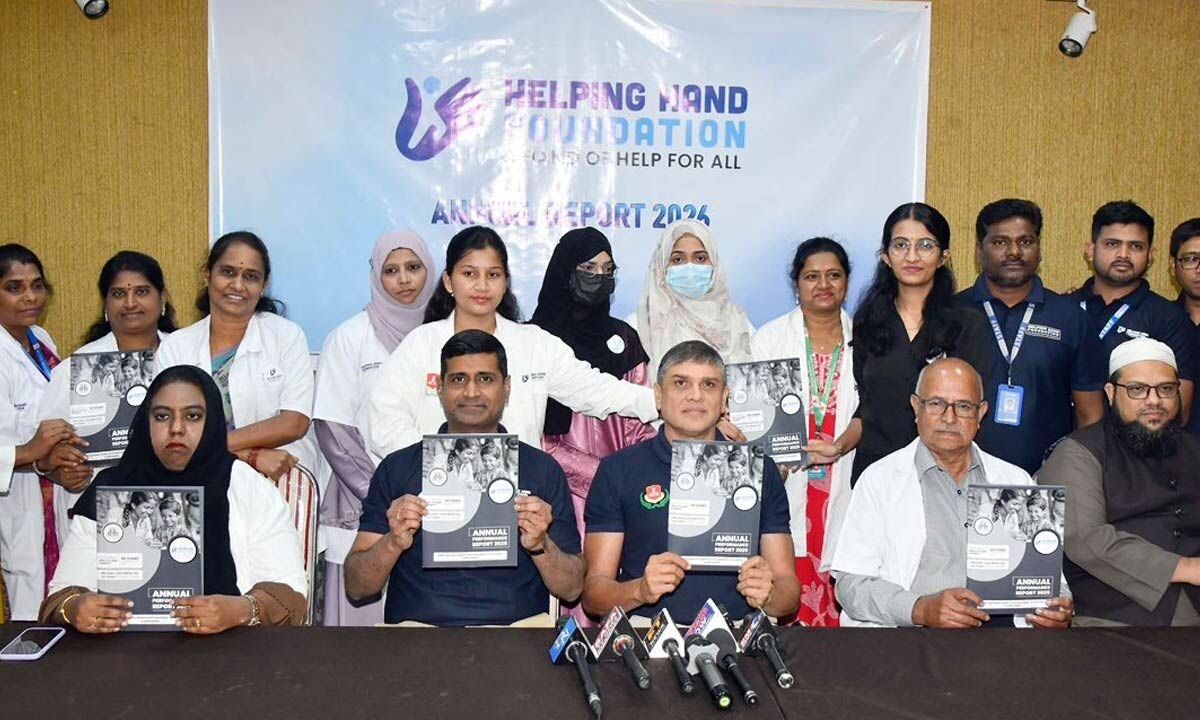
Hyderabad: The health inequities are rising among urban settlements of marginalized communities, with rising prevalence of non-communicable diseases, and persistent financial vulnerability among low-income households across more than 150 urban and peri-urban settlements in the city, revealed the findings of Annual Urban Health Report – 2026, released by city-based health-care Helping Hand Foundation (HHF).
Drawing from patient data and household surveys conducted through its community health interventions, as survey noted, in areas including Hakeempet, Kishan Bagh, Kalapather, Yakatpura, Amanagar, Ganganagar, Bandlaguda, Shaheen Nagar, Jalpally, and Pahadi Shareef, the report identifies access to affordable healthcare as a primary concern for 35% of respondents.
Additionally, 51% reported walking to health facilities to avoid transportation costs, underscoring the importance of proximity and neighborhood-level access in healthcare utilization. In many urban slum clusters, families spend between Rs 500 and Rs 1,000 per visit for routine seasonal ailments, often at private clinics run by informal providers, leading to recurring out-of-pocket expenditure and financial strain.
To bridge these gaps, HHF, supported by SEED-USA and AMPI-USA, operates 20 Urban Comprehensive Community Health Centers, comprising 14 main centers and 6 sub-centres, delivering free outpatient consultations, ante- and post-natal care, vision and dental services, daycare facilities, and non-communicable disease (NCD) management.
In 2025 alone, 5,88,900 patients accessed services free of cost, of whom 65% were women. Children and adolescents aged 0–17 constituted 42% of beneficiaries, while young adults aged 19–35 accounted for another 25%, indicating that urban health issues are increasingly centered around the younger population. Migrant laborers represented 32% of the patient base.
According to Mujtaba Hasan Askari, Founder and Trustee of HHF, sustained community-based interventions have resulted in cumulative household savings estimated to approach Rs 100 crore over time. The findings reveal that 89.26% of beneficiaries agreed that free primary healthcare improved household savings and strengthened overall financial stability.
Further, 81.30% reported that they were able to avoid borrowing money for healthcare-related expenses, while 48.90% stated that affordability prevented delays in seeking treatment.
The survey of approximately 1,500 households also highlights a mounting metabolic health crisis within urban settlements. Between 35% and 40% of households reported hypertension, diabetes, and both.
The report notes a rising trend of reproductive health issues among young women, including PCOS, PCOD, fibroids, and irregular menstrual cycles. Among cancers, head and neck cancers, particularly oral cancer among young men, were found to be prevalent due to high exposure to non-smoked tobacco, gutka, and paan.
To address early detection and ongoing management, HHF has established basti-level BP and Sugar Clinics modelled on community-based interventions. Trained health workers conduct door-to-door enumeration to identify and link NCD patients to clinics where doctors provide consultation, medication, testing, and diet counselling, with close follow-up. Over 2,500 patients are currently enrolled in this program.
The report calls for sustained, neighborhood-based healthcare delivery systems coupled with strong referral networks and community education initiatives to address rising disease burdens and reduce inequity in densely populated urban settlements.
