

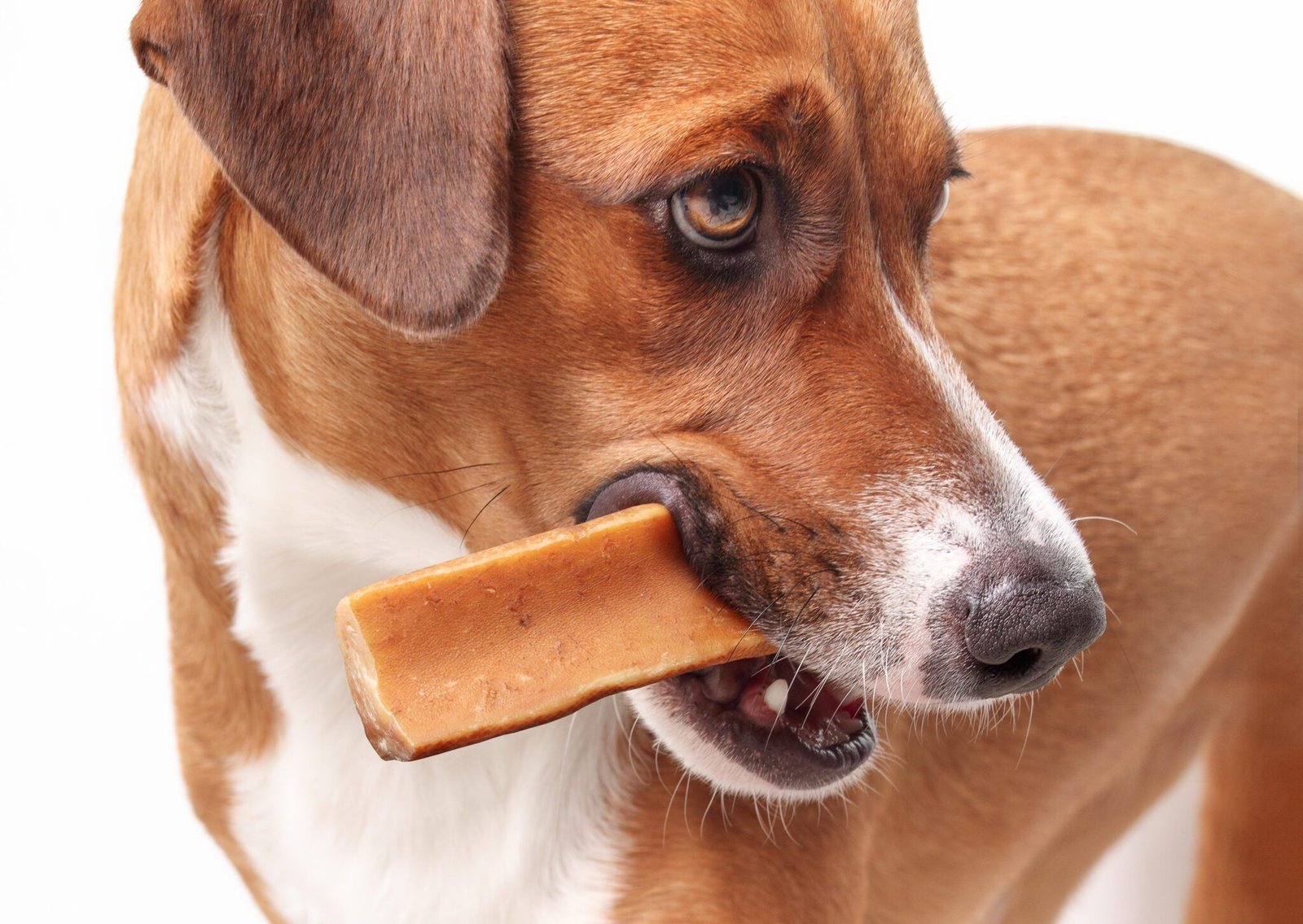
When it comes to dog chews, yak cheese sticks are a popular alternative to rawhide. Credit: Petra Richli | Getty Images
Weighing around 80 pounds, Michele McHugh’s Shepherd mix, Doodle, loved to chew.
“She enjoyed her toys and had an assortment of chew toys,” McHugh says. “The more edible type of chews were given as treats on special occasions to keep her entertained.”
But the Houston, Texas area dog mom wasn’t comfortable giving Doodle rawhide bones, so McHugh opted for rawhide alternatives.
“There are so many other choices out there besides rawhide,” McHugh says.
Whole Dog Journal is reader-supported. If you purchase through links on our site we may earn a commission. Whole Dog Journal does not accept money for its food and product reviews.
In recent years, the demand for rawhide alternatives has grown. We found that many pet supply store shelves and online retailers are packed with products promoted as alternatives to rawhide. Good rawhide alternatives include:
Rawhide Concerns: Why Look for Rawhide Alternatives?
Made from dried animal skins, typically beef, rawhide is a popular product for dogs. There are a wide range of rawhide products available; some are made in the United States while others are imported from China, Mexico, and South American countries.
Many companies say their rawhides are digestible, safe, and natural. However, some dog owners and veterinarians opt for rawhide alternatives due to concerns about possible chemicals used to treat some rawhide products, potential bacterial contamination, and health and safety risks.
“I started seeing more problems in practice with dogs getting rawhides stuck in the back of their throat, causing choking,” says veterinarian Brian Collins with the Cornell Riney Canine Health Center. “Some dogs get them stuck in their GI tract, causing vomiting or creating obstructions.”
While any type of chew could potentially cause an issue—like a digestive problem or choking hazard—for your dog, Dr. Collins also worries about how rawhide and other chews may affect your dog’s teeth.
“I’ve seen dogs break off their canine teeth, chewing on rawhide, but other chews can contribute to these problems,” he says.
Since some dogs are hardcore chewers, picking the right product can be challenging. So how do you figure out what’s best for your dog?
Choosing the Right Dog Chew
Dog chews can help keep dogs busy, entertained, and mentally stimulated. For some pups, getting a dog chew is an exciting reward they look forward to.
Look for Rawhide Alternatives that are Flexible and Digestible
To satisfy your dog’s craving to chomp, Dr. Collins has a recommendation:
“My rule of thumb is that whatever your dog chews on should be something that is flexible, and you can indent with your fingernail, or you can break with your hands,” he says.
This helps reduce wear and tear on dogs’ teeth from gnawing on hard chews.
“I often find myself pointing out broken teeth, or a dog will come in with an acutely broken tooth,” Dr. Collins says. “It’s generally not a question of if, it’s a question of when. Treatment of a fractured tooth generally involves removing the tooth or performing a root canal procedure.”
On the flip side, when your dog gnaws away on a chew, it can help keep their teeth clean. The physical act of chewing helps remove food debris and tartar.
One place to look for recommendations is this list on The Veterinary Oral Health Council’s website (VOHC). An independent group within the American Veterinary Dental College, the VOHC reviews dental care products and awards qualifying items its Seal of Acceptance. Products are awarded the seal for meeting the organization’s teeth-friendly standards for dogs (and cats) and helping to prevent plaque and tartar buildup.
But having good choppers isn’t the only reason Dr. Collins recommends pliable products; digestibility is also a factor.
“You want to make sure that if dogs do swallow something, that it’s something that’s going to break down fairly easily in their stomach,” Dr. Collins says. “Generally, if it’s indentable, bendable, or breakable, it’s more likely to be safe.”
Pay Attention to Dog Chew Ingredients
Check the label on any chew you choose to make sure your dog isn’t allergic or sensitive to some of the ingredients.
Collagen chews for dogs are typically derived from cows, using an inner layer of skin that is softer than the layer used to make rawhide. Yak sticks are made from yak and cow milk and are dairy products. Some freeze-dried products are made from duck, chicken, lamb, venison, and other animals.
“Some of the chews have rice flour and glycerin, which may not be part of their normal diet,” Dr. Collins says. “If a dog tolerates the ingredients, then it’s OK to be given in moderation.”
Hard rubber chew toys like Kongs and GoughNuts are also an option for dogs who love to gnaw. Avoid anything that splinters or is made from inedible ingredients that break apart into pieces that your dog may consume.
When choosing a rawhide alternative, read the online reviews for any chew or treat you’re considering. Google the name of the product to see if it’s ever been the subject of lawsuits or recalls. It also helps to make sure the country of origin for the chew you choose is clearly stated on the packaging.
Common Sense Chew Precautions
When giving your dog any chew, you’ll want to keep an eye out for a few things:
- Choose the appropriate chew for your dog’s chew style and size to avoid a choking hazard. Keep small chews away from big dogs and remove chews when they get small enough to swallow—which may happen fast with an enthusiastic chewer.
- Always supervise your dog when they are chomping on any type of dog chew so you can intervene if there’s a problem.
- When you give your dog a new type of chew, do a test run the first time. Let the dog have the chew for a limited amount of time and then see how their digestive system reacts over the next 24 to 48 hours.
- If your dog is brachycephalic (for example, Pugs and English or French Bulldogs) and has a shorter snout, use caution with any type of chew, as a piece could break off and block their narrow airway.
- Make sure your dog has access to plenty of water; chewing can make them thirsty.
- If your dog experiences health issues after eating a chew, contact your veterinarian.
McHugh’s dog loved bully sticks, but she says her biggest concern was always making sure she watched Doodle when she had any type of chew.
“I made sure that she didn’t chew the bones down to a chokeable size or split them into a pointy piece that could harm her,” she says. “A lot of it has to do with the human as well. You don’t just give them these chews and walk away. You must have some responsibility as well.”
