

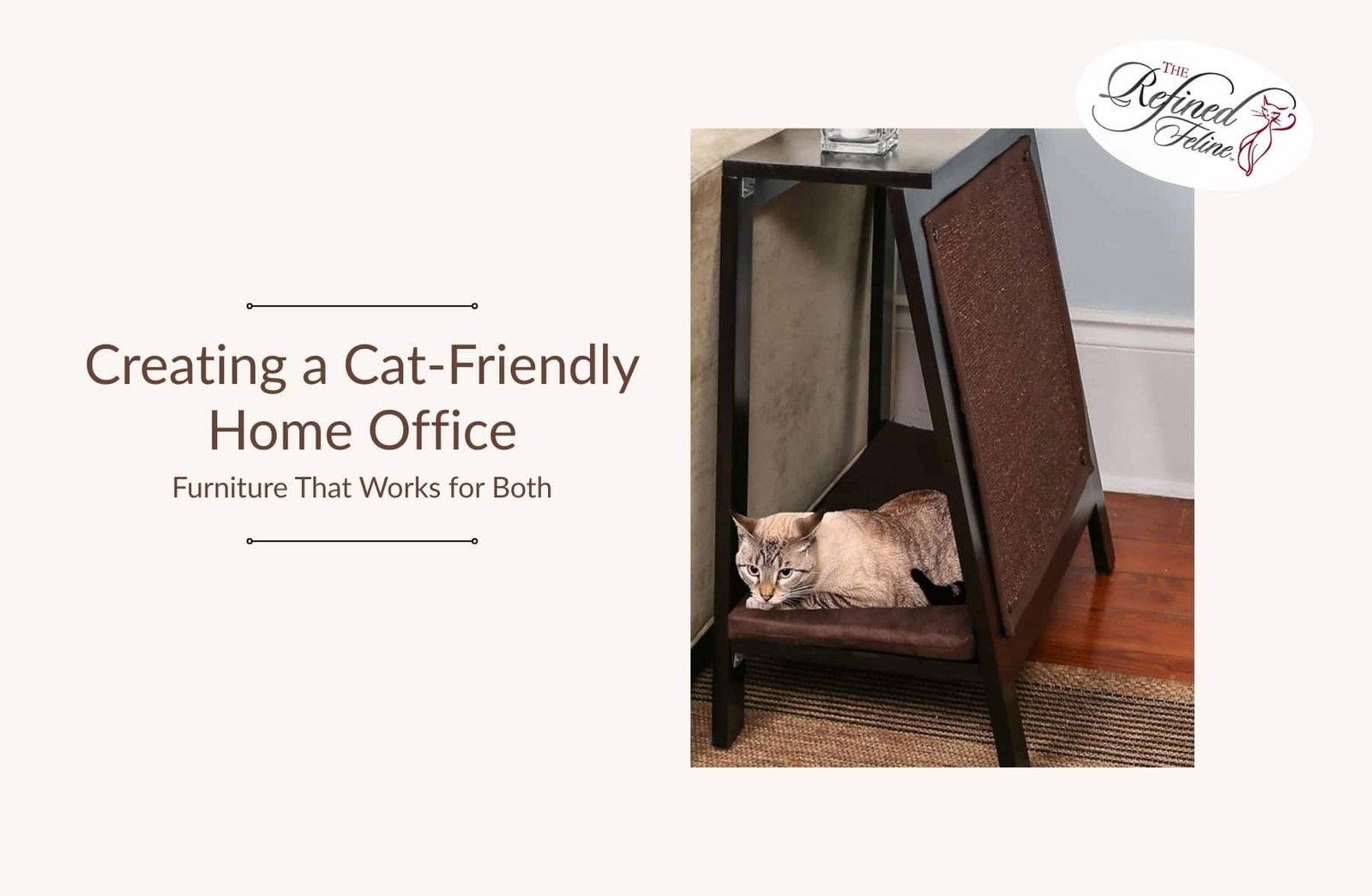
Working from home with a cat means sharing space with a curious companion who doesn’t understand deadlines. Creating an office that works for both of you means giving your cat the right spaces so they don’t disrupt yours.
What Your Cat Actually Needs in Your Office
Basic feline behavior knowledge helps you create a space that keeps everyone happy and productive.
Height and Territory Matter
Cats feel safest when they can survey their surroundings from elevated positions. When you provide vertical spaces for climbing, your cat gets security without claiming your desk. A well-placed tower or wall shelf near your workspace lets your cat stay close while you work, satisfied watching from their perch.
Scratching Is Essential Maintenance
Scratching isn’t destructive behavior. Cats scratch to maintain claws, mark territory, and stretch muscles. Without appropriate surfaces, they’ll use whatever’s available. Place scratching options near where your cat wakes from naps or plays. Sisal-wrapped posts provide satisfying resistance. When posts are in the right spots, your cat will use them consistently.
Comfortable Rest Spots Create Boundaries
Cats sleep 12 to 16 hours daily. Designated rest areas give your cat clear spots to settle without taking over your keyboard. Some cats prefer enclosed hideaways while others like open perches. Having both options accommodates different moods and reduces the appeal of your lap during important calls.
Essential Furniture for a Functional Cat Office
Modern cat furniture has evolved beyond carpet-covered towers that clash with home decor. Quality pieces now blend style with function, meeting feline needs without sacrificing your aesthetic.
Vertical Cat Towers Organize Activity
Cat towers contain feline behavior in one footprint. Multi-level platforms at varying heights give cats exercise without scattering toys across your floor. Our Lotus Cat Tower stands 69 inches tall with wood construction and oak veneer that complements office furniture.
Washable cushion covers simplify maintenance. An enclosed cubby provides privacy for sleep. Position the tower near a window when possible for outdoor entertainment that keeps cats engaged for hours.
Wall Shelves Maximize Limited Space
Wall-mounted perches transform empty walls into feline highways without consuming floor space. Our Lotus Branch Cat Shelf provides sturdy lounging that doubles as wall art. The curved design mimics natural branches while adding visual interest to your office.
Pairing shelves with a tower creates varied elevation options. Morning sun might draw cats to lower shelves while afternoon energy sends them higher. Multiple options prevent boredom and encourage natural movement.
Discreet Litter Solutions Maintain Professionalism
For apartments or smaller homes, keeping a litter box in your office is sometimes necessary. Modern litter box cabinets blend into office decor with enclosed designs. Our Refined Litter Box Deluxe features wood construction resembling a side table. Interior compartments contain the litter box while filtering systems manage odor.
Corner or wall placement keeps the box accessible while maintaining a professional appearance for video calls. Self-cleaning options reduce daily maintenance with timing functions for breaks or after work hours.
Scratching Posts Save Office Furniture
Scratching posts placed strategically protect desk legs, chair fabric, and door frames. Position posts near rest areas and along common pathways. Vertical posts should be tall enough for full stretches, typically 30 inches minimum. Horizontal pads appeal to cats who prefer ground-level surfaces. Replace worn sisal surfaces before they become ineffective.
Layout Strategies That Work
Simply buying cat furniture isn’t enough. Thoughtful arrangement creates a flow that benefits productivity and comfort for both species sharing the space.
Zone Your Office Space
Position your desk in areas with optimal lighting. Establish cat territory adjacent but not underfoot. Place wall shelves within your line of sight but away from your primary monitor. Avoid placing cat towers directly behind your desk if video calls are frequent.
Respect Natural Cat Pathways
Observe where your cat naturally walks before arranging furniture. Cats prefer clear routes for daily routines. When furniture aligns with instinctive paths, cats adopt new pieces more readily. Window access matters greatly. Create routes to windows using connected furniture. Curved wall shelves work beautifully mounted near windows for bird watching or sunbathing.
Connecting multiple pieces creates complete circuits. Start with a tower, add shelves across the room, and you’ve built a vertical highway cats can patrol throughout the day.
Manage Cables and Small Items
Cable management systems bundle and conceal computer cords. Cats are attracted to dangling cables and may chew them, risking injury or equipment damage. Closed storage for office supplies prevents playful batting of pens, paper clips, and other small objects. Cats naturally investigate movement and rolling items, so keeping these secure protects both supplies and your cat from accidentally ingesting harmful objects.
Safety Considerations
Sharing a workspace with a cat requires attention to potential hazards. Simple precautions create safe environments without compromising function.
Anchor Furniture Properly
Cat furniture must be secured to handle jumping and climbing. Wall-mounted shelves require installation into studs. Freestanding towers need stable bases. Check the manufacturer’s weight limits. Inspect furniture regularly for wear, especially on platforms and scratching surfaces.
Choose Pet-Safe Materials
Wood finishes should be non-toxic and fully cured. Our products use pet-safe finishes. Keep only non-toxic plants in your office. Spider plants and cat grass are safe alternatives. Use pet-safe cleaning formulas. Cats walk on surfaces and then groom their paws, so anything contacted can be ingested.
Maintain Emergency Access
Keep a clear path to your office door. Don’t pack the room so tightly that a quick exit becomes difficult. Smoke detectors in your office protect both you and your cat during work hours.
Join the Club
Creating a home office where both you and your cat thrive doesn’t require sacrifice. Modern cat furniture delivers style and function, transforming your workspace into a shared environment both species enjoy. Our complete collection includes towers, shelves, and litter solutions designed for design-conscious cat parents.
When cats have appropriate outlets for climbing, scratching, and resting, workdays flow more smoothly. Fewer interruptions and a happier feline companion result from thoughtful furniture choices. Your productivity improves when your cat feels content and engaged in their own space.
Frequently Asked Questions
What furniture do I need for a cat-friendly home office?
Start with vertical climbing options like a cat tower or wall shelves, dedicated scratching surfaces, and comfortable resting spots. If your office will house a litter box, invest in enclosed furniture maintaining aesthetics while providing necessary access for your cat.
How do I keep my cat off my desk while working?
Provide alternative elevated spaces near your desk so your cat can be near you at their preferred height. Consistent gentle redirection paired with rewarding your cat for using appropriate perches typically resolves desk-walking behavior within a few weeks. Heated pads near your workspace also attract cats away from keyboards.
Where should I place cat furniture in my office?
Position cat towers and shelves where your cat can observe you without being directly in your work path. Near windows works well for natural light and entertainment. Avoid placing furniture directly behind your desk if frequent video calls occur, as constant cat appearances can distract from professional meetings.
How tall should cat furniture be for an office?
Height depends on your ceiling and your cat’s preferences. Most cats appreciate options ranging from two to six feet high. Towers around five to six feet provide excellent vantage points without overwhelming standard office spaces. Multiple height options let cats choose based on their mood and energy level.
What materials are safest for cat office furniture?
Solid wood construction with non-toxic finishes works best. Avoid furniture with small parts that could detach and be swallowed. Natural sisal for scratching posts, untreated wood, and washable fabrics are all safe choices. Always check that finishes are fully cured and free of harmful chemicals before allowing cat access.
How do I stop my cat from scratching my office furniture?
Provide multiple scratching surfaces in locations your cat already frequents. Place scratching posts near where they sleep and along common pathways. Redirect scratching attempts on furniture to appropriate surfaces immediately, and reward your cat when they use designated posts. Consistency and positive reinforcement work better than punishment.
Previous Post
