

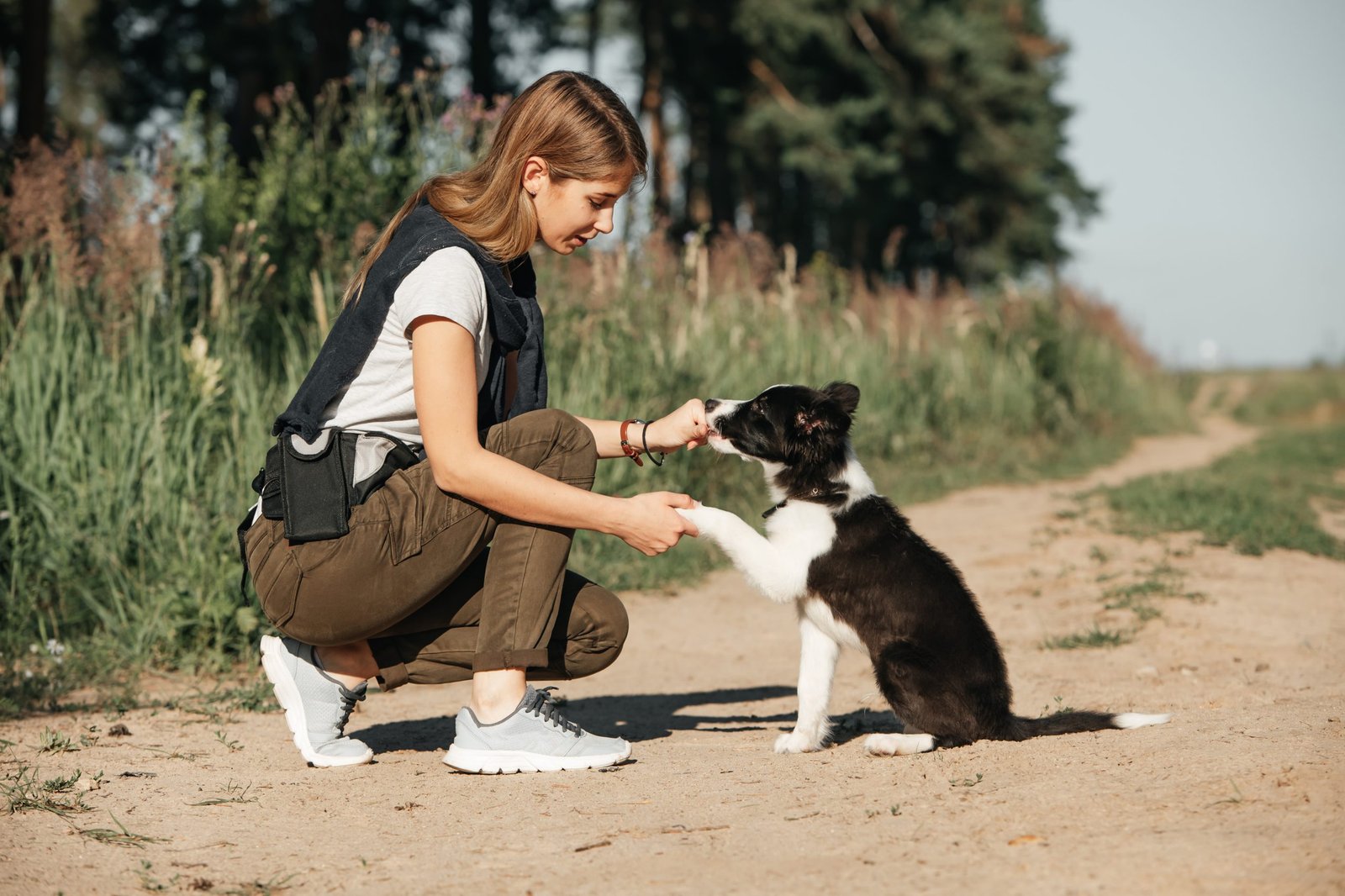
Puppy engagement games are one of the easiest and most effective ways to build focus and connection from the very first day you bring your puppy home. If you want a dog who naturally checks in with you, responds quickly, and enjoys training, this is where it starts. Not with formal obedience, but with simple, intentional interactions that teach your puppy you matter.
The best part is that you don’t need long training sessions or perfect timing to get started. A few treats, a little consistency, and a couple minutes here and there throughout your day can completely change how your puppy sees you. Instead of being just part of the environment, you become the most important and rewarding part of it.
Why Puppy Engagement Games Matter
Focus is not something puppies grow into on their own. It’s something we build, one repetition at a time, through experiences that make paying attention feel worthwhile. When puppies learn early that checking in with you leads to good things, that behavior starts to happen more often and with less effort.
Without this foundation, many owners find themselves struggling later. The puppy ignores their name, gets easily distracted, or seems more interested in the environment than the person at the other end of the leash. That’s not a personality issue. It’s a missing skill.
Puppy engagement games fill in that gap early so you’re not trying to fix it later. When you play these games regularly, you’re not just building attention. You’re building a dog who wants to work with you, looks for information, and finds you relevant even when distractions are around.
Game #1: Name Recognition and Check-Ins
This is one of the simplest puppy engagement games, but it’s also one of the most important. Your puppy’s name should mean something, not just be background noise they hear all day.
Start in a quiet space where your puppy can be successful. Say their name one time, and the moment they turn their head or make eye contact, mark and reward. Keep it light and easy. You’re not testing them, you’re teaching them.
If your puppy doesn’t respond, that’s useful information. It usually means the environment is too distracting or the skill isn’t built yet. Instead of repeating the name over and over, reset and make it easier so they can succeed.
Over time, this becomes a powerful habit. Your puppy hears their name and immediately checks in, which gives you a way to get their attention in all kinds of situations.
Game #2: Find It + Look Back
This is one of my favorite puppy engagement games because it teaches something many dogs struggle with later: how to come back to you after engaging with the environment.
Toss a treat on the ground and tell your puppy “Find it.” Let them go eat it without interference. Then just wait. Don’t call them, don’t make noise, and don’t repeat their name. Give them a moment to process.
Most puppies will naturally look back at some point. The second they do, mark and reward. That moment is where the learning happens. Your puppy is discovering that even after something interesting, turning back to you is what pays.
This game builds a really important pattern. Instead of disconnecting and staying disconnected, your puppy learns to reorient to you. That skill becomes incredibly valuable in distracting environments.
Game #3: Touch, or Hand Targeting
Touch is one of those skills that looks simple, but has a ton of value. It’s a great way to build engagement, and it gives you a clear, easy behavior your puppy can succeed with.
Start by placing your hand a few inches from your puppy’s nose. Most puppies will naturally move toward it out of curiosity. The moment they make contact, mark and reward. At first, you are simply teaching them that moving toward your hand is a good choice.
Once they’re confidently touching your hand, you can start adding a cue like “Touch.” From there, you can build it into movement, recalls, or positioning. But at its core, this is just another way to teach your puppy that interacting with you is rewarding.
For puppies who are unsure or distracted, this can be a really nice way to bring their focus back without pressure. It gives them something clear to do and gives you a simple way to restart the conversation.
Game #4: Movement Games: Moving With You
Puppies are naturally drawn to motion, which makes movement one of the easiest ways to build engagement. Instead of asking your puppy to focus while standing still, use movement to your advantage.
Take a couple steps backward and encourage your puppy to come with you. When they follow, praise and reward. Keep it playful and light. You’re not looking for precision yet. You’re building interest in staying with you.
You can also change directions, move unpredictably, or stop and reward when your puppy checks in. These small moments add up quickly. Your puppy starts to learn that paying attention to you helps them stay connected and in the right place.
This type of engagement carries over directly into leash walking and everyday life. A puppy who wants to follow you is much easier to live with than one who is constantly pulling away.
Game #5: The “Ready!” Cue
The “Ready” cue is one of my favorite ways to build instant attention. It tells your puppy that something is about to happen, and over time, it creates a very clear shift in focus.
Start by saying “Ready!” in a cheerful tone. The moment your puppy looks at you, mark and reward. At first, you’re just pairing the word with the behavior, so keep the setup simple and make the reward easy to earn.
After a few repetitions, you’ll start to see a change. The word itself begins to trigger attention. Your puppy hears “Ready” and immediately checks in, expecting something good.
This becomes incredibly useful as your training progresses. It gives you a way to quickly get your puppy’s brain back with you, whether you’re at home, in class, or out in the world.
How to Use Puppy Engagement Games in Daily Life
One of the biggest mistakes people make is thinking they need to set aside a formal block of time to train. With puppy engagement games, you can build skills throughout your day without adding extra work.
Play a quick name game while your puppy is wandering the house. Do a few reps of touch before going outside. Use “Find it” in the yard, then reward the look back. These small moments are where the real progress happens.
Keeping sessions short and successful is far more effective than trying to do too much at once. Puppies learn best in small pieces, and these games fit naturally into that approach.
Final Thoughts on Puppy Engagement Games
Engagement is the foundation for everything you want to do with your dog, whether that’s basic manners, real-life skills, or future sports. When a puppy learns early that you are worth paying attention to, everything else becomes easier to teach.
These puppy engagement games are simple, but they are incredibly powerful when used consistently. You’re not just teaching behaviors. You’re shaping how your puppy chooses to interact with you and the world around them.
Short, simple, and fun really is enough. When you build that habit of connection early, you set yourself up for a dog who wants to work with you for years to come.
