

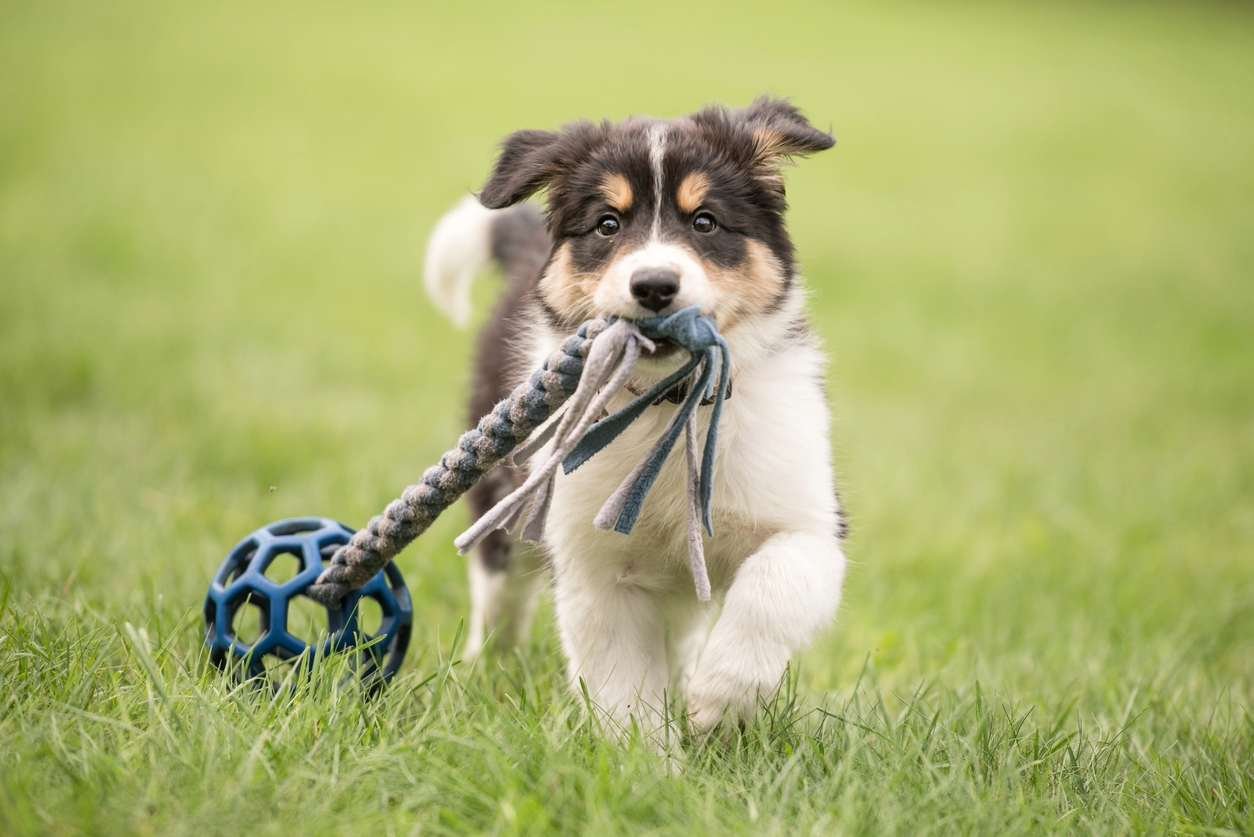
When providing dog training in Sarasota, we are commonly asked “at what age should your dog go to obedience training?” The answer to this question depends on what type of training you are looking for. After over twenty years training thousands of dogs, we rely on real-world experience and science-based training methods to further explore this question in more detail. Let’s discuss when you can start training your puppy, as well as a socialization guide for young puppies.
When can you start training your puppy?
Before your puppy comes home, we recommend enrolling your puppy in private training. So you can have a training plan in place for common puppy manners, including biting, chewing, jumping, socialization, potty training, and crate training. You can always contact Beyond the Dog Sarasota’s pet behavior team for a free consultation.
When your puppy first comes home, at eight weeks old, you should start potty training, socialization, and crate training. You can also start addressing chewing, jumping, and biting behaviors at eight to nine weeks old, but these behaviors often don’t become problematic until they are around ten to fourteen weeks old.
At eight to nine weeks of age, you can start teaching basic obedience commands, including sit and leash walking. Training can be hard for a young puppy, as they lack the stamina to sit through a full training session. It’s unlikely you will be able to keep your puppy’s attention for longer than thirty minutes.
When your puppy is twelve to fourteen weeks old, you can start teaching more advanced obedience commands, such as down and stay. By this age, your puppy should be ready to keep up with a one-hour training session. Especially with positive reinforcement and treats and praise. Let’s keep training is fun, and this is a great time to encourage a lifelong love for learning.
It’s important to start socialization training early
It’s important that puppies are socialized between three and twelve weeks old. Socialization can extend into late puppyhood (five to eight months), adolescence (eight to twelve months), and as they grow into adulthood (one to two years). Before your puppy comes home at around eight weeks old, they should already be learning socialization skills through their littermates and their mother, be exposed to a variety of people, and stay indoors. During this time, your puppy will learn important skills, including bite inhibition and appropriate play behaviors with other dogs. This is one of the reasons why puppies shouldn’t be taken from their litter before they are eight weeks old.
When your puppy comes home, it’s important to expose your puppy to a variety of people of different ages, appearances, and genders. It’s particularly important that your puppy is exposed to children early, so they are more comfortable around them. Your puppy should also be exposed to other dogs and environments. You should aim to meet twenty to fifty dogs and people each week.
What if my puppy isn’t vaccinated?
If your puppy isn’t fully vaccinated, you can take steps to socialize them safely. You should keep exposure to unknown dogs to a minimum. And make sure that the dogs that you do know are fully vaccinated.
It’s important to keep your puppy on concrete surfaces in public. And also to keep them out of the grass at public parks. Keeping your puppy out of the grass will help prevent them from chewing or picking up anything, as puppies are fond of doing. You should also wipe down your puppys paws after each adventure.
When visiting dog-friendly areas such as St Armand’s Circle and dog-friendly stores such as PetSmart or Home Depot, you should put your unvaccinated puppy in a shopping cart so they aren’t touching the ground. If you are eating out at a restaurant, you can bring a towel for your puppy to lie on. Rather than visiting a dog park, you should also set up playdates with friends and their dogs in private areas.
We are here to help
Are you unsure what supplies you need for a new puppy? We recommend checking out our “Supply List Your Puppy Blog”. We have more helpful blogs on puppy training in our Puppy Training Blogs.
Do you have any dog training questions or concerns about your dog’s behavior? Beyond the Dog Sarasota offers obedience training and behavior modification training, with free consultations with our Pet Behavior Team. Our programs are personalized to your dog’s unique needs, with each program provided by or overseen by our co-founder and Certified Applied Animal Behaviorist and Board Certified Behavior Analyst, Dr. Kristyn Echterling-Savage.
