

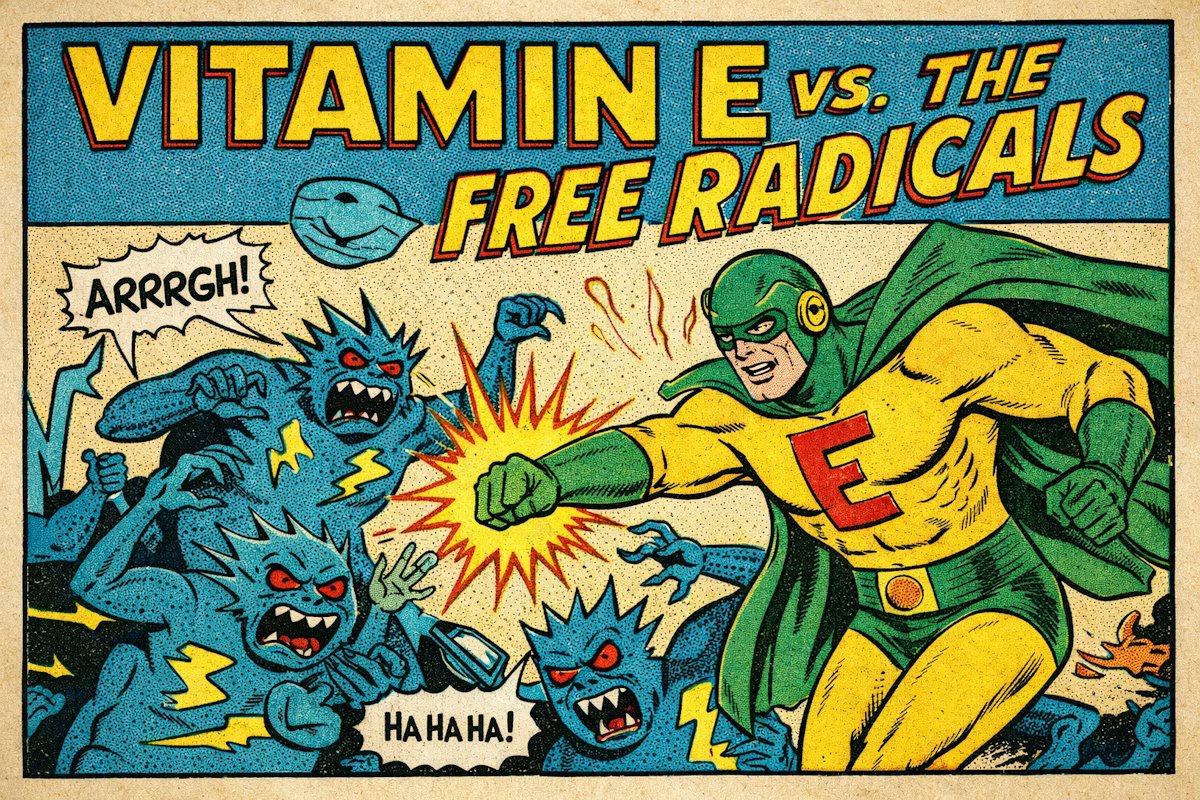
Vitamin E remains an essential nutrient in pet food, valued primarily for its role as a lipid-phase antioxidant, meaning that it works within fats and fat-containing structures in the body, rather than in water-based environments. In his 2007 Petfood Industry column, the importance of vitamin E in pet food was explored by Greg Aldrich, Ph.D., Kansas State University research associate professor and Nulo Pet Food chief operating officer. While the biochemical fundamentals outlined in 2007 are still valid, research and industry practice since then have refined how vitamin E is evaluated, formulated and positioned in dog and cat diets.
Expanding understanding of biological benefits
Vitamin E’s functions as a scavenger of free radicals and protector of cell membranes in animals, including humans and pets, according to the National Research Council. Controlled feeding studies have demonstrated that increasing dietary vitamin E raises circulating α-tocopherol concentrations and improves systemic antioxidant status in dogs and cats, particularly in diets high in polyunsaturated fatty acids, according to a 2024 literature review in the Journal of Animal Physiology and Animal Nutrition. However, dose-response research shows that serum vitamin E concentrations plateau once dietary inclusion exceeds moderate levels, indicating diminishing biological returns beyond that point.
Since 2007, vitamin E has also been investigated for specific health outcomes. Supplementation improved clinical signs and antioxidant status in dogs with atopic dermatitis, according to 2014 research published in Veterinary Dermatology. In contrast, vitamin E supplementation alone did not consistently improve outcomes in dogs with osteoarthritis or cats with chronic kidney disease, according to a 2023 paper in the Journal of Veterinary Internal Medicine.
Nutrient recommendations and guidance
Regulatory treatment of vitamin E has remained relatively stable during the past two decades. In the United States, the Association of American Feed Control Officials (AAFCO) continues to express vitamin E requirements in international units per kilogram of dry matter. AAFCO recognizes increased needs in diets containing higher levels of unsaturated fats.
The National Research Council still expresses requirements in milligrams of α-tocopherol in Nutrient Requirements of Dogs and Cats.
Internationally, the European Pet Food Industry Federation has updated its nutritional guidelines multiple times, most recently in 2024, incorporating newer research while maintaining vitamin E as an essential nutrient across life stages.
Formulation and processing considerations
Tim Wall | DALL-EThe differences in biopotency between natural (RRR-α-tocopherol) and synthetic (all-racemic) vitamin E described in 2007 remain accurate. What has changed is greater attention to processing losses. Extrusion and thermal processing can degrade vitamin E, prompting formulators to include safety margins above minimum requirements to maintain adequate levels throughout shelf life. Researchers have found evidence that vitamin E is used in combination with other antioxidants like vitamin C to support oxidative protection. A peer-reviewed study in Journal of Animal Physiology and Animal Nutrition found that diets for dogs and cats supplemented with a blend of antioxidants, including vitamin E, vitamin C and β-carotene, improved circulating antioxidant status and reduced cellular oxidative damage compared with diets meeting only minimum requirements for vitamin E. Likewise, a 2025 companion animal nutrition review in Veterinary Sciences reported that vitamin E works synergistically with other antioxidants such as vitamin C during free-radical scavenging, noting that vitamin C can help regenerate oxidized vitamin E and that blends of multiple antioxidants have shown enhanced cell protection and reduced oxidative damage.
Since 2007, vitamin E has evolved from a nutrient viewed primarily through the lens of deficiency prevention to one understood as part of a broader antioxidant strategy. Its essential role in pet food is unchanged, but modern research supports more precise, evidence-based inclusion, to protect both the animal and the product without assuming more is always better.
