
Picture this: In a dimly lit dive with a co-worker, the bartender asks if you’d like another round. You order another Athletic brew on tap, and your companion switches to the adaptogen version of their go-to Negroni. Then both of you step outside to hit your vapes.
A decade or so ago, when many millennials were in college or freshly graduated, it would’ve been hard to imagine anyone from this notoriously drunk generation choosing to forgo the mind-altering effects of alcohol, even on a school night. But today’s 20-somethings are drinking less than ever before, data show, and over the past several years, the market for alcohol alternatives has exploded.
A Gallup survey conducted in July 2025 found that the percentage of adults who say they consume alcohol has fallen to 54%, a new low in the analytic firm’s 90-year run investigating American drinking behavior. A 2023 study estimated that the global functional beverage market — made up of non-alcoholic drinks with purported health benefits — would hit over $208 billion in 2024, with a projected growth rate of 7.5% up to 2027.
That’s still smaller than the global alcohol market (about $1,773.7 billion in 2024, per Grand View Research), but the seemingly sudden surge puts the safety of the substances in alcohol alternatives in the spotlight. And science simply can’t keep up, experts tell TODAY.com.
In fact, the number of options on shelves has gotten so huge that Johannes Thrul, Ph.D., associate professor of mental health at the Johns Hopkins Bloomberg School of Public Health, says it could take years to understand whether they’re actually safer than alcohol.
“The problem is that what’s ‘popular’ isn’t necessarily what’s safest, but often what’s easiest to sell with vague claims and minimal oversight,” says Thrul.
So, if you find yourself perusing the fancy drinks aisle in a boutique grocery store wondering if a sleek-looking can give you a buzz without any health risks, here’s what to know.
The Makings of an Alternative
At the center of most hypotheses for lower drinking rates is that Americans are more aware of alcohol’s effects, says Thrul, whose research is focused on substance use. Most Americans believe, the Gallup poll reported, that one or two drinks per day takes a negative toll on health.
Driving the shift is young people: Although alcohol still tops the list of popular substances among adults aged 19-30, there’s been a significant drop in consumption, a national poll found. “The message of the harm of alcohol has started to sink in (with younger generations),” Thrul explains.
However, the poll also found record high use of cannabis, nicotine and psychedelics, other areas where the safety research is decades behind the modes of consumption being developed, Thrul says. Underlying this trend may be the same one possibly driving the alcohol-alternative beverage boom — a desire to replicate how alcohol makes us feel, or “mood modulation,” says Chris Goodchild, the food and beverage senior partner at Boston Consulting Group.
There could be an interpersonal component here, too, Thrul says. Because increased technology use has made young people less comfortable in certain settings, they still crave some social lubrication, but they’re also less willing to be intoxicated in public, he’s found.
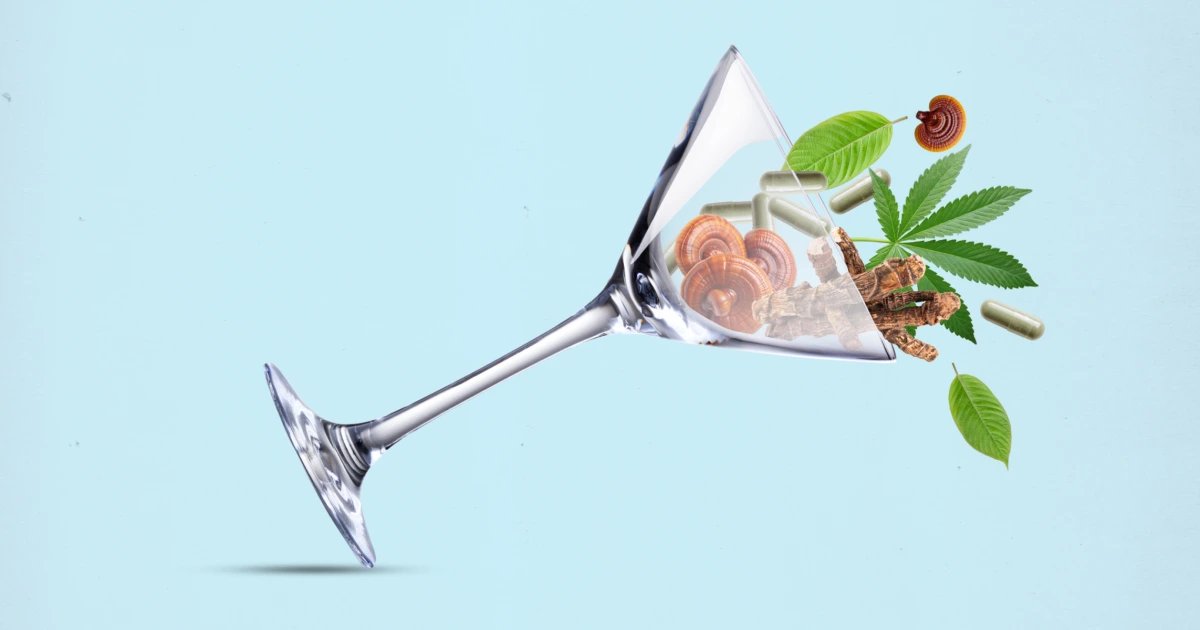
In addition to alcohol-alternative drinks, there are gummies and powder mixes with similar ingredients and claims: nootropics that may enhance brain function, adaptogens that may combat stress, CBD for social relaxation, kratom for boosted mood and more.
Here’s a breakdown of the main categories of active ingredients in alcohol alternative products:
Nootropics, nicknamed “smart drugs,” is a term for a range of substances, both synthetic and natural, that may boost brain function. The most commonly used example is caffeine. The prescription drug Adderall is also a nootropic, as are popular supplements like ginseng and L-Theanine, and the functional mushroom lion’s mane. While research on their efficacy for better memory, motivation and creativity is ongoing, most people can take them with little to no side effects, research has shown. Still, experts recommend consulting a health care provider beforehand, as some can be dangerous for certain individuals.
Adaptogens have some overlap with nootropics, but they’re only found in plants, according to the Cleveland Clinic. They’re believed to help the body return to its natural, balanced state by reducing stress or fatigue, improving concentration, boosting the immune system and more, depending on the adaptogen in question. They generally come with minimal side effects, but it’s best to consult a health care provider before trying them, as they can interact with other supplements and medications.
Cannabidiol, or CBD, is one of the many compounds found in cannabis, but it doesn’t cause a high. In 2020, up to one-third of U.S. adults reported using a CBD product. The foods, lotions, fabrics and beverages CBD is infused into usually come with claims of calm and pain relief, but the scientific evidence is lacking, according to the Substance Abuse and Mental Health Services Administration.
THC, the psychoactive ingredient in marijuana, has been available in vape, gummy and plant form for years (though not always legally), but it’s now popping up in beverages branded as alcohol alternatives. THC alters the senses and changes mood and thinking patterns, and can cause psychosis and hallucinations, according to Yale Medicine. Compared to CBD, THC has a higher “potential for misuse because of its psychoactive effects,” according to SAMHSA.
Kratom, newer to the market, is derived from the leaves of a southeast Asian tree. It comes in pills, powders, tonics and teas sold online, in gas stations and convenience stores. In low doses, it acts as a stimulant, causing increased alertness and energy; in high doses, it can have sedative effects, according to the U.S. Drug Enforcement Agency. Kratom can be addictive, and the U.S. Food and Drug Administration has warned the public not to use it.
7-OH, officially 7-hydroxymitragynine, naturally occurs in kratom in trace amounts and can lead to similar physical effects, Erin Calipari, Ph.D., director of Vanderbilt Center for Addiction Research, tells TODAY.com. In fact, 7-OH’s impact on brain receptors can be more potent than morphine and kratom, according to the FDA. 7-OH is sold in tablets, supplements, drink mixes, shots and more, all of which should be avoided, per the FDA.
A Question of Safety
Calipari worries that with these alcohol alternatives, the public health messaging, or lack thereof, is creating a similar problem to what we’ve seen with alcohol: too little understanding of the risks, which, with alcohol, has only recently started to improve.
A 2022 study estimated that less than one-third of Americans know that drinking can increase their cancer risk, or that it goes up the more you drink. In a similar vein, there’s been a trend on TikTok of users sharing their shock when they became hooked on certain products branded as alcohol alternatives — which can have their own set of health consequences, including dependence and withdrawal, Calipari says.
While not all of the functional beverages, gummies and powders available come with the same degree of health risks, Calipari believes that “we … need to do better with messaging on what these things are and what they’re doing and how they’re working so that people can make informed decisions.”
Here are some of the safety concerns with common active ingredients in the alcohol alternative market.
Kratom
The FDA has advised consumers to avoid kratom due to its risks of liver toxicity, seizures and substance use disorder. In “rare cases, deaths have been associated with kratom use,” the agency noted. Calipari also warns withdrawal can be painful. Wrongful death lawsuits linked to kratom continue to mount across the country, and it’s banned in six states. There are no FDA-approved drugs, including over-the-counter, that contain kratom, and the agency also has said it’s illegal to market kratom as a dietary supplement or add it to foods.
7-OH
7-OH is a byproduct of kratom and often misbranded, but it is substantially more potent in how it affects the brain’s opioid receptors, according to the FDA. It can cause respiratory collapse, physical dependence and opioid-like withdrawal symptoms, according to an FDA assessment. “Concentrated (7-OH) can act like opioids, with real dependence and overdose risk,” says Thrul.
In July 2025, the FDA recommended the Justice Department classify the compound as an illicit substance and issued warning letters to firms marketing it. Like kratom, it’s banned in six states, and the FDA emphasizes that it has not approved any products with 7-OH for any purpose.
Adaptogens and Nootropics
Research shows the seemingly tamer, buzz-promising products made with mushrooms and plant substances are usually well-tolerated and don’t pose the same risks as alcohol, kratom and 7-OH. But Calipari warns about using them anyway because the products that contain them aren’t tested by the FDA before hitting the shelves.
What’s more, certain adaptogens and nootropics have greater risks than others, studies have found. For example, guarana, an Amazonian plant packed with caffeine, can injure those with heart issues. Rhodiola isn’t safe for those who experience manic-depressive psychosis. Kava, known for stress-relieving properties, can cause neurological symptoms and harm liver health, TODAY.com previously reported.
It’s also important not to underestimate how much you’re consuming, especially when using adaptogens or nootropics as an alcohol replacement, Caroline Susie, registered dietitian and spokesperson for the Academy of Nutrition and Dietetics, tells TODAY.com. Nootropics and adaptogens can also interact with other medications and supplements, so consult your doctor before trying any.
THC and CBD
CBD from hemp is legal at the federal level in the United States, whereas THC, the psychoactive ingredient in cannabis, is not, though many states have legalized it. As a result, the regulation of marijuana products varies from state to state, and often they aren’t checked for purity of ingredients, strength or safety, according to SAMHSA.
THC beverages make up a “fast-growing segment of the market that is being promoted as an alcohol alternative … because it’s a familiar route of consumption,” Jane Metrik, Ph.D., professor at Brown University based at the Center for Alcohol and Addiction Studies, tells TODAY.com.
Thrul says the risk of cannabis use disorder from drinking it seems to be less than with dabbing or smoking because it’s less concentrated. But because the oral route delays the psychoactive effects, there’s a risk of consuming too much, especially for cannabis newbies, which can lead to the “scary” symptom of increased heart rate, Metrik explains.
Other health risks of THC include dependency, lowered IQ, mental health problems, and reduced athletic performance and overall life satisfaction, according to SAMSHA. There is ongoing research into whether THC can help reduce alcohol consumption, but it’s still unclear the best way to use cannabis to do so and whether the health harms are less.
CBD doesn’t usually result in side effects but can cause symptoms like diarrhea, fatigue and drowsiness, according to Mayo Clinic. The bigger concern with CBD, per SAMHSA, is that, because CBD products aren’t FDA-approved before hitting shelves, the advertised amounts can differ from the actual amount in the product, and there may be harmful contaminants. “The FDA has ruled that CBD products cannot be sold legally as dietary supplements and CBD is not considered a safe additive for food and beverage products,” according to SAMHSA.
A Long Way to Go
In turning from one proven carcinogen to another mood-altering substance, you might be taking on a different set of risks, especially if you don’t first consult your doctor, Metrick says. The research on the safety of most of these alternatives is as immature as the market itself.
When it comes to alcohol alternatives, “we need basic research on dose-response, impairment, dependence, withdrawal and drug interactions — plus surveillance systems that track adverse events linked to verified product contents, because mislabeled and inconsistent products make safety monitoring almost meaningless,” says Thrul.
He’d also like to see more accurate labeling with the exact dose of each ingredient and whether it has impairing effects so consumers can make better choices regarding safety. He’s also advocating for improved manufacturing standards, contamination testing, potency limits, child-resistant packaging, and enforcement against misleading health claims.
“We’re a long way behind,” Thrul adds.
For anyone considering these alternatives because they worry about their dependence on alcohol, keep in mind how the National Institute on Alcohol Abuse and Alcoholism defines alcohol use disorder: “An impaired ability to stop or control alcohol use despite adverse social, occupational, or health consequences” — essentially, you continue to drink even though it’s harming your personal relationships, work or health.
If you fall into this category, know that there are research-backed ways to get help.
“There are some really excellent evidence-based alcohol treatments including medication and behavioral treatments,” says Metrik. “They should be the first-line approach.”
Calipari agrees: “It’s really important for people to consult (their) doctors when trying to stop drinking.”
There isn’t enough research to recommend selecting a buzz-inducing alternative, Metrik adds. And until there is, experts can’t definitely say whether they’ll help you cut back or just lead to a different substance use disorder, restarting the cycle.
