

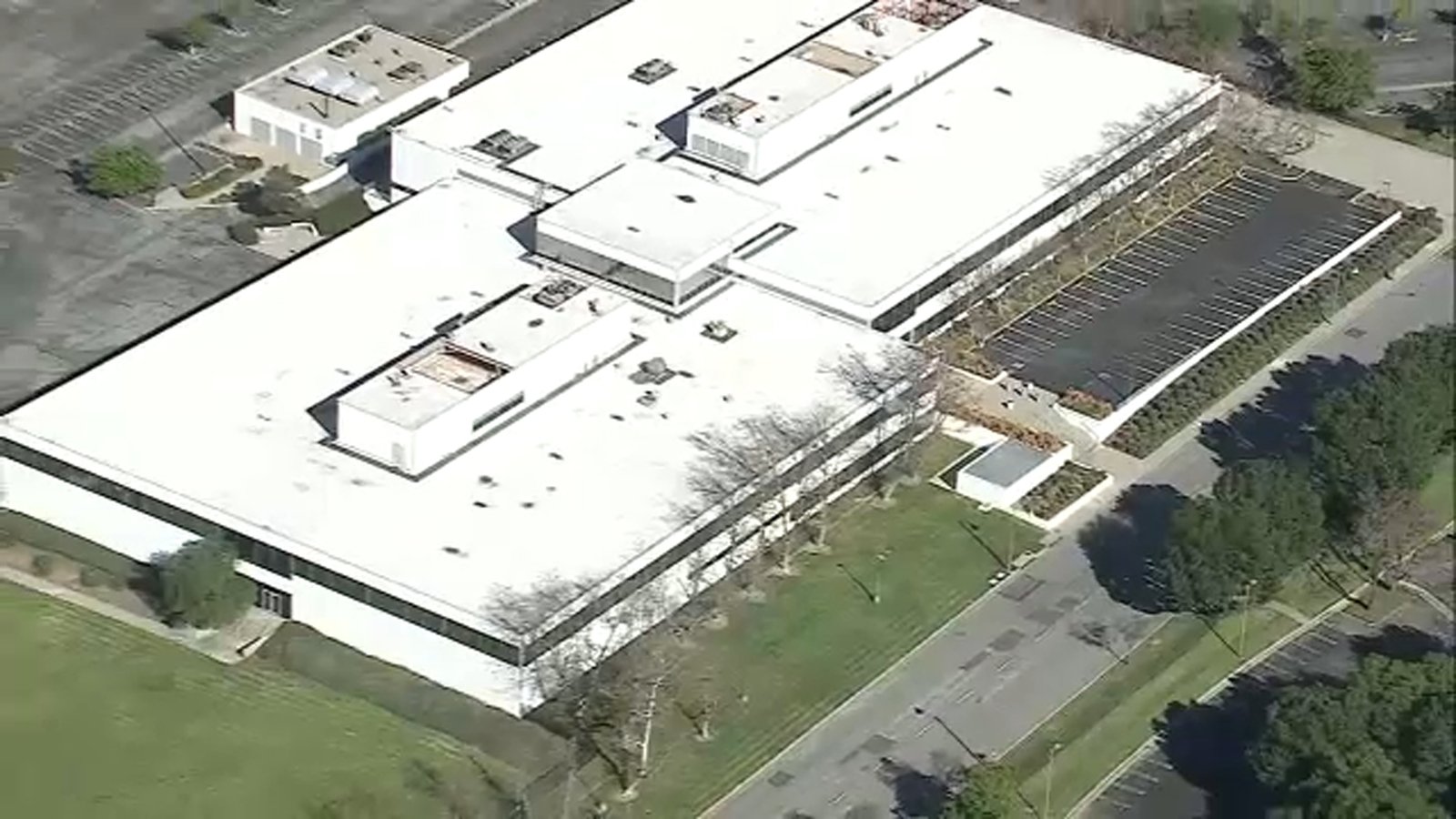
MONTEREY PARK, Calif. (KABC) — Neighbors in Monterey Park protested on Wednesday over a proposed data center in their community. People are worried about the air quality and health impacts that the data center might pose.
Eyewitness News spoke to environmental experts and has a response from the company that wants to get the data center up and running.
We all shop online, stream videos and use artificial intelligence. Every click, stream and online purchase requires computing power, and that power comes from data centers. The servers at the data centers power social media, cloud storage and artificial intelligence systems, but they also require a lot of electricity and water.
“They’ve made no effort to educate the residents or even outreach to us,” said Steve Kung, who lives in a neighborhood a short distance from the proposed site for a data center in Monterey Park.
It would be a 247,000 square-foot facility next to La Loma Park. Right now, it’s a two-story office building, which city records say would be demolished as part of the project.
“So, I have multiple concerns related to the health impacts of this project involving air pollution, noise pollution, which can impact mental health, sleep, other issues, as well as water pollution. This is an environmentally stressed area of the country,” said resident Jesse Damon.
According to public documents, there would need to be diesel generators on site, and Southern California Edison would have to build a substation nearby just to supply all the power the building would need.
Residents nearby say that it is just incompatible with their neighborhood.
“This processor just uses a lot of energy overall,” said Shaolei Ren, a professor of electrical engineering at UC Riverside.
Ren says water use is another major issue. According to public documents, the facility could use more than 15,000 gallons of water per day to cool its servers.
“There’s concern of electricity utility rate increase, since upgrading the power infrastructure is very costly — like the transmission lines, the new generators,” Ren said.
Residents worry those costs could be passed on to them.
“They’re going to have Edison build a substation to support their data center, and then Edison is going to pass the cost on to the residents,” Kung said.
The company behind the project, StratCap, agreed to do an interview with Eyewitness News about the data center, but then canceled, and instead sent us a statement.
Part of that statement addresses the power usage, saying, “No pass-through costs or increases to electricity rates for Monterey Park residents. This project will have a dedicated energy distribution system entirely funded by the applicant.”
In addition, environmental advocates say diesel backup generators — used during outages and testing — can release dangerous pollutants.
“These generators, they emit particulate matter, they emit nitrogen oxides, which are extremely harmful for public health. They cause asthma, they cause lung cancer, even heart problems,” said Meredith Stevenson with the Center for Biological Diversity.
“I’ve gotten a lot of emails, a lot of phone calls. They’re worried about electricity use, water use, pollution, blackouts — the list goes on and on,” said Monterey Park Mayor Elizabeth Yang
Yang says those concerns are now squarely on the developer to answer.
“These are all the real concerns, along with the diesel generator and the substation that the applicant needs to address. It’s not the city’s job to defend them,” Yang said.
The company also responded to the environmental concerns in the statement, saying the “…diesel generators are one of the most environmentally advanced options available for commercial use in emergency use. It’s why they are relied on by hospitals. Their use is strictly regulated, permitted, and monitored by South Coast Air Quality Management District.”
The mayor says the project could bring in about $5 to 6 million in tax revenue, but adds that that alone isn’t enough to move it forward. Residents say they’ll continue to push back until their concerns are fully addressed.
“I don’t believe greater connectivity is a sufficient benefit for the health and environmental costs we’ll be asked to bear,” Damon said.
Copyright © 2026 KABC Television, LLC. All rights reserved.
