

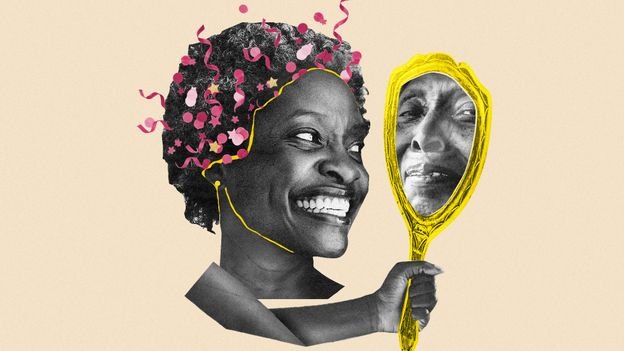
Of course, there is positive messaging around ageing too, and around the world many cultures show signs of great respect for older adults. Influenced by Confucian values, some Asian communities are often still guided by “filial piety” – the value and respect for elders. On the third Monday of every September, Japan holds Keirō no Hi or Respect for the Aged Day, which became an official holiday in 1966 to honour older adults. There are also special celebrations to mark a person’s 60th birthday due to the completion of the life-calendar cycle, as well as their 77th, 88th and 99th birthdays. In Native American communities, older adults have been described as “living libraries”, keepers of wisdom and storytellers – elders passing down traditions and customs orally is integral to their culture.
It serves as a reminder that ageing is a privilege. “We have been given a gift of living well and living long in the modern day, that we are trying to squander by worrying about it,” Raina says.
Overcoming age biases
Swift emphasises the need to challenge stereotypes on a cultural level, as well as an individual level – for example, within our family lives and the role models we have. In a 2016 study, 85% of interviewees indicated they had at least one role model of successful ageing – with most mentioning members of their family, such as parents and grandparents. In turn, these individuals had a less negative view of ageing than those who didn’t name a role model for ageing.
We need to change cultural values and norms around what’s expected of people of different ages, as well as the stereotypes that emerge about certain age groups, Swift says. “You also need people at an individual level to have contact with people of different groups.”
Research has found that intergenerational interventions are associated with a substantial reduction in ageism, and are relatively low cost. In blue zones, for example, regions around the world where people often live to at least 100-years-old, multigenerational living and strong social networks are common. These contribute to longevity by helping to tackle loneliness and increasing connection.
