

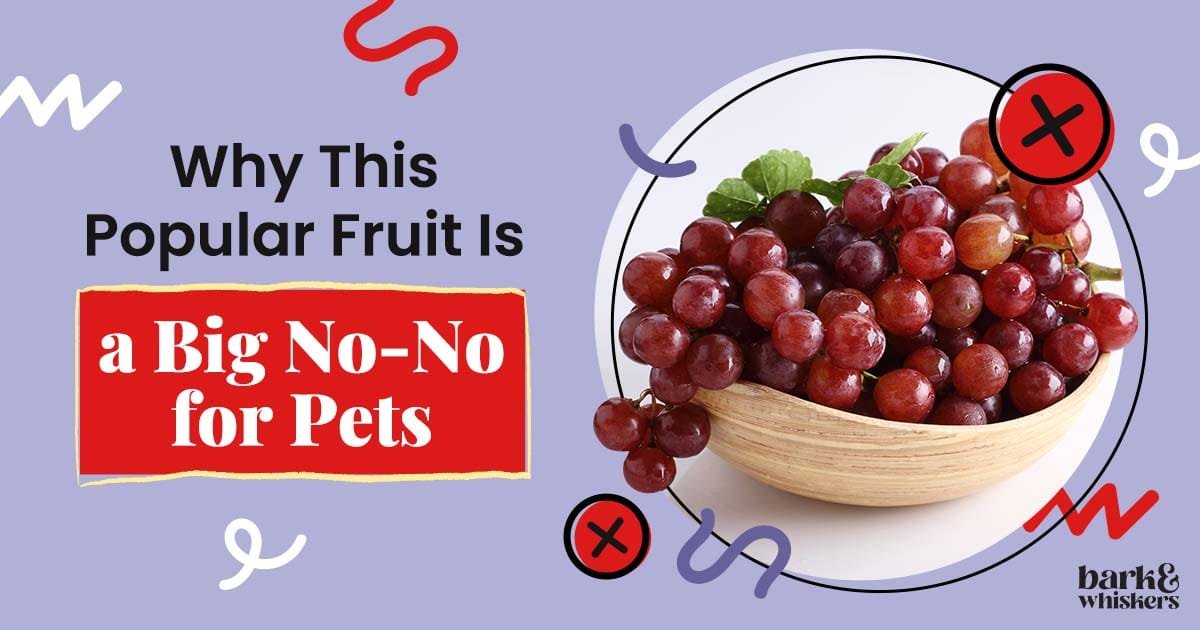
Although studies have found the potential culprit of why this fruit is toxic to pets, more research still needs to be conducted. To be safe, don’t let your pet eat this fruit or get close to the plant.
STORY AT-A-GLANCE
- Newly published research suggests that tartaric acid found in grapes may be the most likely culprit of grape toxicity in animals
- Symptoms of grape toxicity in pets include vomiting, diarrhea, abdominal pain, anorexia and kidney failure
- If your pet accidentally eats grapes, don’t wait for symptoms to appear. Try to induce vomiting and/or take them to a veterinarian right away
- It’s not just the actual fruit you should be wary of — other parts of the plant, such as the leaves and vines, may be poisonous to your pets as well
- If you have grapes growing in your garden, or if you live near a vineyard, make sure you keep your pets away from it
Editor’s Note: This article is a reprint. It was originally published October 2, 2018.
Grapes are a curious case when it comes to determining their safeness for household pets. In some pets, small amounts of grapes, raisins, sultanas and currants can make them very sick. The American Society for the Prevention of Cruelty to Animals (ASPCA) acknowledges that grapes can be toxic for dogs, but the exact mechanics are still unknown.1
On the other hand, there are pets that aren’t affected at all. So what exactly is happening here, and what are the underlying causes of this phenomenon?
In 2016 there was a theory that a fluoride-based pesticide called cryolite applied on grapevines was a possible source of toxicity. However, some dogs still got sick even if they consumed organic grapes. Now there are new findings that shed more light on this issue, as a group of veterinarians may have found the source of grape toxicity — and it’s all thanks to homemade playdough.2
Where Do Grapes Grow?
According to a report from Statista, China is the world’s top producer of grapes, producing around 10,800 metric tons from 2019 to 2020. India comes in second place at just 3,000 metric tons, while Turkey is in third place at 1,950 metric tons.3
Tartaric Acid May Be the Source of Grapes’ Toxicity
In a letter published in the April 2021 issue of the Journal of the American Veterinary Medical Association, the veterinarians/researchers noted that tartaric acid may be the culprit based on an incident involving homemade playdough made with cream of tartar.4
Typically, dogs can develop salt poisoning when they ingest homemade playdough or salt dough ornaments. However, their epiphany for the case of tartaric acid came through the process of elimination. According to an interview with Dr. Colette Wegenast, one of the researchers:5
“The lightbulb moment came with the realization that tartaric acid and potassium bitartrate are uniquely present in high concentrations in grapes, and that dogs are [members of] a species that has been shown to be sensitive to tartaric acid — with acute renal failure reported in the older studies.
Upon further investigation … tartaric acid and potassium bitartrate kept checking off the boxes in support of the theory that they’re the toxic principles in grapes and raisins.”
Furthermore, the amount of tartaric acid differs depending on the grape variety, growing method and ripeness. This could explain why some dogs have differing outcomes when consuming grapes.6
Adding credence to this theory is the high amounts of tartaric acid and potassium bitartrate in tamarinds. In the same interview, Dr. Wegenast noted that the Animal Poison Control Center (APCC) received reports of vomiting and kidney failure after pets consumed tamarinds.7
While the evidence strongly points to tartaric acid, nothing is set in stone yet, academically speaking. There is still more research to be done to solidify the initial findings. To provide contrast, wolves have been shown to forage grapes and don’t seemingly exhibit signs of toxicity, according to Isla Fishburn, Ph.D., a conservation biologist and zoologist.8
Reminder About Tartaric Acid
Tartaric acid is found in other foods as well, such as baking soda, hard candies and taffies.9 Make sure you store these out of your pet’s reach.
Signs of Grape Toxicity in Pets
“Grapes, raisins, sultanas, currants and any product containing them should never be fed to your pets. This includes grape juice, trail mix with raisins, raisin bread and wine.”
Be aware that some products may also contain raisin paste and/or raisin juice, such as cookies, bread and certain protein bars, which can also be toxic to your pet, so be sure to read the product label carefully. Here are the key indicators of grape toxicity in pets:10
- Vomiting
- Diarrhea
- Abdominal pain
- Anorexia
- Kidney failure
Did You Know?
It’s not just the actual fruit you should be wary of — other parts of the plant, such as the leaves and vines, may be poisonous to your pets as well. If you have grapes growing in your garden, or if you live near a vineyard, make sure you keep your pets away from it.11
What Should You Do if Your Pet Accidentally Ate Grapes?
According to a study published in Interdisciplinary Toxicology, there’s time to get help if your pet suddenly eats grapes.12 However, that doesn’t mean you should be complacent and take your time — every minute counts. If you suddenly find yourself in a situation where your pet ate grapes, here’s what you should do:13
- Call your veterinarian for immediate advice.
- If you can’t bring your dog to the veterinarian immediately, you should induce vomiting if they ate grapes within the last 30 minutes. To do this, administer 3% hydrogen peroxide (2 milliliters per kilogram of body weight, but no more than 45 milliliters) followed by activated charcoal.
- To deliver the hydrogen peroxide, use a syringe without a needle and squirt the liquid into the back of your pet’s mouth. If you don’t have a syringe, a turkey baster can work. You may lace the hydrogen peroxide with a little honey or broth to make it easier to swallow. Vomiting usually occurs within 15 minutes of administration.
- Once your pet has vomited, bring them to your veterinarian for aggressive intravenous fluid therapy for two days to help rehydrate and repair the kidneys, along with monitoring.
- If vomiting is not induced, your veterinarian will need to administer a gastric lavage to remove the grapes and proceed to step 4.
- 1 ASPCA, People Foods to Avoid Feeding Your Pets
- 2,5,6,7 AAHA, April 1, 2021 (Archived)
- 3 Statista, Global leading grape producing countries in 2022/2023 (in 1,000 metric tons)*
- 4 Journal of the American Veterinary Medical Association, April 1, 2021, Vol. 258, No. 7, Pages 704-707
- 8 Dogs Naturally Magazine, December 16, 2021
- 9 Britannica, Tartaric Acid
- 10 Pet Poison Helpline, Grapes
- 11 Garden Guides, September 6, 2022
- 12,13 Interdiscip Toxicol. 2009 Sep; 2(3): 169–176, Therapy
In this free guide, you’ll discover:
-
How your pet’s biology influences their nutritional needs -
Why conventional feeding advice often falls short -
Practical ways to choose better food for your dog or cat
View our Privacy Policy and Terms of Service.
