

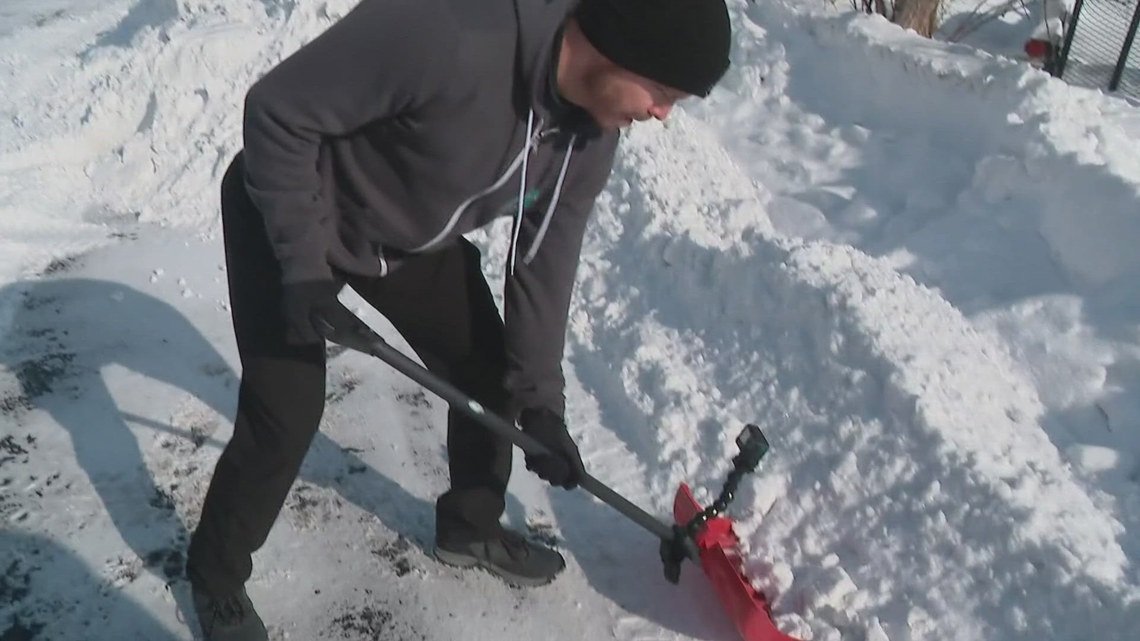
Studies estimate hundreds of Americans die during or shortly after snow removal each year.
COLUMBUS, Ohio — The American Heart Association warns that clearing snow from sidewalks and driveways, while often necessary, can place dangerous strain on the cardiovascular system, potentially triggering heart attacks or sudden cardiac arrest.
Research published in the organization’s 2020 scientific statement identifies snow shoveling as one of several physical activities that put extraordinary stress on the heart, particularly for those unaccustomed to regular exercise.
“When your arteries receive pressure from that increased heart rate, and the increased blood flow sometimes its too much for them if they are not conditioned,” said Dr. Kyle Schneider an Upper Arlington Chiropractor.
The impact is most severe for those who are least physically fit.
Studies estimate hundreds of Americans die during or shortly after snow removal each year. A Canadian study found heavy snowfall, approximately 7 to 8 inches, increased men’s odds of hospital admission for heart attack by 16% and raised their risk of fatal heart attack by 34%. Women showed no similar increase.
Frigid temperatures elevate blood pressure while constricting coronary arteries, and when combined with the physical exertion of shoveling, these factors can trigger acute cardiac events. Even automatic snow blowers pose risks, as pushing the equipment can rapidly spike heart rate and blood pressure.
The American Heart Association recommends taking frequent breaks and pushing snow rather than lifting and throwing it.
Heart attacks aren’t the only issue. Dr. Schneider says his office is often busier after snowstorms because of people who throw out their backs.
He suggests before grabbing the shovel to work on your body’s flexibility by doing a series of lunges and hip stretches for 3 to 5 repetitions each.
He says one of the common mistakes people make is load too much snow on the shovel and twist to throw it aside. Instead, Dr. Schneider says tighten your abdominal muscles and glutes, bend down and then when the snow is on the shovel move one foot to the side and toss the snow.
He says important to bend at the knee and lift with the legs. “ We want to limit the lumbar rotation, we want to step instead of the rotation,” he said.
Stop shoveling immediately and contact your medical provider if you notice any of the following symptoms:
- Feeling lightheaded or dizzy
- Palpitations or a racing heartbeat
- Chest pressure or pain
- Shortness of breath
- Nausea or heartburn
- Excessive sweating
If they last more than five minutes after stopping, call 911.
