

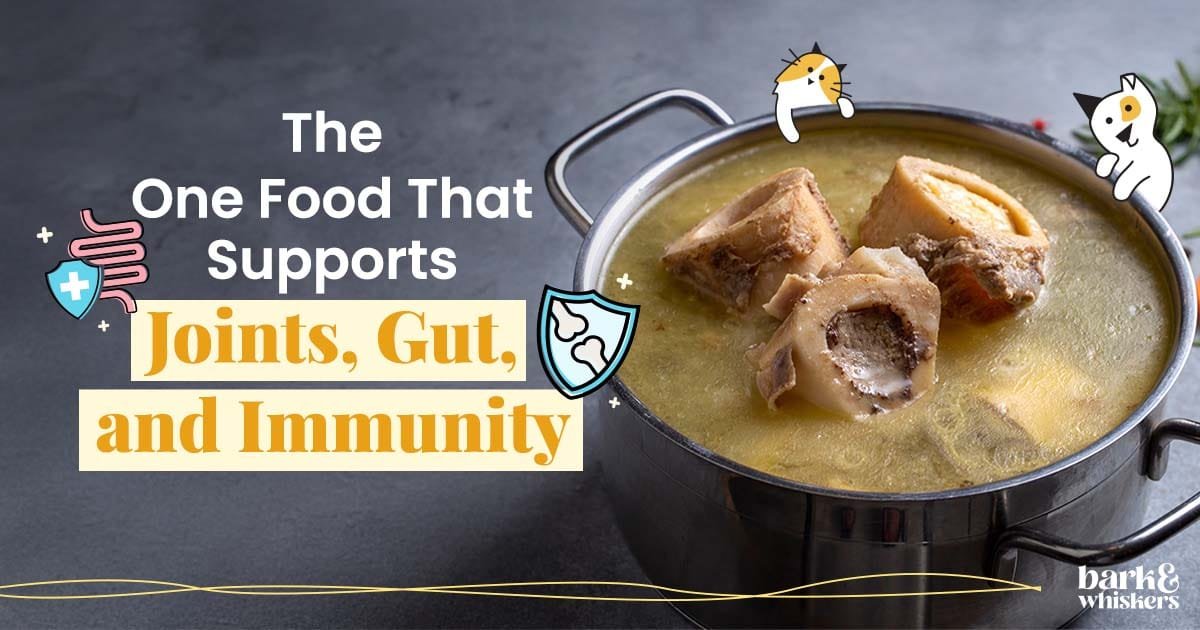
Bone broth is good for a host of issues, and especially for picky eaters or aging pets. While this nutrient-rich superfood is easy and inexpensive to make at home, keep in mind it may not be for every pet, especially those with this type of systemic inflammation.
STORY AT-A-GLANCE
- Bone broth is a nutrient-rich meal supplement or treat for any pet, and especially dogs and cats recovering from tummy troubles, picky eaters, and older animals with declining appetites
- The minerals and collagen from bone broth support both muscle growth and skeletal health
- It’s easy to digest, and perfect in situations where you need to add flavor, moisture, and extra nutrients to your pet’s meals
- Bone broth is both inexpensive and easy to prepare using chicken, beef, or soup bones
- Pets who may not do well consuming bone broth can be histamine-intolerant, as this nutrient-dense superfood contains a lot of naturally occurring histamine, which can exacerbate some health conditions, including chronic systemic inflammation
Editor’s Note: This article is a reprint. It was originally published May 28, 2023.
Bone broth is an excellent bioavailable source of vitamins, minerals and nitrogen, with potent healing properties. It can help relieve joint and stomach pain and supports the immune system.
Bone broth is also a great after-fasting food for animals recovering from gastrointestinal (GI) irritation or illness. If you have a finicky pet, you can use it as a topper on food. If you have an older pet with a declining appetite, feeding bone broth provides very concentrated nourishment and helps keep the GI tract functioning.
Bone Broth Is a Nutrient-Packed Meal Supplement or Treat
Bone broth is inexpensive to make, easy to prepare and incredibly nutritious. When you simmer bones in water overnight (or longer), it allows all the minerals and marrow to leach out into the water, providing your pet with a variety of nutrients in an easily absorbable form, including:
- Calcium, phosphorus and other minerals
- Components of collagen and cartilage
- Silicon and other trace minerals
- Components of bone and bone marrow
- Glucosamine and chondroitin sulfate
- The “conditionally essential” amino acids proline, glycine and glutamine
The boiled down cartilage and collagen in bone broth is excellent for animals with achy joints and may help reduce joint pain and inflammation. Cartilage is also known to support immune system health, while amino acids such as glycine, proline, and arginine fight inflammation.
The minerals in the broth help support bone health, as does the collagen, and the gelatin may also support muscle growth, making it useful for athletic as well as elderly pets.
Bone broth is also easy to digest and provides excellent support for the gastrointestinal tract. In fact, bone broth provides a highly concentrated source of nutrition for pets that have recently been sick, are elderly or have become finicky eaters.
While bone broth isn’t a balanced diet, it works well for a snack or for pets who are refusing to eat. You can include it with your dog’s or cat’s regular meals for added flavor, moisture, and nutrition. Freeze it in ice cube trays to make a perfect summer cool-down treat. It will even help your pet detox from the environmental pollutants she encounters on a daily basis. As noted in Dogs Naturally magazine:
“The liver is the master organ of detoxification. The dog’s liver is under assault daily as the poor dog lies on carpets and floors treated with chemicals, walks on grass that’s been treated and sprayed with poisons, consumes foods with toxic and synthetic ingredients, and suffers through toxic dewormers, flea and tick preventives, drugs, antibiotics, vaccines and more.The liver was never meant to suffer this onslaught and its capacity to detoxify is limited by the availability of the amino acid glycine. Guess what has tons of glycine? Bone broth!”1
How to Make Your Own Bone Broth
Both dogs and cats love bone broth, and it’s easier to make bone broth than you might think. Start with the highest quality ingredients you can find, including organic, pastured chicken, beef, or bones. You can use a whole organic chicken (pets will enjoy the meat, too) or look for organic beef thigh bones (soup bones).
Fill a pot with pure water and add the bones plus a splash of organic apple cider vinegar to help leach the minerals from the bones into the stockpot water. Let the mixture simmer on the stove for up to 4.5 hours, until the meat is falling off the bone and you can remove it (and any skin) from the pot.
Return the broth (including the bones) to the stove, add another splash of vinegar, and continue simmering for another 24 hours to be sure all the nutrition is pulled from the bones.
After 24 hours, run the broth through a strainer to remove the cooked bones and bone fragments. You can either discard these or run them through a food processor and add them back into the broth. With very little effort on your part, you’ll have a superfood that will provide your pet with comfort and nutrition year-round (and as a bonus, you can eat it too)!
During warm seasons, you can pour some broth into an ice cube tray, freeze it, and offer your dog bone broth popsicles as a delicious, nutritious treat.
Histamine Intolerance — Why Some ‘Superfoods’ Aren’t So Super
Animals can have the same genetic variants as some humans, HNMT and ABP1 gene anomalies, causing them to be histamine intolerant. This means they have genetic variations, or Single Nucleotide Polymorphism (SNPs, pronounced “snips”) that prevent the normal clearance of histamine from the body.
This results in a buildup of histamine, which looks an awful lot like allergies (itching, red and miserable pets); however, these animals have negative allergy test results.
Functional medicine veterinarians are aware of this possibility and design low-histamine diets around this potential, once all other root causes of allergy-like symptoms have been ruled out. If your dog appears to have allergy symptoms but has negative allergy test results, histamine intolerance could be the problem. In this case, feeding low histamine foods, avoiding fermented foods and low-histamine bone broth is a good idea.
In this free guide, you’ll discover:
-
How your pet’s biology influences their nutritional needs -
Why conventional feeding advice often falls short -
Practical ways to choose better food for your dog or cat
View our Privacy Policy and Terms of Service.
