

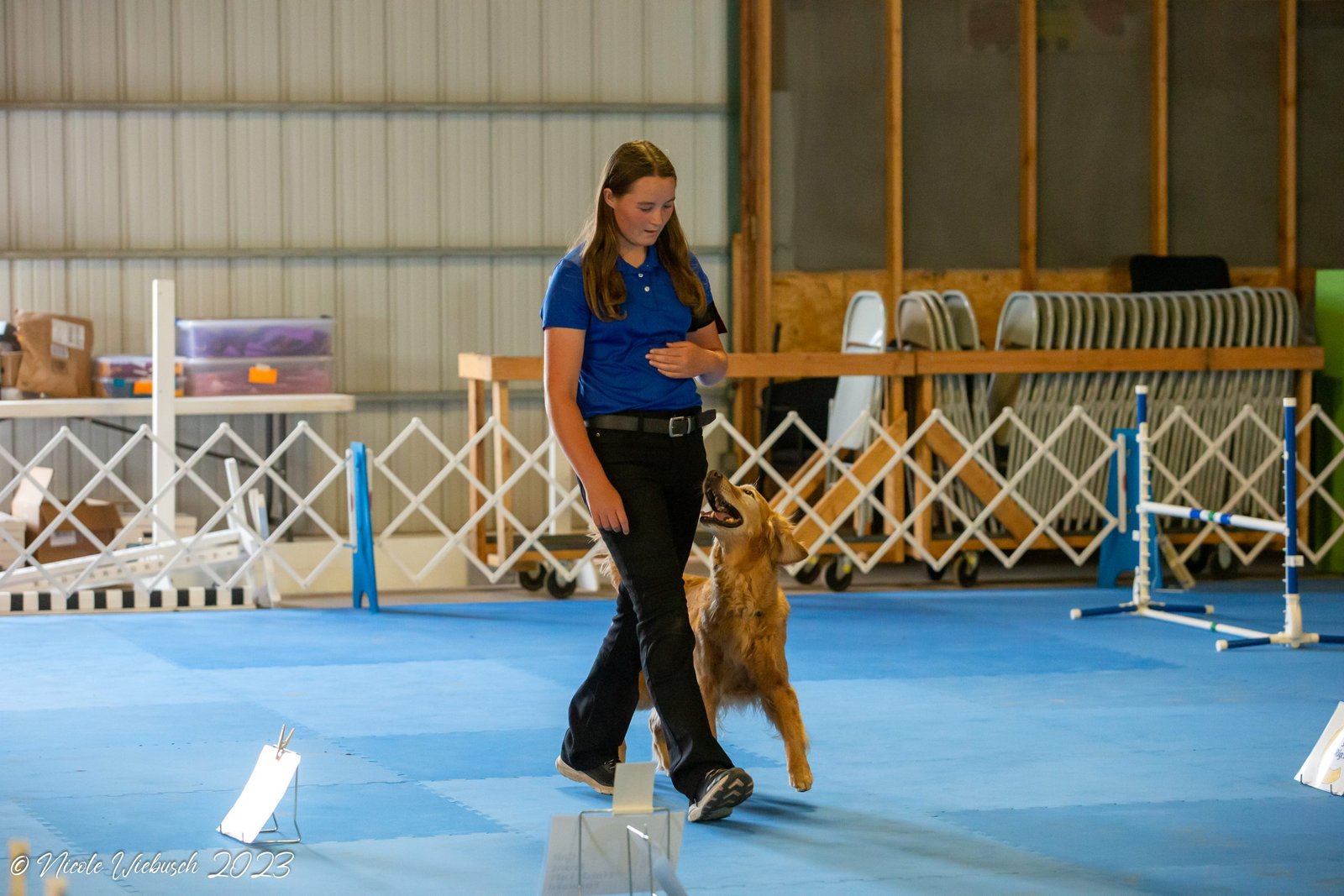
Rally training for sensitive dogs often gets overlooked because rally is frequently associated with flashy movement, speed, and high energy. Many handlers assume that if their dog is thoughtful, cautious, or easily overwhelmed, rally probably isn’t the right sport.
In reality, the opposite is often true. When rally is taught with strong foundations and an emphasis on clarity, it can be an excellent choice for sensitive dogs who need structure, predictability, and time to think.
The Myth That Rally Is Only for Fast, High-Drive Dogs
Rally sometimes gets marketed as a fast-paced sport. Dogs move continuously. Handlers talk. Courses flow. That image can feel intimidating if your dog takes time to process, startles easily, or shuts down under pressure. It can also make handlers feel like they need to push their dog to keep up.
But rally itself isn’t the problem. How rally is taught makes the difference. Rally training for sensitive dogs works best when speed is not the goal and understanding comes first.
What We Really Mean by “Sensitive” or “Thoughtful” Dogs
Sensitive dogs aren’t weak. They’re aware. These dogs notice changes in environment, tone, and handler movement. They often feel emotions deeply and respond strongly to pressure. Many are highly connected to their handler, which can be both a strength and a challenge.
Thoughtful dogs want to be right. When they aren’t sure what’s expected, they hesitate. When information comes too fast, they struggle to respond. These dogs don’t need less structure. They need clearer structure.
Why Structure Feels Safe for Sensitive Dogs
Predictability lowers stress. When dogs understand what’s coming next, they can stay engaged instead of bracing for surprises. Clear routines, consistent criteria, and familiar patterns help sensitive dogs regulate their emotions.
Rally training, when built on solid foundations, offers exactly that. The course provides structure, the handler provides information, and the dog learns how to move through tasks with purpose. For sensitive dogs, this clarity is comforting.
How Rally Foundations Reduce Emotional Pressure
Sensitive dogs often struggle when training jumps too quickly to full courses or complex sequences. The pressure to “keep moving” can overwhelm them. Rally foundations training breaks skills into manageable pieces. Dogs learn positions, transitions, and movement patterns without the added stress of speed or expectation. This approach allows dogs to think instead of react. When dogs understand the job, confidence grows naturally.
Rally Training for Sensitive Dogs Builds Confidence Slowly—and That’s a Good Thing
Progress with sensitive dogs often looks quieter. Confidence may show up as steadier movement instead of enthusiasm. Engagement might look like thoughtful eye contact instead of intensity. Improvement may come in small increments. That pace is not a problem.
Rally training for sensitive dogs values consistency over flash. Dogs learn that they can take their time and still be successful. That lesson carries into every part of their training.
Why Pressure Backfires for Thoughtful Dogs
Sensitive dogs often shut down when pressure increases. Repeated cues, rushed handling, or frustration from the handler can quickly erode confidence. These dogs aren’t being stubborn. They’re overwhelmed.
Rally foundations training emphasizes communication instead of correction. Dogs are given time to process and respond. Handlers learn how to adjust criteria without creating stress. This reduces conflict and builds trust.
What Confidence Looks Like for Sensitive Dogs in Rally
Confidence doesn’t always look excited.
For sensitive dogs, confidence often looks like:
- Willingness to try
- Ability to recover from mistakes
- Staying engaged through transitions
- Calm, steady movement
- Improved emotional balance
These changes may feel subtle, but they are meaningful. Rally training for sensitive dogs focuses on these markers rather than speed or precision alone.
Why Rally Can Strengthen the Dog–Handler Relationship
Sensitive dogs tend to be deeply connected to their handlers. That connection can become fragile if training feels confusing or stressful. Rally, when taught thoughtfully, strengthens that bond.
Handlers learn how to communicate clearly. Dogs learn they can trust the information they receive. The partnership becomes more collaborative and less reactive. Rally stops feeling like pressure and starts feeling like teamwork.
Rally Foundations Matter Even More for Sensitive Dogs
All dogs benefit from strong foundations. Sensitive dogs depend on them. Without foundations, rally can feel chaotic. With foundations, rally becomes predictable and supportive.
Revisiting foundations is not a setback. It’s a way to protect confidence and keep training enjoyable. Rally training for sensitive dogs works best when foundations are treated as an ongoing priority, not a box to check once.
Why Rally Can Be a Supportive Sport, Not a Stressful One
Rally does not have to be loud or rushed to be successful. For thoughtful, sensitive, or easily overwhelmed dogs, rally can provide structure, clarity, and purpose. It teaches dogs how to think, move, and stay connected under gentle challenge. When trained with intention, rally builds confidence instead of pressure. That’s what makes it such a powerful option for dogs who need understanding more than intensity.
