

STORY AT-A-GLANCE
- Apricots are rich in beneficial antioxidants including polyphenols (flavonoids and phenolic acids), which are known for helping ward off chronic diseases
- Carotenoids are another example of beneficial phytochemicals also found in these fruits, and are responsible for their bright color
- These pigments also have free radical-scavenging action, which may help prevent or minimize oxidative damage to your pet’s cells
- Cut up the flesh into small, chewable bites to avoid any choking issues
- You can add these to your pet’s food bowl as a topper to their meals, or use them as training treats
Editor’s Note: This article is a reprint. It was originally published May 9, 2024
Not all dogs and cats enjoy eating fruit, as they are carnivores by nature. But all carnivores still need sources of fiber, and if they show an interest in eating a slice or two as a treat, one excellent option is the apricot.
Apricots are a tasty addition to salads and baked goods, and are made into preserves and jam, which is why they’re great to have on hand. Your pets may appreciate a bite of this delicious and refreshing fruit, and this article will give you some interesting trivia on why this can be a good addition to their meals.
What Is an Apricot and What Does It Taste Like?
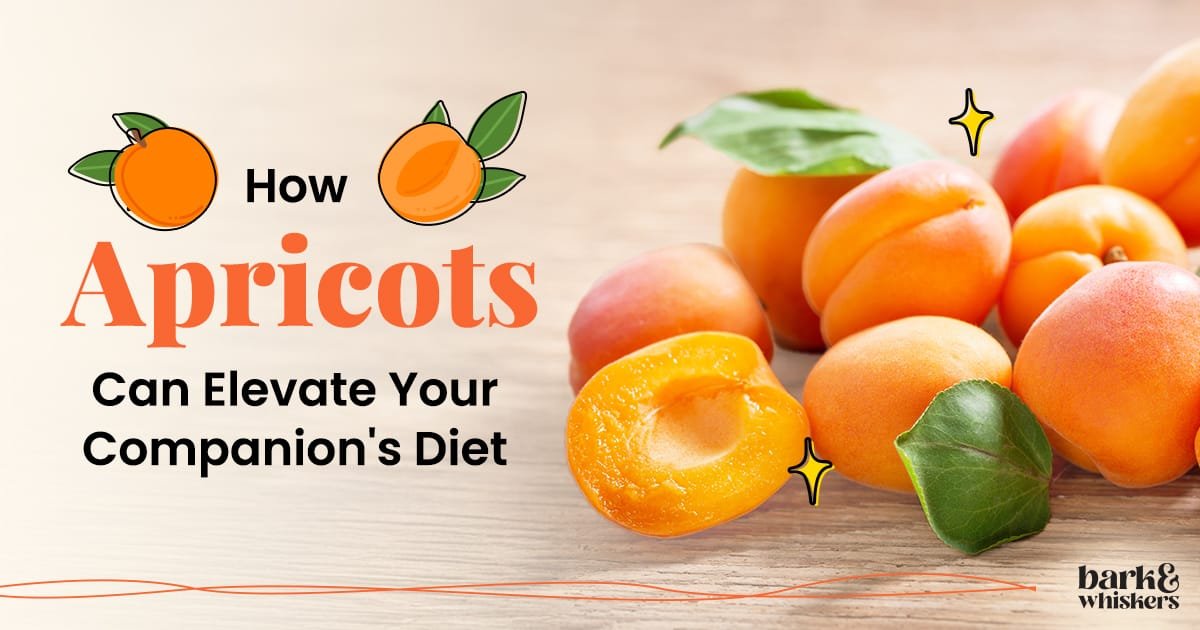
A relative of the peach, plum, nectarine and cherry, apricot (Prunus armeniaca L.) belongs to the plant family Rosaceae,1 and are small fruits that have a soft, velvety skin and a unique flavor with a good balance of sweetness and tartness. These golf ball-sized fruits are classified as a drupe (with a pit in the center), and range in color from pale yellow to deep orange, with a tinge of pink or blush. The surface is fuzzy, like a peach.2,3
Apricot has been cultivated in China and Central Asia since 2,000 BC and gradually made its way into the Mediterranean, through the Persian Empire.4 Today, it’s grown in the U.S., with around 41,740 tons produced in 2021.5
In culinary, apricots are often used for confections and desserts, though they also taste great in savory dishes like lamb and poultry.6 When shared with pets, though, it’s good to just give them the plain fruit, either added to their species-appropriate, nutritionally adequate meals as a topper, or as fresh treats.
Did You Know?
Apricot is Armenia’s national fruit; the country is the basis of the fruit’s scientific name.
Phytochemicals Found in Apricots
Apricots are rich in beneficial antioxidants including polyphenols (flavonoids and phenolic acids), which are known for helping ward off chronic diseases. According to one study:7
“The phenolic acids such as chlorogenic, neochlorogenic, isochlorogenic, caffeic, βcoumaric, p-coumaric and ferulic acids derivatives are the most common found in apricot …Flavonoids in apricots mostly occur as glycosides and rutinosides of quercetin, kaempferol and rutin (Fig. 2) (Garcia-Viguera et al., 1994). The flavonoids include the purple, blue, red anthocyanins and the yellow anthoxanthins, which largely contribute to the visual quality of fruits.”
A review published in the Journal of Animal Physiology and Animal Nutrition looked at the benefits of plant-based phytonutrients in canine health, and the researchers concluded that not only have these nutrients “been proven to be essential to maintain normal function,” but they are also crucial for health optimization and longevity. They concluded:8
“Phytonutrients possessing anti-inflammatory and antioxidant properties may have notable roles in the prevention of chronic diseases, whose underlying development involves accumulated oxidative stress and chronic low-grade inflammation or altered protective functions (Khansari et al., 2009). Based on existing evidence, highlighted in this review, the potential of plant-based ingredients and phytonutrients to benefit canine health is promising and warrants further investigation.”
Carotenoids are another example of beneficial phytochemicals also found in these fruits, and are responsible for their bright color. These pigments also have free radical-scavenging action, which may help prevent or minimize oxidative damage to your pet’s cells.9
One type of carotenoid abundant in apricots is beta-carotene, also known as vitamin A precursor.10 In a 2003 study, researchers found that getting additional beta-carotene may be beneficial for senior pets, as it was found to significantly restore their natural defense response.11
Another particular area of health where phytochemicals may prove to be useful is for the cardiovascular system. According to one study, “chlorogenic acid, beta-carotene and lycopene help prevent the oxidation of low density lipoprotein (LDL) and thus improve the antioxidative status of the body.”
Vitamins, Minerals and Fiber Are Also Abundant in Apricots
As with other fruits, there’s no shortage of vitamins in apricots, as they contain vitamins C, K, and E, as well as B vitamins thiamine (B1), riboflavin (B2), niacin (B3), pyridoxine (B6), and folate (B9). As for essential minerals, small amounts of calcium, magnesium, iron, selenium, zinc and potassium.12,13
Adding apricots to your pet’s meals may also benefit their digestive system, as it contains both soluble and insoluble fiber.14 Soluble fiber dissolves in water and is more digestible than insoluble fiber. It promotes smooth passage of food to the GI tract. Meanwhile, insoluble fiber speeds up the rate at which food passes through. According to one study:15
“Fiber provides necessary roughage and bulk to the food consumed, stimulates normal gastric mobility and prevents constipation, as animal model studies of apricot fiber significantly improved faecal output (Akin et al. 2007; Tamura et al. 2011). Soluble fiber lowers blood cholesterol, maintain blood sugar level and helps in reducing body weight.”
Top Apricot Producers
Globally, Turkey is the top producer of apricots, with around 800,000 tons produced yearly. On the top 2 and 3 spots are Uzbekistan (424,734) and Iran (323,019), respectively.16 In the United States, California produces the most apricots, with much of the production in the San Joaquin Valley.17
How to Share Apricots with Your Pets
There’s plenty of misinformation surrounding many healthy fruits, vegetables, nuts and seeds on the internet. This is because websites have labeled all risks (such as the risk of overconsumption causing gastrointestinal issues or choking on too large of pieces or pits) as “toxicities,” which isn’t true but has managed to confuse millions of pet lovers, nonetheless.
In the case of apricots, pets can safely eat them fresh as long as they’re consuming the flesh only. Avoid giving them the stem, pit or leaves, as these contain small amounts of amygdalin, which is converted as cyanide in the body.18,19 Small amounts of amygdalin may not cause any harm, but if ingested in excess, it could trigger adverse effects, so keep your pet away from apricot pits or around apricot trees.
Cut up the flesh into small, chewable bites to avoid any choking issues. You can add these to your pet’s food bowl as a topper to their meals, or use them as training treats. Dried apricots are higher in sugar, so fresh is best for pets. Just make sure to limit these human foods to 10% of your pet’s daily caloric intake.
Storing Apricots
If you have fresh but unripe apricots on hand, store them at room temperature until they ripen. Placing them in a brown paper bag helps speed up ripening. Once the desired ripeness has been achieved, refrigerate the fruits to stop the process.20
Apricots Sustainability
According to Impactful Ninja, apricots only need 25 to 30 inches of water per year — it has a low water requirement. They also have a low carbon footprint, around 0.16kg of CO2e per pound of apricots. However, their waste generation (ex. from plastic and Styrofoam packaging) and pesticide use — which harms wildlife and biodiversity, and pollutes waterways — are quite high, meaning they aren’t as eco-friendly as they seem.
To address this, make sure to look for organic, spray-free apricots grown by trustworthy farmers. This will help protect you and your furry buddy from the excessive amount of harmful chemicals and pesticides in conventional varieties.21
- 1,4,10,13,15 International Journal of Unani and Integrative Medicine 2018; 2(2): 05-09
- 2 Real Food Encyclopedia, Apricot
- 3 BBC Good Food, August 22, 2023
- 5 AgMRC, April 2024
- 6 The Spruce Eats, December 23, 2022
- 7,9 Annals. Food Science and Technology, Volume 16, Issue 1, 2015
- 8 J Anim Physiol Anim Nutr (Berl). 2022 May; 106(3): 586–613
- 11 J Vet Intern Med. 2003 Nov-Dec;17(6):835-42
- 12 USDA Food Data Central, Apricots, Raw
- 14 WebMD, November 22, 2024
- 16 World Population Review, Apricot Production by Country 2024
- 17 Tasting Table, November 1, 2022
- 18 Rover.com, Can Dogs Eat Apricots?
- 19 Molecules. 2021 Apr; 26(8): 2253
- 20 Mobile-Cuisine.com, Apricot Fun Facts
- 21 Impactful Ninja, The Environmental Impact of Apricots: From Farm to Table
In this free guide, you’ll discover:
-
How your pet’s biology influences their nutritional needs -
Why conventional feeding advice often falls short -
Practical ways to choose better food for your dog or cat
View our Privacy Policy and Terms of Service.
