

STORY AT-A-GLANCE
- Recovery collars help prevent pets from reopening wounds, irritating hot spots, or damaging healing skin through constant licking, scratching, and chewing
- Traditional plastic cones remain one of the most effective options, but softer alternatives may work better for certain pets, injuries, and recovery situations
- Inflatable collars, soft cones, recovery suits, and neck-brace styles each provide different levels of coverage, mobility, and restriction during the healing process
- Gradually introducing a recovery collar with treats and short practice sessions can make the adjustment period less stressful for both you and your pet
- Small home adjustments like raised food bowls, cleared walkways, and supervised mealtimes can make recovery collars easier for pets to tolerate
Few things make pet parents feel guiltier than watching their pet walk into walls, freeze in doorways, or struggle to reach the water bowl while wearing a giant plastic cone around their neck. That is usually the moment you start wondering if there is a better option to help your pet heal comfortably without letting them lick, scratch, or chew the part of their body that needs protection.
The problem is that not all recovery collars work the same way. Some improve comfort while still protecting the surgical site, while others allow surprisingly easy access to stitches, hot spots, or irritated skin. The right choice depends on your pet’s injury, body shape, flexibility, and persistence in reaching the area. A few simple adjustments can also make those first awkward days in a cone much easier for your pet to handle.
What Are Recovery Collars?
Recovery collars are commonly used after surgeries like spays or neuters, as well as for hot spots, ear injuries, skin infections, and other healing wounds. They prevent pets from licking, scratching, or chewing irritated areas while the skin repairs itself. Without that protection, repeated licking and grooming can damage healing tissue, reopen wounds, and introduce bacteria into vulnerable skin.1
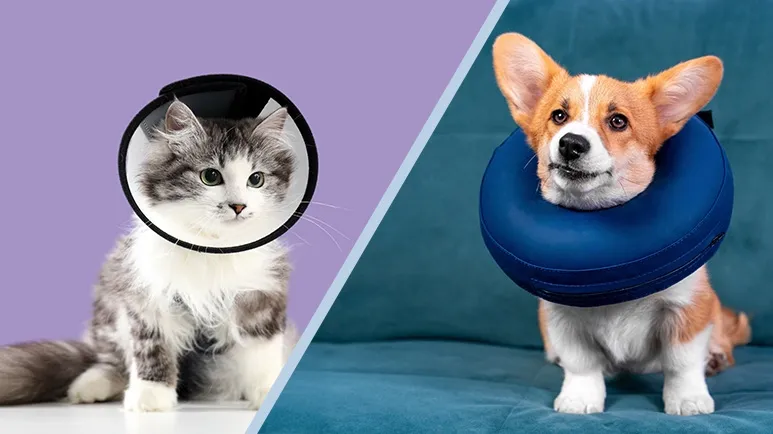
One of the most recognizable types of recovery collar is the traditional “cone of shame,” officially known as an Elizabethan collar or e-collar. The name comes from the large, ruffled collars worn during the Elizabethan era, which inspired the cone’s shape when the design was first patented by Frank L. Johnson in 1962. Earlier versions of Johnson’s design date back to 1897.2,3,4 The cone works by extending past the pet’s nose, making it difficult or impossible to reach the affected area.
When fitted properly, the collar should sit snugly enough that two fingers fit comfortably between the neck and the collar without allowing your pet to slip out of it. Even though many pets dislike them at first, traditional e-collars remain one of the most reliable options for preventing wound interference, particularly for determined pets with injuries on the paws, tail, or rear legs.5
Choosing the Right Recovery Collar
If your pet is miserable in a traditional cone, the good news is that there are other options available. Each of these works differently and suits different injuries, body types, and recovery situations:6,7,8,9,10
- Soft fabric cone — Soft cones keep the same general shape as a traditional e-collar but replace rigid plastic with padded or flexible fabric. Many pets tolerate them better because they are lighter, quieter, and less likely to bump painfully into furniture, walls, or your legs. They work best for pets that need moderate restriction but become highly stressed wearing stiff plastic cones.
The downside is that flexibility also makes them easier to bend or compress. A determined dog or cat may still manage to reach the wound, especially if the cone is too short or too floppy. Soft cones are generally less ideal for eye injuries because the sides can collapse inward, allowing rubbing or scratching near the face.
- Padded or inflatable collars — These recovery collars look similar to travel neck pillows and work by limiting how far your pet can rotate or bend the neck rather than extending outward past the nose. For some pets, they are dramatically more comfortable. They improve visibility and make eating and drinking easier.
The tradeoff is reach. Flexible pets, long-nosed breeds, or those recovering from injuries near the paws, tail, or rear end may still be able to reach the area despite wearing the collar. Proper sizing matters because collars that are too small may provide very little actual protection. Padded collars may also be uncomfortable for overnight use, as they make it hard for your pet to lay their head down.
- Recovery suit — Recovery suits work completely differently from cones because they cover the wound itself instead of restricting head movement. They are often used after abdominal surgeries or for skin conditions affecting the torso, chest, or back. Many pets tolerate them extremely well because they do not interfere with their vision or movement.
But recovery suits are not foolproof. Your pet can still lick through the fabric, create excess moisture against the skin, or chew through the material if they are persistent enough. They also work poorly for injuries located on the face, feet, or tail, where your pet can still easily reach the area.
- Neck brace style — Neck brace-style collars restrict neck movement more rigidly than most other recovery collars. Because they sit closely around the neck instead of extending outward, they interfere less with peripheral vision and function more like a medical neck brace that limits bending and twisting.
That tighter restriction can feel uncomfortable and may become frustrating for some pets, particularly during the adjustment period. For that reason, these collars are often considered after softer or less restrictive options have failed to provide enough protection.
How Long Do Pets Need to Wear a Recovery Collar?
How long your pet needs to wear a recovery collar depends on what is being treated, where the affected area is located, and how quickly healing progresses. Some pets may only need to use it for several days, while others recovering from more extensive procedures, deeper wounds, or chronic skin conditions may need to wear it for a few weeks.
One of the most common mistakes pet parents make is removing the collar too early because the incision “looks fine” from the outside. Skin often seals faster on the surface than it does underneath. Some veterinarians may recommend short, supervised breaks during calm activities like eating or cuddling, but unsupervised time without protection can quickly undo days of healing.
Many wound complications happen during brief moments when pets regain access to the surgical site and begin licking or chewing before anyone notices. The safest approach is to follow your veterinarian’s timeline closely, even if your pet seems frustrated by the collar.11
Helping Your Pet Adjust to an E-Collar
E-collars can feel strange and overwhelming the first time your pet wears one. If you have any advance notice that they are heading into surgery — or if you just want to be prepared in case something comes up later — spending a little time teaching them that a cone means good things can make the actual recovery period much easier on both of you. A few things to keep in mind before you start:12
- Practice fitting the cone on your own a couple of times first so you feel confident with how it goes on (if you are not sure, ask your vet to show you).
- Start when your pet is calm and relaxed, not immediately after a stressful or high-energy event.
- Keep your training sessions short, since even five productive minutes is better than 15 frustrated ones.
- Pay close attention to your pet’s body language as you go. If they start backing away, pinning their ears, or tucking their tail, slow things down and give them more time to get comfortable.
A Step-by-Step Guide to Cone Training
Once you are ready to begin, gather a handful of your pet’s favorite treats and the recovery collar you plan to use. If you have access to more than one size, starting with a slightly larger cone often helps because your pet can move their head in and out more comfortably while learning. Here are tips to help you out:13
- Let your pet explore the cone — Place the cone on the floor and scatter a few treats around and inside it. Let your pet approach in their own time, sniff it, and investigate without pressure.
- Turn the cone into a treat container — Lay the cone on its back with the wide opening facing up and place a few treats inside. Your pet will need to dip their head through the opening to reach them. This stage works well early on because they can pull their head back out whenever they want, which helps them stay comfortable and in control of the experience.
- Tilt and lift — Once your pet is comfortable placing their head into the cone on the floor, begin holding it at a slight angle so they need to push through a little farther to reach the treats. After a few successful repetitions, raise it to neck height so they slip their head fully through the opening. Reward them immediately, then let them back out and toss another treat away from the cone so they can reset before trying again.
- Build up the time — Once your pet is willingly putting their head through the cone, gradually increase how long they stay there before receiving the next treat. Start with very short pauses and slowly extend them. Over time, your pet learns that remaining calm with the cone in place predicts more rewards.
- Add movement — Hold the cone gently around your pet’s head and encourage a few steps of movement. Reward calm walking, turning, or following you while wearing it. For cats, this may mean a few relaxed steps across the room rather than continuous walking. This is to help your pet realize they can still move safely and comfortably with the cone around their face.
- Fasten and practice — Once your pet seems relaxed with the earlier steps, loosely fasten the cone while continuing to offer treats and encouragement. Guide them through a few calm movements around the room, rewarding relaxed behavior throughout the session. You can also scatter treats along the floor to encourage natural movement and exploration while wearing the cone.
If your pet hesitates at any stage, simply return to the previous step and spend more time there before moving forward again. Do not rush the process — the cone needs to be associated with calm, predictable, reward-filled experiences rather than stress or restraint.
Setting Up Your Home Before Your Pet Comes Back in a Recovery Collar
A pet wearing a recovery collar is suddenly wider than they are used to, and they do not know it. Doing a little prep work at home before they come back from the veterinary clinic makes those first few days much smoother and prevents the kinds of small accidents that can set healing back.14
- Open up walkways — Prop interior doors open so your pet does not have to navigate narrow gaps. Clear breakable or sharp items off of side tables, low shelves, and counter edges to keep your pet from knocking them over with their recovery collar.
- Block off the stairs — A pet with limited peripheral vision can easily misjudge a stair edge, especially on the way down. Use baby gates or close doors to keep them on one level for the first several days. If your pet is used to having free range of the house, expect a little protest, and plan to spend extra time with them in whatever space they are confined to.
- Raise the food and water bowls — Some recovery collars make it difficult for pets to comfortably reach bowls placed on the floor. Setting bowls on a low stool, a stack of books, or a raised feeder usually solves the problem. If your pet still will not eat with the collar on, you can take it off for meals as long as you stay right there and put it back on the moment they are finished.
- Plan for sleep — Most pets can sleep with the collar on, though they will need to figure out new positions for the first night or two. Keep an eye on them if you can, and check in if you hear them struggling to settle. If they are really not sleeping at all, talk to your veterinarian about whether a softer alternative might be appropriate for overnight hours.
- Keep activity calm and controlled — Recovery is not the time for rough play, jumping, or high-energy activity. Follow whatever movement restrictions your veterinarian has recommended. Pulling, jumping, and quick turns can all stress a healing wound.
- Have a distraction plan — Stock up on long-lasting chews, food-dispensing toys, snuffle mats, and frozen lickable treats to distract your pet when their healing skin is itchy. Extra company and attention from you also goes a long way toward keeping your pet settled when they would otherwise be obsessing over the wound.
If your pet seems genuinely distressed at any point — trembling, refusing food, hiding for long stretches, or showing signs that something is off beyond ordinary cone frustration — call your veterinarian. There may be a more comfortable alternative, or there may be something else going on that needs attention.
Recovery Gets Easier with the Right Setup
Recovery collars are rarely anyone’s favorite part of the healing process, but the experience often becomes far more manageable once your pet settles into a routine and the environment is adjusted to support them. Every pet heals a little differently, which is why there is no single recovery collar that works perfectly for every situation. What matters most is finding the option that keeps the healing area protected while allowing your pet to stay as comfortable and stress-free as possible during recovery.
- 1,7 Animal Wellness Magazine, April 27, 2026
- 2 Animals (Basel). 2020 Feb 20;10(2):333
- 3 Biodiversity Library, Surgical Diseases of the Dog and Cat
- 4 Protective devices for dogs
- 5,6 PetMD, February 29, 2024
- 8 Dogster, October 21, 2025
- 9 Preventive Vet, Veterinary-Approved Cone Alternatives for Dogs
- 10 Cats.com, February 21, 2025
- 11 VCA Hospitals, Elizabethan Collars in Dogs
- 12,13,14 Dogs Trust, How to Introduce a Pet Cone
In this free guide, you’ll discover:
-
How your pet’s biology influences their nutritional needs -
Why conventional feeding advice often falls short -
Practical ways to choose better food for your dog or cat
View our Privacy Policy and Terms of Service.
