

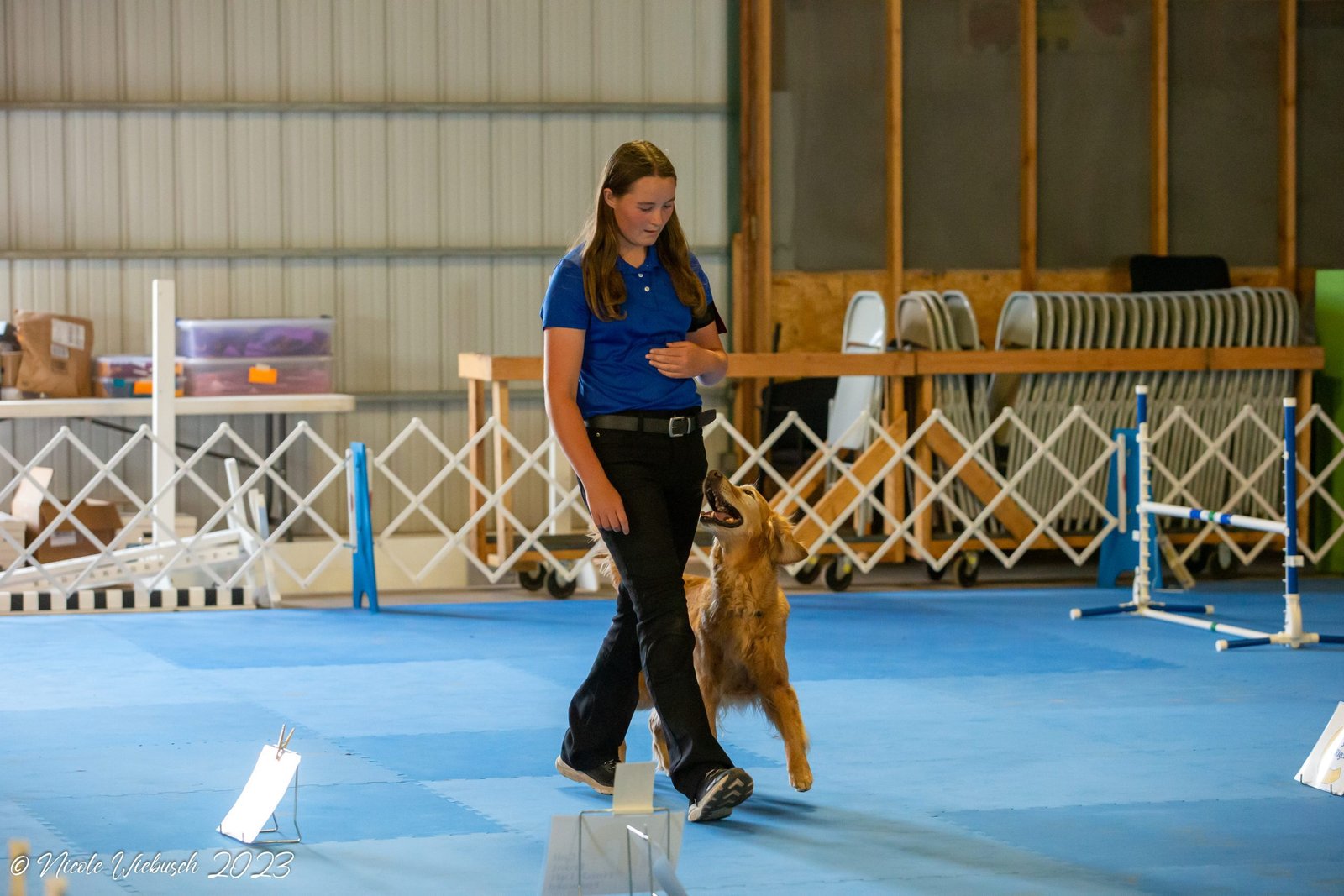
If you’ve been wondering why drilling heeling doesn’t work for your dog, you’re probably putting in plenty of reps and still seeing the same mistakes show up. You’ve drilled the heeling pattern, practiced the halts, worked the same problems over and over. And yet, the lag is still there. Or the wide heeling. Or the forging that shows up right before every halt. You’re doing the work, and the work doesn’t seem to be working.
Here’s what’s actually going on: drilling more of the same thing only helps if you’ve correctly identified what’s causing the problem in the first place. If you haven’t, you’re not fixing the error. You’re just practicing it more.
Mistakes Are Symptoms, Not Problems
Most handlers approach heeling errors as the thing to fix. The dog is lagging, so we work on lagging. The dog is wide, so we drill heel position. It seems logical. But heeling errors are almost never the actual problem. They’re symptoms of something else, and if you treat the symptom without finding the cause, the error keeps coming back no matter how many reps you put in.
Before you reach for a fix, it’s worth asking one question: why is this happening?
That question sounds simple. It changes everything.
Why Drilling Heeling Doesn’t Work: The Same Mistake Can Have Completely Different Causes
Here’s something that surprises a lot of handlers: two dogs can show the exact same heeling error for completely different reasons, and the fix for one will do absolutely nothing for the other.
Take lagging. It’s one of the most common heeling problems out there, and it looks the same on every dog. But the cause varies widely.
One dog might lag because their handler consistently slows down before every halt. The dog has learned to read that deceleration as a cue and starts dropping back in anticipation. Another dog might lag because rewards have been delivered behind the handler’s hip for months, and the dog has simply learned to position themselves where the cookies come from. A third dog might lag because the environment feels overwhelming and they’re mentally checking out rather than actively working. A fourth dog might lag because heel position was never clearly defined in the first place, and the dog is doing their best with a fuzzy picture of what’s actually being asked.
Four dogs. Four lags. Four completely different fixes.
If you take dog number two, whose lag is a reinforcement placement problem, and drill more heeling without changing where your rewards land, you will drill that lag in deeper. You’re practicing the wrong thing with more repetition, and repetition builds habits whether the habit is what you wanted or not.
This is why more drilling so often doesn’t work. It’s not that the handler isn’t trying hard enough. It’s that effort applied in the wrong direction doesn’t produce the right result.
The Three Places to Look Before You Drill Again
When a heeling error keeps showing up, there are three places worth investigating before you do anything else.
The first is clarity. Does your dog actually have a clean, consistent picture of what heel position looks like? This one is easy to underestimate, especially with dogs who have been training for a while. Criteria shift gradually. Reinforcement gets a little inconsistent. The picture gets blurry around the edges without anyone noticing. A dog working from a blurry picture will look like a dog who knows the behavior but won’t do it. Often they’re just doing their best with incomplete information.
The second is reinforcement history. Where have your rewards been delivered? Dogs go where the reward comes from, and if your delivery has been pulling your dog forward, backward, wide, or low, your dog has been learning a position you didn’t intend to teach. This happens to everyone, and it’s nobody’s fault. But it does mean that fixing the error starts with changing where and how you deliver your rewards, not with drilling the behavior itself.
The third is handler mechanics. This one is the hardest to see because you’re inside your own handling. But your footwork, your body position, your timing, and your cue delivery are all communicating information to your dog, often before you realize you’re sending a signal. A subtle drift to the left pushes your dog wide. A deceleration before a halt cues your dog to drop back. A lean forward pulls your dog out of position. Your dog is reading you constantly, and if your body is giving different information than your verbal cues, your dog will follow your body every time.
Why Video Changes Everything
If you’re not already recording your training sessions, this is the single most useful thing you can add to your practice right now. You don’t need anything fancy. A phone propped up on a chair works perfectly.
Watching yourself from the outside will show you things you simply cannot feel in the moment. You’ll see where your rewards are landing. You’ll catch the subtle drifting to the left. You’ll notice the moment your dog starts to disconnect and what was happening right before it. You’ll see patterns that are completely invisible from inside the handling.
Most handlers who start recording are surprised by what they see. Not because they’re doing something wrong, but because so much of what influences our dogs happens below the level of conscious awareness. Video brings it to the surface.
Watch a recent session and ask yourself three things: does my dog have a clear picture of what I’m asking? Where are my rewards coming from and what position is that reinforcing? What is my body doing right before the error shows up?
You don’t need all the answers immediately. You just need to start asking better questions.
What to Do Instead of Drilling Heeling
Once you’ve identified the likely cause, the approach changes completely.
If it’s a clarity problem, go back and rebuild the behavior with cleaner criteria. Shorter sessions, higher rate of reinforcement, and a clear definition of exactly what you’re marking. You’re not starting over. You’re filling in gaps that were always there.
If it’s a reinforcement history problem, start paying close attention to where your rewards land and adjust deliberately. Think about what position your delivery is pulling your dog toward and whether that’s the position you actually want. Small changes in reward placement can shift a dog’s default position over a surprisingly short period of time.
If it’s a handler mechanics problem, use your video to identify the specific thing your body is doing and work on that separately from your dog if you need to. Practice your footwork, your halts, your turns without your dog present. Clean up the input you’re giving before you ask your dog to respond to it.
In all three cases, the work is more targeted and usually more interesting for your dog than drilling the same pattern over and over. Shorter sessions with a clear purpose tend to produce faster progress than long drilling sessions that leave both ends of the leash a little frustrated.
The Goal Isn’t More Reps. It’s the Right Reps.
Heeling is a complex behavior, and when it breaks down, it almost always means something specific needs attention. The handlers who make the most progress aren’t the ones who practice the most. They’re the ones who practice with the most clarity about what they’re actually working on and why.
When you know what’s causing the error, you can fix it with confidence. And when you fix the cause instead of the symptom, it actually stays fixed.
