

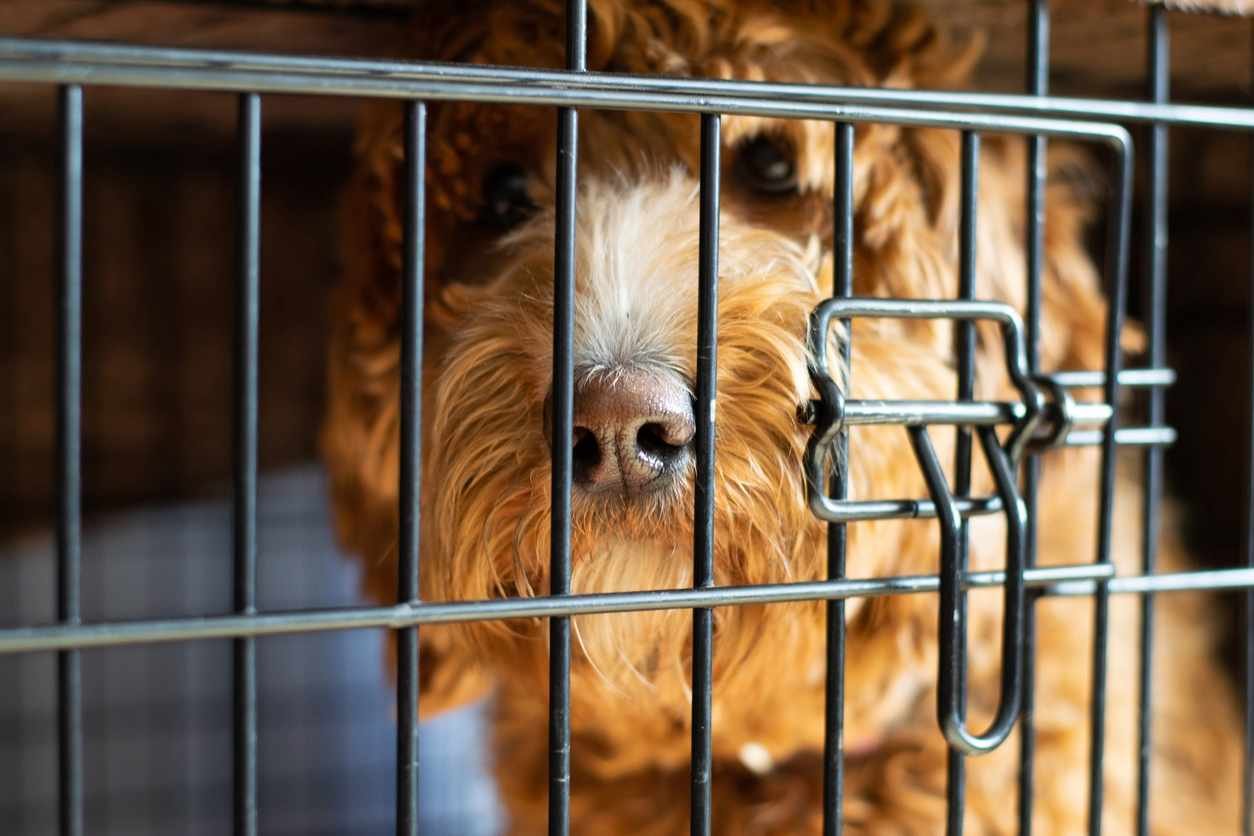
Have you settled down for the night, hopped into bed, and then heard your puppy whining from the crate? While you don’t want to reinforce the behavior by letting them out every time they cry during the night, you also want to make sure your puppy doesn’t need to go potty or isn’t becoming overly stressed or anxious being alone in the crate. In this blog, we will discuss the differences between attention seeking behavior and separation anxiety in the crate. And then discuss how to help prevent separation anxiety behaviors. With a particular focus on separation anxiety behaviors and whining in the crate.
Why does a puppy whine from the crate?
It’s common for puppies to whine, cry, and bark during their first few nights in the crate. Puppies often do this because they are seeking attention. Unfortunately, attention seeking behaviors can be accidentally reinforced by coming to check on them every time you hear your puppy’s calls. This attention can be reinforced verbally, such as saying “It’s alright, Luna, I’m here”, or picking your puppy up to console them.
Whining, crying, and barking from the crate can also be a sign of separation anxiety behaviors. Separation anxiety is usually seen in middle aged adult dogs. So, it’s more likely that your puppy is whining for attention. That being said, it’s still helpful to understand the signs so you know what to watch for as your dog matures. Let’s discuss signs of separation anxiety behaviors.
What are signs of separation anxiety behaviors?
Dogs with separation anxiety will typically show high levels of stress when they are crated or alone. Let’s separate low and high stress behaviors.
Low levels of stress may include when your dog:
- Barks excessively when they can’t be with you
- Struggles to settle down, or not settling down at all, when separated from you
- Follows you from room to room when you are around
- Always lays at your feet when you are home.
High levels of stress may include when your dog:
- Excessively bites and paws at the crate to try to escape
- Goes potty inside the crate, even when potty trained
- Excessively salivates
Dogs with separation anxiety who escape from the crate will often seek out areas where the owner has left the home. Such as the front door or gate.
- In severe cases, dogs with separation anxiety will:
- Break windows, chew through drywall or baseboards
- Cause injury to themselves
- Destroy areas that smell like their owner, such as a laundry room
Now that we have explained the signs of separation anxiety behaviors, let’s discuss exercises that can help prevent separation anxiety from developing.
Exercises to help prevent separation anxiety behaviors
Comforting a puppy when first bringing them home
Is your puppy struggling to settle in the crate? During your puppy’s first three nights, you should set up their crate close to your bed. If your puppy is struggling, you can comfort them by putting your fingers through the crate so they know that you are there.
Keeping some space with your puppy throughout the day
We recommend that your puppy spend some time away from you during the day. You can do this by tethering your puppy at least a few feet from you throughout the day.
Your puppy may whine when separated from you; however, they should settle down, and after repeated tethering exercises, the whining will decrease. If your puppy is quiet, you can toss a treat to reinforce quiet and calm behavior.
Encourage a positive association with the crate through food and treats
You can give your dog some high valued treats, such as a stuffed Kong, just before you leave the house without them. This feeding routine will help encourage a positive relationship with the crate, and teach them that there can be a good experience when you leave them home alone.
Separation Anxiety can be addressed through training
Fortunately, separation anxiety behaviors can be addressed through behavior modification training, such as classical conditioning to teach your puppy to be calm and comfortable when you are away. If you have concerns that your dog is engaging in separation anxiety behavior, and are looking to address this through training, you can contact our pet behavior experts for a free consultation.
We use scientifically proven training methods, backed by over 20 years of hands-on experience. Beyond the Dog Dallas is led by our co-founders, Dr. Echterling-Savage, a Certified Applied Animal Behaviorist (CAAB) and Board Certified Behavior Analyst (BCBA), and Sean Savage, a Certified Dog Behavior Consultant (CDBC) and Certified Professional Dog Trainer-Knowledge Assessed (CPDT-KA).
