

The first rain always feels like relief. For your pet, it often marks the start of a season where small issues quietly build into bigger problems. Most of what goes wrong in the monsoon is predictable. The mistake is waiting for it to happen before making changes.
A couple of years ago, a Labrador came in with what the family thought was a sudden weakness in the back legs. It had started a day after the first heavy showers. On closer questioning, I found the dog had slipped twice on balcony tiles. This was not a neurological problem but a preventable painful soft tissue injury. The frustrating part is how often we see versions of this every year.
Monsoon care is less about treating disease and more about preparing your home and routine in advance.
Start with your floors. Smooth tiles and moisture reduce traction. Older dogs, large breeds, and even young active pets are at risk of slipping. Place anti-slip mats near entrances, balconies and feeding areas. If your pet hesitates on certain surfaces, that is an early warning sign. Cats are not immune either. While they are more agile, repeated slips on wet ledges or window sills can lead to minor injuries. Keep their preferred perches dry.
Also Read | Summer pet grooming tips explained
Next, check drainage. Stagnant water builds up quickly in plant trays, balcony corners and blocked outlets. Dogs walk through it and lick their paws, exposing themselves to bacteria. Cats may not step into puddles, but are sensitive to damp litter areas and humid environments. A litter box that stays even slightly wet can lead to avoidance or inappropriate urination. Keep these areas dry and clean.
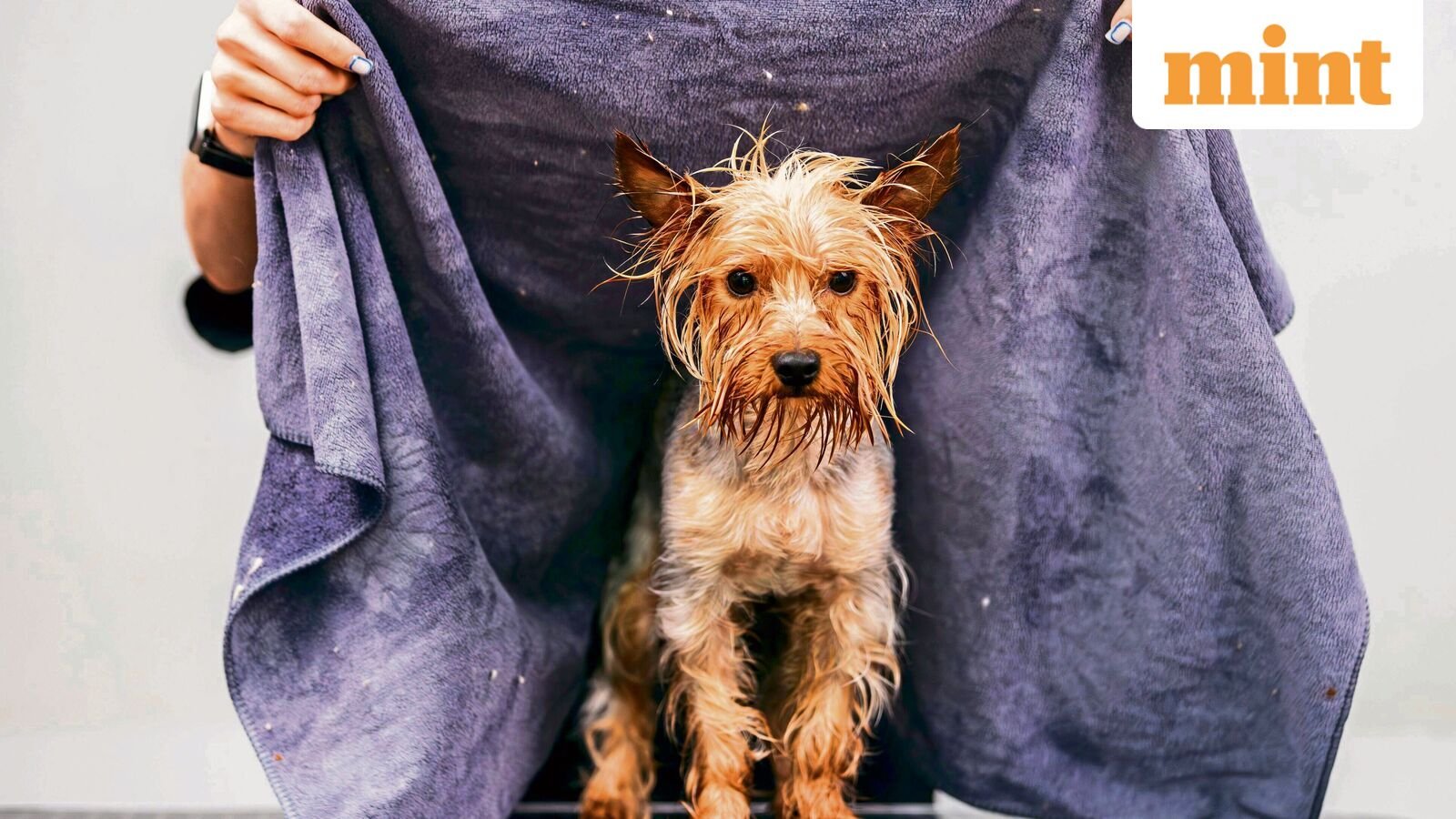
Coat care needs a shift. The instinct is to bathe more often because pets get dirty, but the real problem is incomplete drying. A damp coat, especially in dense breeds, encourages fungal and bacterial infections. Focus on thorough drying. Use a blow dryer on a mild setting, particularly for the paws, underarms, groin, and between the toes. Or towel-dry well and keep the pet in a ventilated space until fully dry. With cats, focus on regular brushing to remove debris and improve circulation within the coat.
Paws need routine attention. Constant moisture softens the skin between the toes, making infections more likely. After every walk, wipe and dry the paws. Look for redness, licking, or a change in smell. Addressing these signs early prevents a prolonged infection. For cats, check paws, especially if they step into wet areas or litter sticks between the toes.
Your walking routine will change. Rain reduces outdoor time and can lead to pent-up energy. Behaviour issues often follow. Build a backup plan now. The goal is consistent mental engagement, not just physical exhaustion. Cats, too, show behavioural shifts in monsoon. You may notice increased inactivity or sudden bursts of restlessness. Interactive play, even for 10–15 minutes a few times a day, helps reduce stress.
Disease risk increases during the monsoon. Leptospirosis is the most talked about, but prevention is often inconsistent. Check vaccination status now. Avoid puddles and stagnant water during walks. If exposure happens, rinse and dry the paws once home. Tick and flea populations also spike with humidity, so ensure preventives are up to date.
Appetite changes are common. Reduced activity, humidity and mild gut disturbances can all play a role. Keep meals consistent and avoid introducing new foods during this time. If appetite drops significantly or is accompanied by vomiting or diarrhoea, don’t wait.
Anxiety is another overlooked aspect. Thunderstorms, changes in light and sound before rain can trigger stress. Signs include pacing, hiding, panting, or clinginess in dogs. Cats may withdraw, hide more, or become unusually irritable. Identify a quiet, secure space in your home in advance. Familiar bedding, reduced visual stimuli, and some background noise can help.
Also Read | Don’t leave pets behind: Essential tips for emergency preparedness
One simple but useful habit is a daily 2-minute check. Look at the paws, run your hands over the coat, check ears for moisture or smell, and observe behaviour. Monsoon problems rarely appear overnight. They build gradually.
Nameeta Nadkarni is a veterinary soft tissue surgeon and pet blogger from Mumbai.
