

STORY AT-A-GLANCE
- Xylitol is a natural sweetener that is highly toxic to dogs, and it’s being used in a long and growing list of consumer products
- It doesn’t take much xylitol to cause problems — just a single piece of gum or one mint may cause hypoglycemia in a 10-pound dog
- Signs of xylitol intoxication in dogs include vomiting, weakness, lethargy, loss of coordination, seizures and collapse
- Pet parents should be aware of any product in their home containing xylitol, and especially anything they might consider offering to their dog (e.g., certain nut butters)
- Early detection and effective treatment of xylitol exposure in dogs offers the best chance for a full recovery
Editor’s Note: This article is a reprint. It was originally published December 23, 2018.
A 3-year-old dog named Canon in Tennessee got into some Mentos sugar-free gum. The dog’s heartbroken mom, Christy Figlio, didn’t realize until after he had been euthanized that the source of Canon’s illness and rapid deterioration was the result of xylitol poisoning from the gum.
“We really wanted everybody to know so they don’t have to go through this because it was horrible,” Figlio told Inside Edition. “Always check the label.”1
Xylitol Poisonings in Dogs More Than Doubled in 7 Years
Each year as the number of products containing xylitol expands, sadly, so do the cases of poisoning in dogs. In 2007, the first year the ASPCA Animal Poison Control Center (ASPCA-APCC) started tracking cases of xylitol toxicity in dogs, the Center received 1,764 calls. In 2014, they handled 3,727 xylitol calls.2
That’s over a 200% increase in just seven years and includes only the cases called into the ASPCA-APCC. There are other animal poison control centers that receive calls, as well as unreported cases of xylitol-related illnesses and deaths.
Xylitol Is Only Toxic for Certain Species
Although xylitol is safe for humans, the sweetener’s effect varies by species. In people, rhesus monkeys, rats and horses, it causes little to no insulin release. However, it has the opposite effect on dogs, ferrets, rabbits, cows, goats and baboons. At the present time, xylitol’s effect on cats is unknown. Fortunately, cats aren’t typically attracted to sweet tastes.
Humans absorb xylitol slowly, and the sweetener when ingested orally is absorbed at from 50% to 95%. However, in dogs, xylitol is rapidly and fully absorbed within about 30 minutes. Just a small amount of xylitol can cause a dangerous insulin surge and a rapid drop in blood sugar.
The toxicity of xylitol in dogs is dose-dependent. The dose required to trigger hypoglycemia (low blood glucose) is approximately 0.1 grams/kg, while the amount needed to cause liver failure is about 0.5 grams/kg. Most gum and breath mints typically contain 0.22 to 1.0 gram of xylitol per piece of gum or mint.
This means just a single piece of gum or one mint may cause hypoglycemia in a 10-pound dog. For more detailed information and graphics on how much xylitol is dangerous to different sized dogs, as well as a comparison of xylitol versus chocolate toxicity in dogs, look at this Preventive Vet page.
The List of Products Containing Xylitol Is Long and Getting Longer
Xylitol poisoning in dogs is reaching epidemic proportions according to some sources. The sweetener is being used in an ever growing list of products because it’s as sweet as sucrose, but with only two-thirds the calories of sugar. It’s less expensive than other sugar substitutes, tastes better and causes little if any insulin release in humans.
Just a few years ago, xylitol could be found in less than a hundred products in the U.S., primarily limited to sugar-free gums, candy and foods. Today it can be found in a wide range of health and beauty products, food products, over-the-counter drugs and supplements, and prescription medications.
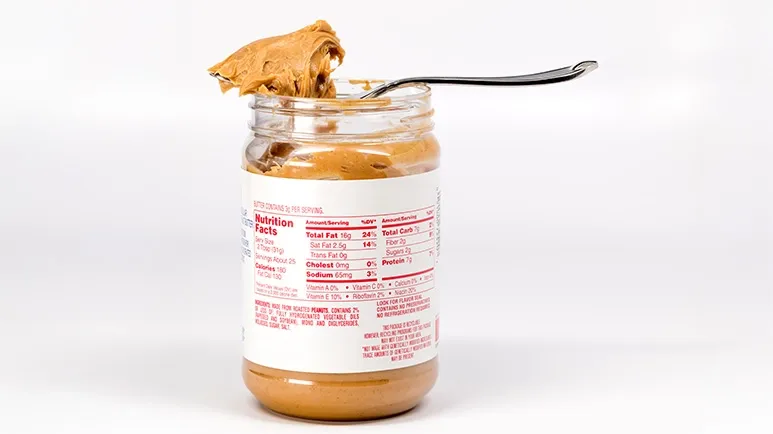
Xylitol was originally found primarily in products not normally given to dogs. However, the sweetener is now being used in certain peanut and nut butters. As most dog guardians know, our pets love these creamy butters. Many people use a dab of peanut or nut butter to hide pills or supplements they give to their dog, or they fill a Kong with the gooey stuff as a special treat.
The nut butter brands containing xylitol are No Cow (formerly D’s Naturals), Go Nuts, Krush Nutrition, Nuts ‘N More and P28 Foods.3 These are specialty nut butters sold primarily in nutrition stores and online, but the fact that xylitol is being used in these products is a heads-up for dog parents everywhere of the importance of reading ingredient labels.
It’s probably just a matter of time before more mainstream peanut and nut butters also contain xylitol. Dr. Ahna Brutlag, associate director of veterinary services for Pet Poison Helpline explains the seriousness of the situation:
“First, dogs fed straight peanut butter as a treat or fed treats baked with xylitol-containing peanut butter may certainly be at risk for harm. Second, a dog that nabs the entire jar of xylitol-containing peanut butter and happily gorges on his or her treasure without anyone knowing could quickly become extremely ill. If this occurred during the day while the owners were not home, it’s possible the dog could die before people returned.”4
You should be aware of any product in your home containing xylitol, and especially anything you might consider offering to your dog.
Determining the Amount of Xylitol in a Product
Currently, product manufacturers aren’t required to list the quantity of xylitol on package labels, and while some companies will reveal the amount in their products, many are reluctant to do so.
In some cases, you might be able to use the placement of xylitol on an ingredient list to estimate how much is in the product. In the U.S., ingredient lists for foods should be organized in descending order based on weight. The ingredient weighing the most is at the top of the list.
In most chewing gum ingredient lists, xylitol appears in fourth or fifth place, making it clinically insignificant. But if it appears as one of the first three ingredients, extreme caution should be taken. In fact, it’s recommended that pet parents avoid or be cautious when it comes to handling products with any amount of xylitol.
When it comes to medications and dietary supplements, U.S. regulations do not require manufacturers to list xylitol by name on package labels. This is because the sweetener is often categorized as an “inactive” or “other” ingredient, and such ingredients don’t have to be listed in order by the amount contained in the product.
To confuse matters further, when xylitol is named in these products, it’s often part of an alphabetized list, which could lead pet owners to assume, perhaps in error, that there is a very small amount in the product. That’s why it’s best, in my opinion, to either avoid or very carefully store any product that contains xylitol in any amount. Preventive Vet has a comprehensive list of products containing xylitol here.
Symptoms and Treatment of Xylitol Toxicosis
Symptoms of xylitol intoxication in dogs include vomiting, weakness, lethargy, loss of coordination, seizures and collapse. Hypoglycemia is usually evident within an hour or two after a dog ingests xylitol, but symptoms are occasionally delayed for several hours.
Treatment depends on how quickly it is given. Vomiting is induced in cases where the xylitol has just been ingested. Once a dog develops hypoglycemia, intravenous (IV) dextrose may be administered until the animal can self-regulate his blood glucose concentrations, which typically takes from 12 to 48 hours.
In dogs who ingest enough xylitol to cause liver toxicity, it’s recommended that liver enzymes be closely monitored, as evidence of hepatic necrosis can show up one to two days after ingestion. Should the liver begin to fail, the dog will require IV fluids, dextrose, hepatoprotectants (substances to help support and repair the liver) and regular monitoring of blood clotting activity.
When xylitol exposure is caught early in a dog and treated effectively, the prognosis for a full recovery is excellent. The prognosis for dogs who develop hepatic failure is less optimistic.
In this free guide, you’ll discover:
-
How your pet’s biology influences their nutritional needs -
Why conventional feeding advice often falls short -
Practical ways to choose better food for your dog or cat
View our Privacy Policy and Terms of Service.
