

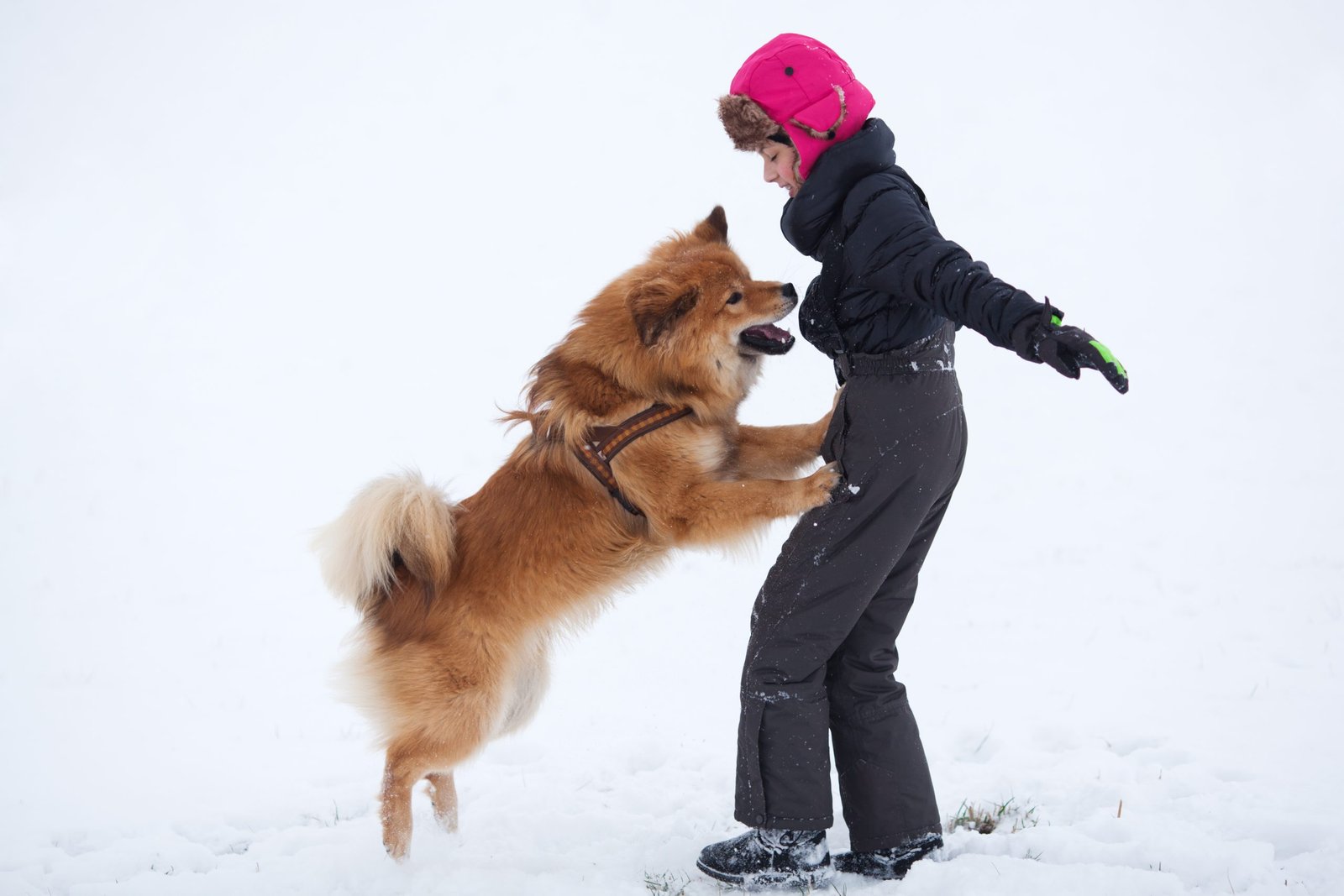
If you have a dog jumping on people, you’re not alone. This is one of the most common struggles dog owners face, and it can quickly turn into something frustrating or even embarrassing, especially when guests come over. One minute your dog is calm, and the next they’re bouncing, pawing, and trying to get as close to someone’s face as possible.
The important thing to understand is that this behavior isn’t random, and it isn’t your dog being rude. Dogs jump because it works. It gets attention, interaction, and engagement, and as long as that continues, the behavior will too.
Once you start looking at jumping this way, the path forward becomes much clearer. You’re not trying to “stop” your dog from doing something bad. You’re teaching them a better way to get what they want.
Why Dogs Jump on People in the First Place
Dogs are naturally social, and attention has a lot of value to them. Talking, eye contact, movement, and touch are all things dogs are drawn to, especially in exciting moments like greetings. When a dog jumps and someone responds, even if that response is pushing them away or telling them “no,” the dog is still getting interaction.
From your dog’s perspective, the sequence is simple. They jump, and something happens. That “something” might be talking, laughing, hands on their body, or even frustration, but it’s still engagement. Over time, that pattern becomes very clear and very reliable.
This is why dogs continue to jump, even when we think we’re discouraging it. The behavior is doing exactly what it was designed to do.
Why Trying to Stop Jumping Often Doesn’t Work
Most people respond to a dog jumping on people by correcting it in the moment. They might say “no,” push the dog down, or physically block them. While this feels like the right response, it often has the opposite effect.
All of those reactions still involve attention. You’re talking to the dog, touching them, and engaging with them. For many dogs, that’s enough to keep the behavior going, even if the interaction isn’t particularly pleasant from our perspective.
This is why you can see the same dog jump over and over again, even though they are being corrected every time. The behavior is still working. Until that changes, the jumping won’t either.
What Your Dog Is Actually Learning During Greetings
Every greeting is a learning opportunity. Dogs don’t separate “training time” from real life, so what happens at the door or when people approach matters just as much as anything you practice intentionally.
If your dog jumps and gets attention most of the time, that behavior becomes strong and automatic. If they sometimes get attention and sometimes don’t, the behavior can actually become even more persistent, because unpredictability encourages them to keep trying.
This is why consistency is so important. It’s not just about teaching a new behavior. It’s about making sure the old behavior stops being effective.
Teaching Calm Instead of Fighting Excitement
Instead of focusing on stopping jumping, it’s much more productive to focus on what you want your dog to do instead. Calm greetings don’t come from suppressing excitement. They come from teaching your dog how to manage it.
This starts with recognizing and reinforcing small moments of calm. Four paws on the floor, a brief pause, or a quick check-in are all valuable behaviors. They might not look like much at first, but they are the building blocks of a polite greeting.
When those moments are consistently reinforced, your dog begins to understand that calm behavior is what starts interaction. That shift is what changes the pattern.
Why Management Matters More Than You Think
One of the biggest mistakes people make is trying to train in the middle of chaos. When a dog is already excited and guests are walking in, it’s very difficult for them to make good choices.
Using management tools like gates, crates, or leashes allows you to control the situation so your dog can be successful. This is not about restricting your dog. It’s about preventing them from practicing the behavior you’re trying to change.
When you reduce rehearsal, progress happens much faster. Your dog gets more opportunities to practice calm behavior instead of repeating jumping.
How Distance and Setup Change Everything
Distance plays a huge role in how dogs respond to exciting situations. The closer your dog is to a person, the harder it is for them to stay calm and make good decisions.
Starting greetings with a bit of space gives your dog time to think. It lowers the intensity of the situation and makes it easier for them to offer calmer behaviors. As they become more successful, you can gradually decrease that distance.
This kind of setup allows your dog to succeed, rather than constantly putting them in situations that are too hard.
Why Your Guests Need to Be Part of the Training
One of the biggest challenges with a dog jumping on people is that other people often unintentionally reinforce the behavior. They talk to the dog, bend down, or reach out, all of which increase excitement.
Clear communication helps. Let guests know to ignore jumping and only interact when your dog is calm. This consistency makes a huge difference in how quickly your dog learns.
When everyone responds the same way, your dog gets a clear message about what works and what doesn’t.
What Progress Actually Looks Like
Progress doesn’t mean your dog immediately greets people perfectly. It usually starts with smaller changes. Maybe the jumping lasts for a shorter amount of time, or your dog recovers more quickly after getting excited.
Over time, you’ll start to see more pauses, more moments of calm, and more intentional behavior. Those small changes add up, and eventually the calm behavior becomes the default.
The key is consistency. When calm behavior is what consistently works, your dog will choose it more often.
From Jumping to Calm: The Bigger Picture
Teaching your dog how to greet politely isn’t just about stopping jumping. It’s about giving them a clear and effective way to interact with people. It reduces frustration for both you and your dog and makes everyday situations much easier to handle.
These skills also carry over into other areas of life. Dogs who learn how to manage excitement in greetings tend to have better impulse control in general, which shows up in many different situations.
When your dog understands that calm behavior leads to attention and jumping does not, greetings become predictable, manageable, and much more enjoyable for everyone involved.
