

Are you concerned about your puppy’s behavior? It can be hard to tell whether certain behaviors are a normal part of a puppy’s development or red flags in puppy behavior. Understanding the differences is key to addressing issues before they become more serious behavioral issues.
Many of our Tampa Bay dog training clients are concerned about biting, chewing, crying, and housebreaking behaviors. These are normal stages of puppyhood and can be addressed through training.
Red flags are behaviors that, left untreated, will almost certainly become more serious issues as a puppy gets older. They will often peak at around two to three years of age. By addressing these problem behaviors early, you can prevent them from becoming serious issues and help your dog lead a happier life.
In this blog, we will discuss common red flags, so you have a better idea of what to look out for.
What are some red flags of puppy behavior?
Let’s discuss some abnormal behaviors that can escalate into more serious problem behaviors if left unaddressed. Starting with how a puppy responds to fear.
Slow recovery from a scary event
It’s considered abnormal to be repeatedly fearful of environments or stimuli, such as loud noises or crowded areas, such as parks with unfamiliar people and dogs. It is also abnormal to take a long time to recover from this fearful experience. It’s important that this fearful behavior is addressed early, or it could escalate into aggression or reactivity as a puppy gets older.
Continuously having accidents in the crate
Crate training is a normal stage of being a puppy. It helps establish a routine for your puppy so you can avoid accidents in the crate. This will provide a safe space for your puppy to relax when you are unable to supervise them.
Occasional crate accidents should not be concerning, as it may be caused by drinking too much water, not being let out after eating, or having an upset stomach. Puppies won’t want to go potty where they lay and eat. So if accidents in the crate occur often, we recommend contacting a trainer for behavioral issues or your veterinarian.
Crying in the crate
It’s normal for a puppy to cry when put in the crate, particularly during the first week of crate training. Your puppy likely wants to be near you, and it takes some time to be comfortable with spending time in the crate.
Some signs of abnormal behaviors during crate training include crying for hours every time they are in the crate, self-injury from trying to escape, and potty accidents due to the stress of being alone. For more information, you can check out our blog on “Understanding Crate Training and Separation Anxiety”.
Regularly ingesting entire objects
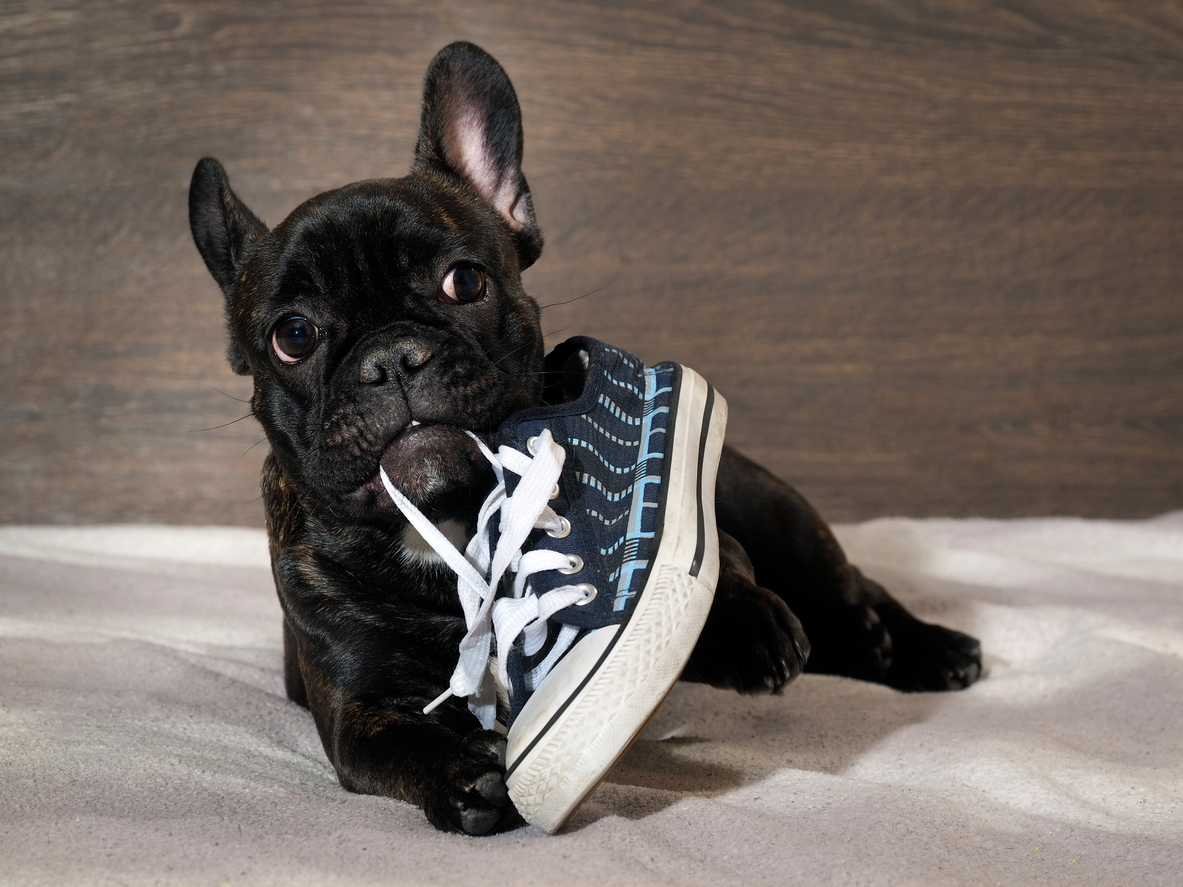
It’s normal that a puppy wants to explore the world with their mouth. Chewing on your shoes, pillows, sticks, and balls can be considered fair game for a puppy.
However, it is not normal if a puppy tries to ingest a bone almost as soon as they get it. Or to try to swallow items whole. It’s also abnormal for a puppy to be growling when you approach them while they have a bone or another valued item. These are often signs of resource-guarding behaviors and will often escalate as a puppy gets older. Fortunately, this behavior can be effectively treated through dog training. For more information, you can check out our blog on “Resource Guarding in Your Puppy”.
Negative reactions to being handled or restrained
It’s normal for a puppy to be squirmy and mouthy when picked up. Training exercises can help teach a puppy to be calm. This is particularly useful when putting on or taking off a collar and leash, during vet examinations, and grooming appointments.
It is abnormal for a puppy to ignore treats, become aggressive, snap, or growl at you when you pick them up or handle them. This behavior will get worse as a puppy gets older, and it’s important to treat it early through training.
Playbiting without bite inhibition
Puppies enjoy playbiting; it’s a behavior they first start in the litter, and often continues when they come home. You should not be concerned with how often they are playbiting, but if your puppy lacks bite inhibition and bites too hard or draws blood. If this occurs, it’s likely a sign that your puppy didn’t learn bite inhibition while in the litter. This could have been because they were taken out of the litter too early, weren’t socialized enough, or their conditions weren’t appropriate. If your puppy hasn’t developed bite inhibition skills, it’s important to teach them proper manners around playbiting early through training.
We are here to help
Do you have any concerns about your puppy’s behavior? Or have any puppy training questions? You can contact our Pet Behavior team for a free consultation. Beyond the Dog Tampa Bay offers training programs for obedience training and behavior modification training. All of our sessions are conducted privately with your trainer. We offer in-home training programs both at your home or in your local neighborhood, Board and Train Programs, and Virtual training programs. Beyond the Dog Tampa is led our co-founders and experts in the field, Certified Applied Animal Behaviorist, Dr. Kristyn Echterling-Savage, and Certified Dog Behavior Consultant, Sean Savage.
