

STORY AT-A-GLANCE
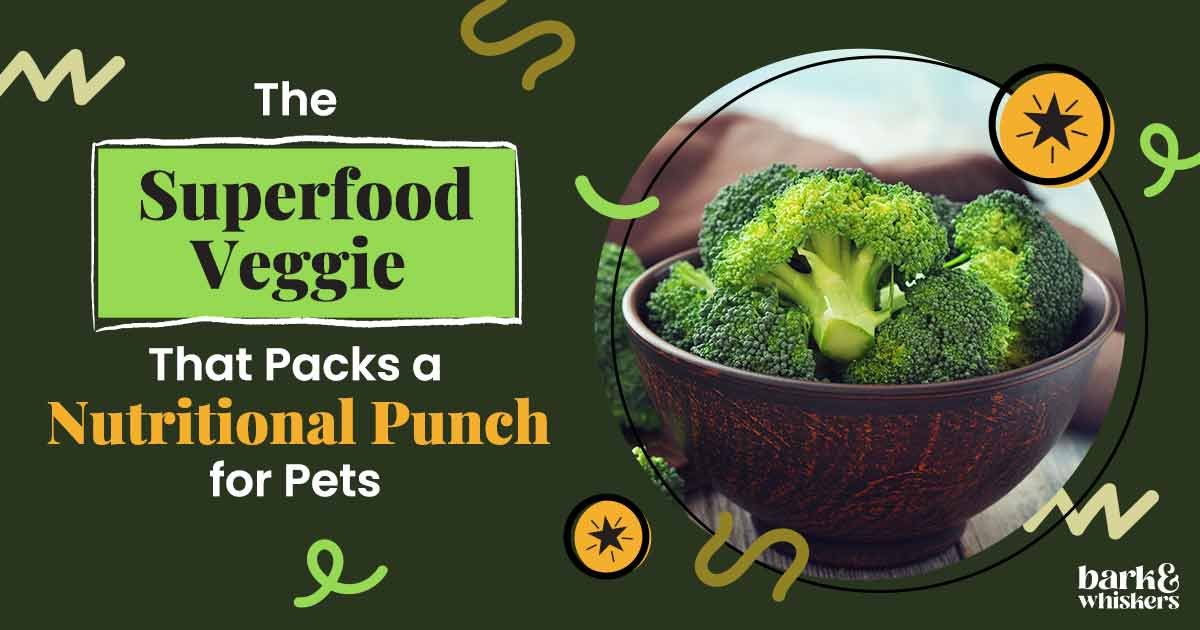
- Broccoli is just as beneficial for your pet as it is for you. It can be a great pet treat or a component of your pet’s nutritionally balanced, species-appropriate homemade diet
- One of the primary phytochemicals found in broccoli is glucoraphanin, which is the precursor of the antioxidant and anticarcinogenic compound sulforaphane
- Broccoli also contains lutein, zeaxanthin and beta-carotene, whose benefits go beyond their antioxidative properties
- The vitamin C in broccoli acts as a free radical scavenger and oxygen interceptor, keeping cells from being damaged by oxidation
- The sulforaphane in broccoli has anti-inflammatory properties, as well as vitamin K, which helps with proper blood clotting
Editor’s Note: This article is a reprint. It was originally published February 9, 2022.
There’s a reason why broccoli (Brassica oleracea italica) is considered one of the most well-loved vegetables in America,1 especially among health food enthusiasts.2 It has earned the distinction of being a superfood because of the wealth of nutrients and phytochemicals that it contains.
If you’re wondering whether you can share this vegetable with your pet, then here’s the good news: Broccoli is just as beneficial for your pet as it is for you. It can be a great pet treat or a component of your pet’s nutritionally balanced, species-appropriate homemade diet.
Broccoli Fun Facts
Native to the Mediterranean region, broccoli has been considered a valuable food since the ancient Roman period. Despite its long history in the culinary world, it wasn’t until the 1920s that this vegetable became popular in the U.S.3
Broccoli Is a Powerhouse of Antioxidants
“Broccoli contains a number of compounds that exhibit potent antioxidant properties, including vitamin C, carotenoids and tocopherols.”
Vitamin C, which is present in broccoli at 5.08 milligrams (mg) per tablespoon,4 acts as a free radical scavenger and oxygen interceptor, keeping cells from being damaged by oxidation.5 It’s been found to play a role in several metabolic functions as well, including tissue growth and maintenance.
With regard to carotenoids, broccoli contains lutein, zeaxanthin and beta-carotene,6 whose benefits go beyond their antioxidative properties. Beta-carotene is a vitamin A precursor that also supports vision, bone growth, reproduction, cellular differentiation and immune response in dogs.7
Meanwhile, lutein and zeaxanthin may help protect your pet’s ocular tissues and cells against phototoxic damage and oxidative stress.8 Tocopherols, on the other hand, are phenolic vitamin E antioxidants that may help inhibit lipid oxidation by “scavenging free radicals and by reacting with singlet oxygen.”9
This Phytochemical Detoxifies and Scavenges Free Radicals
One of the primary phytochemicals found in broccoli are glucosinolates, the most notable of which is glucoraphanin, which is the precursor of a potent compound called sulforaphane.10 Studies have found that sulforaphane exhibits direct antioxidative effects and induces the enzymes involved in the detoxification process.11,12 By scavenging free radicals, it helps slow down your pet’s aging process and reduce their risk for age-related diseases.13
Sulforaphane has also been studied for its anticarcinogenic effects. According to a study published in Veterinary Medicine and Sciences, this compound exhibits “multiple epigenetic and non-epigenetic mechanisms” to help inhibit the formation and progression of cancer.14
One of its mechanisms of action is inhibiting histone deacetylase activity, which is linked to cancer cell proliferation. Although further studies are needed, the researchers concluded that sulforaphane may be used to prevent or slow cancer development in canine patients.15 Broccoli stalks provide an abundance of this bioactive molecule, making it the perfect bite-sized training treat for your pup.
Did You Know?
The broccoli head that we eat is actually made up of numerous flower buds. If left unharvested, these buds will bloom into small green-yellow flowers.16
These Compounds Help Protect Your Pet Against Inflammation
Aside from exhibiting antioxidative, anticarcinogenic and detoxification properties, sulforaphane has been shown to have anti-inflammatory effects. According to an animal study in the journal Brain Research, this compound works by suppressing proinflammatory cytokines.17
Another anti-inflammatory compound found in broccoli is kaempferol.18 One study published in Lipids in Health and Disease evaluated the anti-inflammatory effects of this flavonoid on early atherosclerosis in rabbits fed a high cholesterol diet. Researchers found that kaempferol may help reduce the risk for atherosclerosis by “modulating the gene and protein expression of inflammatory molecules.”19
The vitamin C in broccoli helps support your pet’s innate and adaptive immune system in numerous ways, such as supporting cellular functions, reinforcing the epithelial barrier against pathogens, protecting against environmental stressors and triggering microbial killing, among others.20
Lutein, a type of provitamin-A carotenoid, may also be useful for enhancing immune response in both animals and humans, even more than beta-carotene.21 Two studies in Veterinary Immunology and Immunopathology evaluated the effects of dietary lutein in domestic dogs and cats, and found that it helps modulate both humoral and cell-mediated immune responses.22,23
In addition to the phytochemicals and nutrients mentioned above, broccoli is also a good source of:
- Folate — This B vitamin plays a role in DNA synthesis, cell growth and metabolic function.24 Your pet can obtain 3.58 micrograms of folate per 1-tablespoon serving of broccoli.25
- Vitamin K — A tablespoon serving of broccoli contains 5.8 micrograms of vitamin K,26 a nutrient that is essential for the blood clotting process in an animal’s body.27
- Fiber — Broccoli contains 49.37 mg of fiber per 1-teaspoon serving. This may help promote regular bowel movements and improve your pet’s gut microbiome.28 Keep in mind, however, that companion animals only need small amounts of fiber in their food to mimic the fiber content of their ancestral diet, which is only about 4%.
Which State Produces the Most Broccoli?
The U.S. is one of the largest producers of broccoli in the world. While this vegetable is grown in almost every state, California produces the greatest amount of it.29
Keep These Points in Mind When Feeding Broccoli to Your Pet
The American Kennel Club (AKC) warns the isothiocyanates in broccoli may cause GI irritation in some dogs if consumed in excess.30 But don’t let this discourage you from giving your pet broccoli as a healthy snack or part of a nutritionally complete homemade meal.
Misinformation about many healthy fruits, vegetables, nuts and seeds abounds on the internet. This is because websites have labeled all risks (such as the risk of overconsumption causing gastrointestinal issues, or choking on too large of pieces or pits) as “toxicities,” which isn’t true but has managed to confuse millions of pet lovers, nonetheless.
In the case of broccoli, some online information suggests feeding members of the brassica family may cause or exacerbate hypothyroidism, but thankfully this urban legend was disproved in lab animals.31 In fact, in animals with hypothyroidism, broccoli sprouts were found to exert a beneficial influence on the antioxidant balance of the thyroid gland. In comparison to the rats with iodine deficiency, the addition of broccoli sprouts to the diet was observed to decrease IL-6 level.
If you have never fed members of the brassica family, including broccoli, to your pets, you should always start with very small amounts to allow your animal’s body to adapt to the new food. You can avoid gastrointestinal issues by simply feeding it to your pet in moderation. Remember that healthy treats like this should comprise less than 10% of your pet’s daily caloric intake.
Chop the broccoli florets and stalks into finely diced or bite-sized pieces before giving it to your pet. You can offer it raw, steamed or pureed; just make sure not to add seasonings and spices. Cats usually don’t like broccoli, but it’s fine to offer it if your cat shows an interest.
Finally, make sure that you buy organically grown broccoli, as this vegetable is included in the Environmental Working Group’s (EWG) list of produce that contains the highest traces of pesticides.32 To keep your family members (furred or not) safe from these harmful chemicals, look for organic or spray-free varieties from your local farmers market.
- 1 PR News Wire, June 14, 2021
- 2 The Spruce Eats, December 22, 2022
- 3 The Spruce Eats, July 22, 2021
- 4,25,26 USDA FoodData Central, Broccoli, raw
- 5 Whole Dog Journal, April 24, 2001
- 6 PLoS One. 2014; 9(7): e95683. Introduction
- 7 Br J Nutr. 2012 Mar 1;108(10):1800–1809. Abstract
- 8 J Ophthalmol. 2015;2015:523027
- 9 Bibl Nutr Dieta. 1989;(43):297-312
- 10,14,15 Veterinary Medicine and Science, Volume 4, Issue 4 Pages 357-363
- 11 Recent Patents on Endocrine, Metabolic & Immune Drug Discovery, Volume 9, Number 1, 2015, Pages 24-39(16)
- 12 Nutramax Laboratories Veterinary Sciences, Inc. Clinical Notes, June 2021
- 13 GeroScience. 2019 Apr 2;41(5):655–670
- 16 The Spruce, How to Grow and Care for Broccoli, May 7, 2022
- 17 Brain Res. 2016 Dec 15;1653:1-7
- 18 USDA, Flavonoid Content of Vegetables
- 19 Lipids in Health and Disease, Volume 12, Article number: 115 (2013)
- 20 Nutrients. 2017 Nov 3;9(11):1211
- 21 J Nutr. 2004 Jan;134(1):257S-261S
- 22 Vet Immunol Immunopathol. 2000 Mar 15;73(3-4):331-41
- 23 Vet Immunol Immunopathol. 2000 May 23;74(3-4):315-27
- 24 National Institutes of Health, Office of Dietary Supplements, Folate
- 27 Oregon State University, A Guide to the Principles of Animal Nutrition – Vitamins
- 28 Nutr Res Rev. 2014 Dec;27(2):295-307
- 29 AgMRC, May 2024
- 30 American Kennel Club, September 13, 2023
- 31 Biomedicine & Pharmacotherapy October 2017, 97: 82-90
- 32 EWG’s 2024 Shopper’s Guide to Pesticides in Produce
In this free guide, you’ll discover:
-
How your pet’s biology influences their nutritional needs -
Why conventional feeding advice often falls short -
Practical ways to choose better food for your dog or cat
View our Privacy Policy and Terms of Service.
