

Encounters with an aggressive dog are uncommon, but as a tragic incident in California showed this week, they can escalate fast, especially if you misread the moment or react on instinct.
A dog showing aggressive behavior such as barking, growling, lunging, or snapping may be trying to push you away from a space, a person, or something it values. This kind of dog aggression can happen outside on a walk, at a friend’s house, or in a public place where dogs and people are crossing paths close together.
Pets
Looking to adopt or raise a pet? Get expert tips and tricks right in your inbox from LA Times Studios.
By continuing, you agree to our Terms of Service and our Privacy Policy.
Even professionals stay alert. “As someone that works with dogs every day, I still have my eye out for my own safety and my friends or clients safety, that’s no different if I’m just walking my dogs down the street or I’m hanging at a café with friends passing a dog,” says Nicole Ellis, a Los Angeles-based Certified Animal Trainer & Pet Lifestyle Expert. The goal is not to “win” an interaction with a dog. The goal is to exit safely without injury.
How to Recognize Warning Signs Before a Dog Bites
Dogs rarely bite “out of nowhere.” The problem is that the early warning signs can easily go unnoticed if you don’t know what to watch for. Those warning signs are often the first clues that the dog is feeling pressure and wants more space.
Ellis points to exactly that kind of early read. “Over the years, I’ve learned that prevention starts easily by reading body language early and respecting a dog’s thresholds. Learning to notice things like a stiff body, lip licking, avoidance, excessive yawning or a hard stare so you can adjust and move away before a dog feels the need to escalate.”
More obvious signs of aggression include a low growl, teeth showing, snapping in the air, or lunging. If you notice any of these, treat them as a clear request for distance. Do not keep approaching and do not try to pet the dog to “show you’re friendly.” That’s how a tense situation can rapidly turn into a dog bite emergency.
(Yekatseryna – stock.adobe.com)
What to Do if a Dog Starts Acting Aggressively Toward You
When a dog is acting aggressively toward you, your safest move is usually to de-escalate. That means avoiding the behaviors that may feel normal, but that most dogs will read as threatening.
Don’t stare into the dog’s eyes. Don’t step toward it. Don’t wave your arms or make sudden movements. If you can, turn your body slightly sideways so you’re not squared up face-to-face. Keep your hands close to your body. Speak calmly if you need to, but avoid yelling. Loud, sharp energy can add fuel to the moment.
Then, create distance. Back away slowly, or move behind something that puts space between you and the dog: a car, a gate, a bench, a trash can. You want to put a barrier between you and the problem.
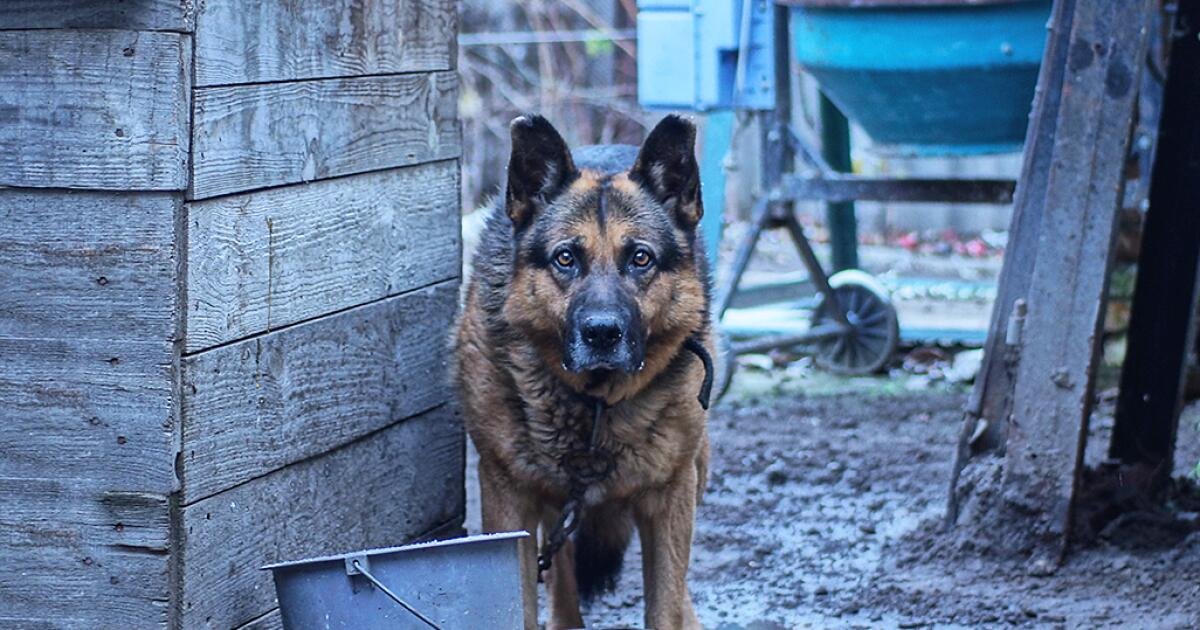
If the dog is behind a fence or tied up, give it extra room. Many dogs involved in bite incidents are restrained or trapped between you and an escape route — the dog’s behavior can escalate when it feels cornered and can’t move away.
What to Do if an Aggressive Dog Approaches While You’re Walking
A loose dog approaching you on a sidewalk or trail is its own category of stress, especially if it’s an unfamiliar dog you can’t read from a distance. The instinct is to run but try not to. Running can trigger chase behavior in other dogs, even dogs that aren’t normally so bold.
Ellis describes the approach she relies on. “If a loose dog approaches, I also try not to run if possible, since that can trigger chase behavior. Instead, I stay calm, create space, and use my voice or a noise deterrent if needed.”
If you’re able to stop and stay grounded, do it. Create distance by stepping behind an object or moving slowly to the side. Put something between you and the dog if possible, even something simple like a bag, jacket, or backpack held in front of you. If you have a stroller, bike, or scooter, keep it as a buffer rather than abandoning it.
If you’re walking your dog, the stakes change because other dogs can trigger each other. If you can safely move away without tangling leashes, do it. If you can’t, try to keep your dog close to you and avoid letting the dogs meet head-on. A tight leash and face-to-face greetings often increase tension. Getting distance is usually more effective than trying to negotiate a greeting.
Whether you are around dogs frequently or they’re not part of your life at all, an encounter with an aggressive dog can occur at random. It’s important to have a plan and know what to do. In some neighborhoods, people choose to carry deterrents designed to interrupt a charging dog without causing injury. Nicole Ellis notes one example. “I focus heavily on prevention and preparation before things escalate. That can mean creating distance, using barriers, and sometimes carrying simple tools like a correction spray that makes a quick noise to interrupt or startle a charging dog without harming them.”
The key phrase there is without harming them. Anything that escalates pain or provokes panic in a dog can make an incident worse, especially if you’re close enough that the dog can redirect toward you. If you carry anything at all, the goal is creating space so you can leave, not staying to “fix” the aggression.
If a Dog Actually Attacks
Most people reading this won’t experience a serious attack, but it helps to know what to do if contact happens. If a dog bites, protect your face and neck first. Use whatever you have as a shield: a bag, backpack, jacket, even a thick sweatshirt wrapped around your forearm. If you’re knocked down, curl into a ball with your hands behind your head and your elbows protecting your face.
Once you’re away from the dog, seek medical care immediately for any bite that breaks skin. Even small puncture wounds can become infected.
What to Do at a Friend or Relative’s House
This is where people can often find things difficult. The dog is familiar to someone else, the owner is right there, and you don’t want to make it awkward. If a dog growls, stiffens, snaps, or repeatedly blocks you from moving through a space, treat that as a serious safety issue, not a social one.
Stop interacting with the dog. Don’t reach for it. Don’t try to “prove” you’re good with dogs. Ask the owner calmly to put the dog in another room or behind a gate. Most owners will understand the request, particularly if their dog has shown aggression or is known to behave aggressively with visitors.
“Just because a dog is in your family or friend circle, doesn’t mean they’re suited to safe interactions,” advises Los Angeles-area trainer and LA Times Studios Pets contributor Michael Hill. “You should never feel pressured to be in a situation where the dog is posing a safety risk.”
If the owner minimizes it or refuses, you are allowed to leave. That’s not being dramatic — it’s risk management. If you have kids with you, take the warning signs even more seriously. Small children tend to move quickly and clumsily. They hug, grab, and get close to faces. Additionally, many dogs are not familiar on a regular basis with small children. A dog that is tolerating adults may not tolerate a child.
When to Report an Aggressive Dog and Who to Call
Most tense encounters end when you create distance and leave. Reporting becomes relevant when there’s an injury, a repeated neighborhood problem, or a dog that is loose and behaving in a way that puts people at risk.
In general, consider reporting when:
- a dog bites someone or breaks skin
- a dog repeatedly threatens people in a specific area
- a dog is roaming loose and charging pedestrians, runners, or cyclists
- a dog attacks other pets or animals
For non-emergency situations, local animal control or your city’s animal services department is usually the right starting point. If you believe there is immediate danger, call 911 or your local police non-emergency line depending on the urgency in the moment.
If you’re unsure what applies where you live, document the incident and start with animal services. They can tell you the next step.
(TravelMedia – stock.adobe.com)
What to Do After a Dog Bite
If you’re bitten, wash the wound with soap and water as soon as you can. Seek medical attention for any bite that breaks skin. You may need antibiotics, a tetanus booster, or follow-up care depending on the location and depth of the wound.
If possible, get the owner’s name and contact information and ask about rabies vaccination status. Many areas require bites to be reported so officials can verify vaccination records and follow public health procedures.
Also document what happened. Take photos of injuries, note the location, record the time and date, and write down what you remember about the dog’s behavior. If there were witnesses, get their contact information.
How to Reduce the Risk of Aggressive Dog Encounters
Avoiding problems starts with recognizing dog body language and giving dogs space, which even self-professed “dog lovers” can sometimes have difficulty with.
“If your truly love dogs, you should default to respecting their personal space and never force interactions,” Hill cautions. “Consent is key: approaching is always a ‘no’ unless both the dog and the owner give an enthusiastic ‘yes.’”
Don’t approach unfamiliar dogs without asking. Never reach through fences. Be cautious around dogs that are eating, sleeping, guarding a yard, or restrained on a leash.
Ellis comes back to prevention and education. “Ultimately, respecting a dog’s communication and setting up the environment thoughtfully goes a long way in keeping both people and dogs safe. I think it’s important to mention that if we can notice these signs ahead of time often we can avoid many situations, and in doing so also teaching our children and friends these signs as well.”
A simple rule helps: the earlier you notice the early warning signs, the more options you have to de-escalate. The later you notice them, the fewer choices you’re left with in potentially very dangerous situation.
